Disney, Dennis and the Menacing Pace
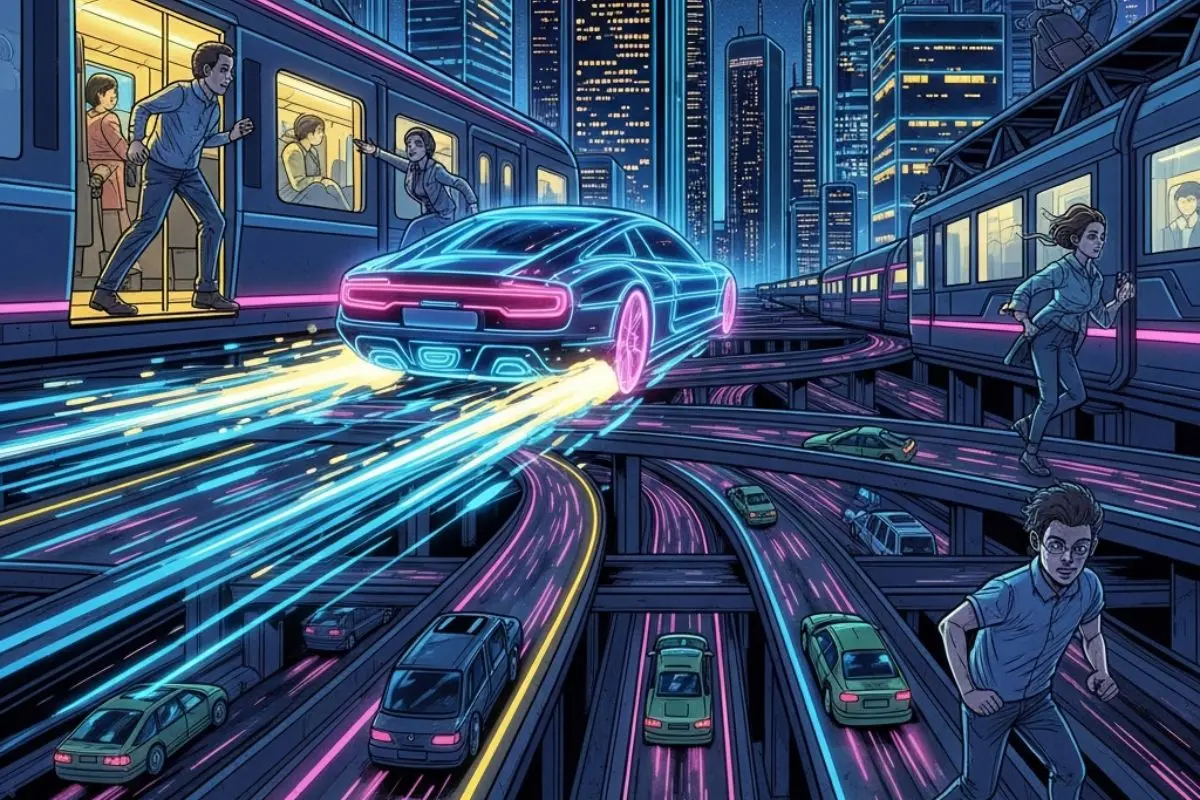
Walker was that friendly neighbour who would always wait his turn, stop, smile, and greet.
All that changed when he went and bought a car. The newborn Wheeler grabbed the wheel, stepped on the gas pedal, and screamed at other road users. He was in perennial haste, which is what the automobile in the first place was meant to alleviate.
The car you buy to manage your time leaves you with little time to manage. This paradox of pace hits you barely minutes into ‘Motor Mania’, a 1950 animation film from Walt Disney Studios. A classic on post-war urban mobility, it was an early warning that speeding would become an everyday global challenge on and off the road.
The car became affordable to the American middle class thanks to Henry Ford’s breakthrough in mass production – the moving assembly line. And the film that criticised the car was made on annoyingly similar lines. Early animation sequenced tasks along an assembly line. Specialised teams were assigned to do characters, backgrounds, key frames, and in-betweens. The speeding machine and the fault-finding movie sprang from the same shop floor urge to produce rapidly.
In the face of this compelling newfound haste, Cartoonist Hank Ketcham showed unusual restraint. The creator of Dennis the Menace, Hank, made sure the kid’s family always used a car about three years old, and it never flew till group air fares were available. There was no escalation that sent everyone into a spin. That is why we still see a lively home and neighbourhood at least in a cartoon.
Far from the first world, here in Kerala, one of our own greats chronicled lives picking up pace. In ‘Cheriya Manushyarum Valiya Lokavum’, Aravindan recorded the new vehicle owner’s impatience with the slower road user. “These pedestrians are a problem,” went the refrain. The speeding urge reappears as a deeper drive when, in a rare revelatory moment, protagonist Ramu asserts that he wants to go faster than his love, who left him for the big life.
Finally, let me share a big jolt to my sense of pace, which came not from a cartoon but from Kathakali. I was sketching on location for filmmaker M R Rajan’s ‘Minukku’, a documentation of Kathakali actor Kottakkal Sivaraman. At a shoot of this celebrated master of female roles with his favoured co-star Kalamandalam Gopi Asan, cinematographer Venu was planning to record two short renderings in one go.
Three masters were at work, and I was sketching live. The drawings would be edited in, along with the footage, and if I made a mistake, it would show. But why worry? Nothing happens in a hurry in Kathakali, where the story unfolds in proverbial slow motion. Or so I thought. The veterans sprang into a surprising surge of gestural and facial expressions. Two pairs of eyes and hands raced to create choreographic patterns that the sketch pen struggled to keep pace with.
Doodling at its rapidest was squarely outpaced by the good old Kathakali.
(The writer is Chief Political Cartoonist, The Indian Express)