Behind India's move to fortify 'Chicken’s Neck'
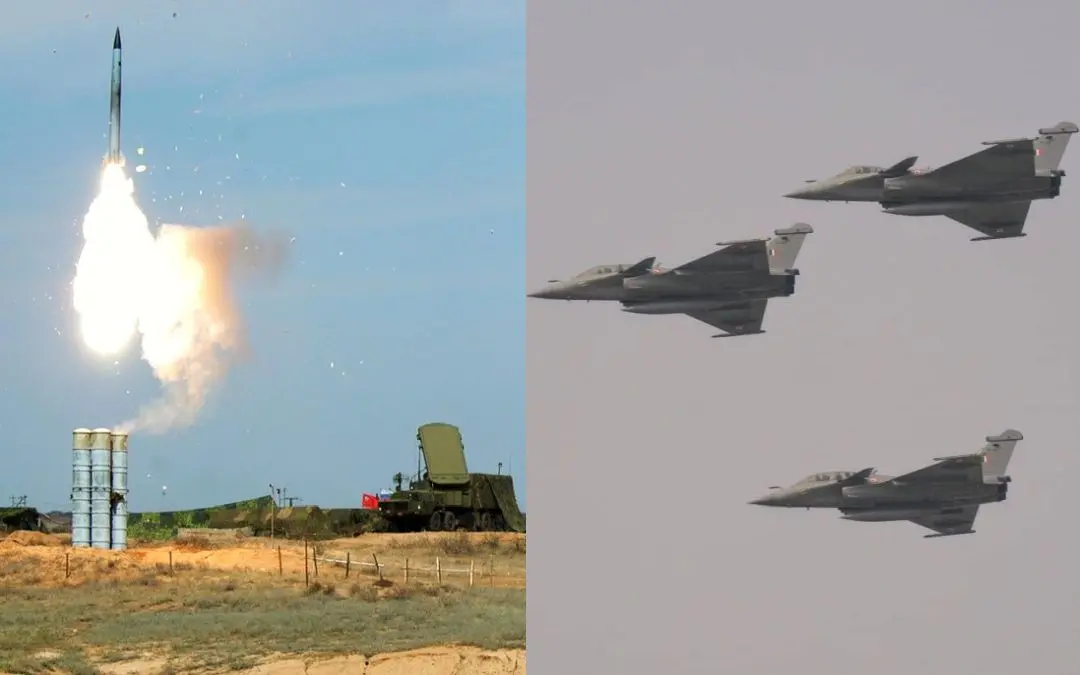
India has taken an important step for its national security by placing the advanced S-400 Triumf air defence system, which it bought from Russia, in the Siliguri Corridor. This area, located in West Bengal, is a narrow strip of land just 20 to 22 kilometres wide. Because of its slim shape and strategic location, it is often called the 'Chicken’s Neck'. This move is seen as crucial because this corridor connects the northeastern states to the rest of India, making it very important from a defence point of view. Deploying the S-400 system here will help India better protect this vulnerable area from any potential threats from the air.
For many years, the Siliguri Corridor has been seen as a weak spot in India’s defence setup. Military experts have often warned that if an enemy, especially China, carries out a quick and well-planned attack -- possibly through the sensitive Doklam Plateau -- it could cut off India’s northeastern states from the rest of the country in just a few hours.
Placing the S-400 system in this region is a well-thought-out move by India. The S-400 is known for its powerful ability to track and shoot down several enemy aircraft or missiles at the same time, even from more than. 400 kilometres away. This deployment is seen as a smart response to the growing air force activities by China and Bangladesh near India’s eastern border. By doing this, India is strengthening its air defence to keep a close watch and be ready for any threats in the region.
The 'Chicken Neck' Concern
India’s security agencies have become more concerned about the rising number and increasing complexity of air movements by China and Bangladesh near the borders close to the Siliguri Corridor. These actions are being seen as testing moves, possibly meant to check India’s response and carry hidden strategic intentions.
For many years, the Siliguri Corridor has been seen as a risky and narrow passage in India’s defence system. It plays a key role in linking the northeastern states to the rest of the country. Defence planners have warned that if China carries out a sudden and well-coordinated attack -- especially through the sensitive Doklam region -- it could cut off the northeast from mainland India in just a few hours. This is why the area is considered very important for national security.
The fear of India being split through the Siliguri Corridor has caused a major change in the way the Indian Army’s Eastern Command plans its defence. Now, the focus is on being ready to respond quickly, using strength across land, air, and other areas, and keeping troops and equipment stationed near the corridor at all times. This helps ensure better protection and quicker action if any threat arises.
Bangladesh's Tilt Towards China
India’s decision to adjust its military presence and strategy in the region comes at a time when Bangladesh’s temporary government, led by Mohammad Yunus, is showing signs of getting closer to China. This shift is visible not just in their statements but also in their actions. India sees this change as important and is making sure its defences are ready in response to these new developments.
After the fall of the pro-India government led by Sheikh Hasina in Bangladesh, the temporary government now in power in Dhaka has started openly seeking support and partnerships from China and Pakistan. These two countries are seen by India as major rivals, especially in matters of defence and regional influence. This shift has raised concerns in New Delhi, as it could affect the balance of power and security in the region.
To reshape its foreign policy, the government in Bangladesh under Yunus has been actively working to build closer economic and infrastructure ties with China. This growing partnership has raised concerns among India’s intelligence and security agencies, who see it as a possible threat to India’s interests in the region.
India is especially worried about reports that Bangladesh and China might work together on building major infrastructure projects. New Delhi sees these plans as part of China’s Belt and Road Initiative (BRI), which India has often criticized. India believes the BRI is not just about development, but also a way for China to increase its control and influence over other countries through long-term debt and strategic projects.
India has always been against China’s Belt and Road Initiative (BRI). India believes that through this project, China is building roads, ports, and other infrastructure that can be used not just for trade and development, but also by the Chinese military. This makes India worry that such projects could reduce the control other countries have over their own land and affect the balance of power in the Indo-Pacific region.
As of April 2025, new reports say that Bangladesh is considering the idea of setting up an airbase in its northern Lalmonirhat district with help from China. If this happens, it could become a major concern for India, as it would bring Chinese military presence closer to its border. This possible plan has raised serious concerns in India because the location is very close to the Siliguri Corridor.
Rafale Boost For India
Now, besides placing the powerful S-400 air defence system in the Siliguri region to deal with these growing threats, India is sending a squadron of advanced Rafale fighter jets to the Hashimara Airbase, which is located nearby.
The Dassault Rafale is a highly capable fighter jet designed to handle various air threats. It is equipped with Meteor missiles that can hit targets from a long distance (beyond visual range), and SCALP cruise missiles that can strike deep into enemy territory. The jet also has advanced electronic systems to block enemy radar and communication signals, making it difficult to detect or stop. With these features, the Rafale is effective for both defending the skies and carrying out accurate attacks.
These Rafale jets work together with older MiG fighter aircraft already based there. This teamwork helps create a strong, multi-layered defence in the air. It also improves India’s ability to quickly respond if there is any enemy activity or threat near the Siliguri Corridor.
Supersonic Response in Siliguri
India has also strengthened its defence in the region by placing a BrahMos cruise missile unit there. These missiles are very fast (supersonic) and can accurately hit both land and sea targets within a range of 300 to 500 kilometres. This adds to India’s ability to quickly and effectively strike back if needed, making its overall defence setup even stronger.
The BrahMos missile, jointly developed by India’s DRDO and Russia’s NPO Mashinostroyenia, is known as the fastest cruise missile currently in use. It plays a key role in India’s military plans that focus on quick and early strikes, especially during sudden conflicts.
India has set up a strong, multi-level air defence system in the Siliguri Corridor to guard against enemy attacks from the sky. This setup includes the Akash missile system, which is made in India and can target threats at medium range. It also includes SHORAD (Short-Range Air Defence) systems for short-range protection and VSHORAD( Very Short-Range Air Defence) systems for very close-range defence. Together, these systems are designed to detect and destroy low-flying enemy aircraft or missiles before they can do any harm.
This combined air defence system is built to spot, follow, and stop any flying threats -- such as stealth drones or cruise missiles. It helps keep a constant watch over the skies and ensures that India is always ready to respond to any air attack at any time, day or night.
Trishakti On The Ground
The main ground force in this region is the Trishakti Corps, which is based in Sukna. This army unit is known for its strong coordination between different types of forces -- such as infantry, tanks, and artillery -- and for its high level of skill in carrying out military operations.
The Trishakti Corps is armed with powerful T-90 Bhishma battle tanks, top-level mechanised infantry units, and a variety of artillery weapons. It often carries out intense training exercises that include live firing. These drills are designed to prepare for possible cross-border conflicts and to practise how different units can work together as one strong fighting group.
Alongside its regular military strength, India has also created a special force called the ‘Brahmastra Corps’ to deal with growing military pressure from China. This is the country’s first dedicated mountain strike corps, officially known as XVII Corps. It is based in Panagarh, West Bengal, and is trained to carry out operations in tough mountain areas.
This special corps was created to move quickly and launch strong counter-attacks if needed. It is trained to carry out deep strike missions in the difficult and mountainous areas along the Line of Actual Control (LAC) shared with China.
The Brahmastra Corps plays a key role in India’s defence setup in the eastern region. It includes two infantry divisions, its own armoured brigades, and special units for air defence and helicopters. All these forces together make it a strong and important part of India’s strategy to prevent or respond to any threats in the area.
In a tense incident last year, India is said to have given a strong warning to Bangladesh after one of its military drones, a Turkish-made Bayraktar TB2, flew dangerously close to the India-Bangladesh border. This raised serious concerns for India about the safety and intentions behind the drone’s movement.
According to senior Indian military officials, local media reported that current rules -- known as standard operating procedures (SOPs) -- do not allow any drones to fly within 10 kilometres of the international border. This rule is in place to stop drones from spying on or capturing images of important and sensitive military areas near the border.
The author is a Defence, Aerospace & Political Analyst based in Bengaluru.