Gwadar Gamble: Will China's port sink Pakistan, boost India?
While the Indian Navy continues to strengthen its role as a stabilising force in the Indian Ocean Region (IOR), Pakistan’s naval expansion has emerged as a cautionary tale of misplaced priorities. Islamabad’s ambitious plans to modernise its navy -- despite a crippling economic crisis -- highlight the stark contrast between India’s strategic vision and Pakistan’s disregard for its people’s welfare.
The Indian Navy, guided by the doctrine of SAGAR (Security and Growth for All in the Region), has consistently prioritised regional stability and maritime security. From leading humanitarian assistance and disaster relief (HADR) missions to counter-piracy operations, India’s maritime force has cemented its reputation as a net security provider.
Key initiatives like Operation Samudra Setu during the COVID-19 pandemic and sustained anti-piracy patrols in the Gulf of Aden underscore the Indian Navy’s commitment to safeguarding regional interests. Modernisation efforts, such as the commissioning of INS Vikrant and an expanding fleet of submarines, enhance India’s capacity to address emerging threats without undermining the nation’s economic priorities.
Pakistan Navy's costly ambition
In stark contrast, Pakistan’s naval modernisation programme prioritises militarisation over addressing pressing socio-economic challenges. Islamabad aims to build a 50-ship navy, including Hangor-class submarines and Jinnah-class frigates, with substantial support from China and Turkiye. However, this ambition comes at a staggering cost to its people.
Pakistan’s reliance on Chinese financing for naval assets exacerbates its debt crisis. With inflation at 24.8% and a GDP growth rate hovering below 3%, ordinary citizens are paying the price for the government’s misplaced priorities. Repeated bailouts from the International Monetary Fund (IMF) have imposed severe austerity measures, disproportionately impacting small businesses and low-income households.
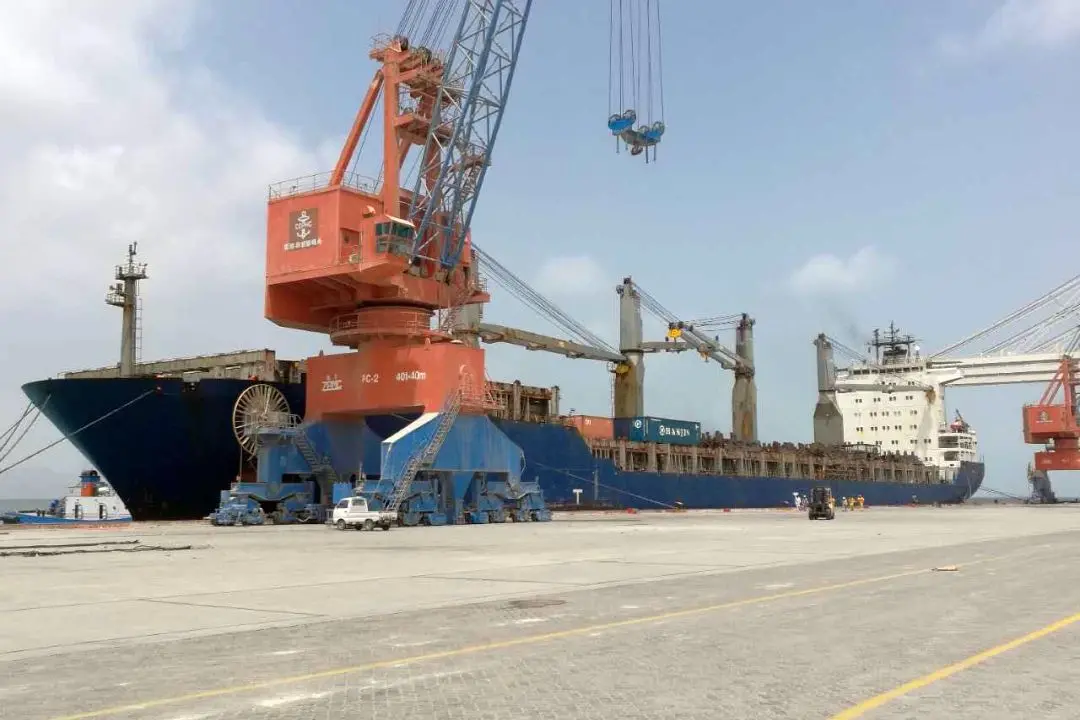
In regions like Balochistan, home to Gwadar Port -- a key element of the China-Pakistan Economic Corridor (CPEC) -- residents continue to face unemployment, inadequate infrastructure, and resource exploitation. The promises of prosperity tied to naval and economic projects remain unfulfilled, fueling unrest and disillusionment.
China's shadow over Pakistan's naval ambitions
China’s involvement in Pakistan’s naval expansion is driven by its strategic interest in Gwadar Port, which provides Beijing with direct access to the Arabian Sea. For Pakistan, this partnership has become a double-edged sword. While it enables naval modernisation, it deepens Islamabad’s dependency on Beijing, eroding its sovereignty.
Moreover, disputes over Gwadar’s control have strained relations between the two nations. Reports of Pakistan demanding second-strike nuclear capability in exchange for greater Chinese control have led to delays in critical CPEC projects, exposing the fragility of this alliance.
Hurting Its Own People
Pakistan’s decision to prioritise naval expansion over welfare programmes highlights the disconnect between its leadership and the needs of its citizens. While Pakistan’s defence budget continues to rise, the health and education sectors remain underfunded. This imbalance is particularly glaring in rural areas, where access to basic amenities is limited.
The military’s economic empire, through entities like the Fauji Foundation, monopolises key industries, leaving the civilian economy in disarray. Ordinary Pakistanis bear the brunt of heavy taxation imposed by IMF-mandated reforms, while the military enjoys financial immunity.
The neglect of regions like Balochistan and Sindh, coupled with the exploitation of local resources for military projects, has intensified public discontent. The symbolism of Gwadar -- a gateway to China but a closed door for local prosperity -- captures the essence of Islamabad’s flawed priorities.
Advantage India
The Indian Navy’s approach provides a sharp contrast. Rather than building alliances through dependency, India fosters partnerships based on mutual respect and shared growth. Naval exercises like Malabar and collaborations with Quad members enhance India’s strategic positioning without compromising its sovereignty or burdening its citizens.
Domestically, India’s naval modernisation is integrated into a broader framework of economic and industrial development. Initiatives like Aatmanirbhar Bharat have spurred domestic shipbuilding, generating employment and reducing reliance on foreign suppliers. This model ensures that the benefits of naval expansion extend beyond the military sphere, contributing to national growth.
Lessons for Pakistan
Pakistan’s naval ambitions, driven by external dependencies and internal inefficiencies, serve as a cautionary tale for nations prioritising military spending over people’s welfare. Islamabad’s focus on countering India in the IOR has led it to neglect its own population, deepening economic woes and social unrest.
For Pakistan to truly secure its maritime interests, it must adopt a balanced approach that addresses domestic needs alongside strategic imperatives. Until then, its naval dreams will remain an expensive exercise in vanity, with the cost borne by its struggling citizens.
The contrasting trajectories of the Indian and Pakistani navies reflect broader differences in governance and vision. While India positions itself as a stabilising force in the IOR, Pakistan’s militarisation at the expense of its people highlights the pitfalls of shortsighted strategy.
As Pakistan sinks deeper into economic and social turmoil, its naval expansion risks becoming a hollow symbol of power—unsustainable, unwise, and ultimately unfair to its own people. The Indian Navy’s people-centric model, rooted in regional cooperation and national growth, offers a compelling alternative, showcasing the true purpose of maritime power in the modern era.
The author of this article is a defence, aerospace & political analyst based in Bengaluru.