Explainer: How F-35 fighter jets for India impact air power, geopolitics, and defence strategy
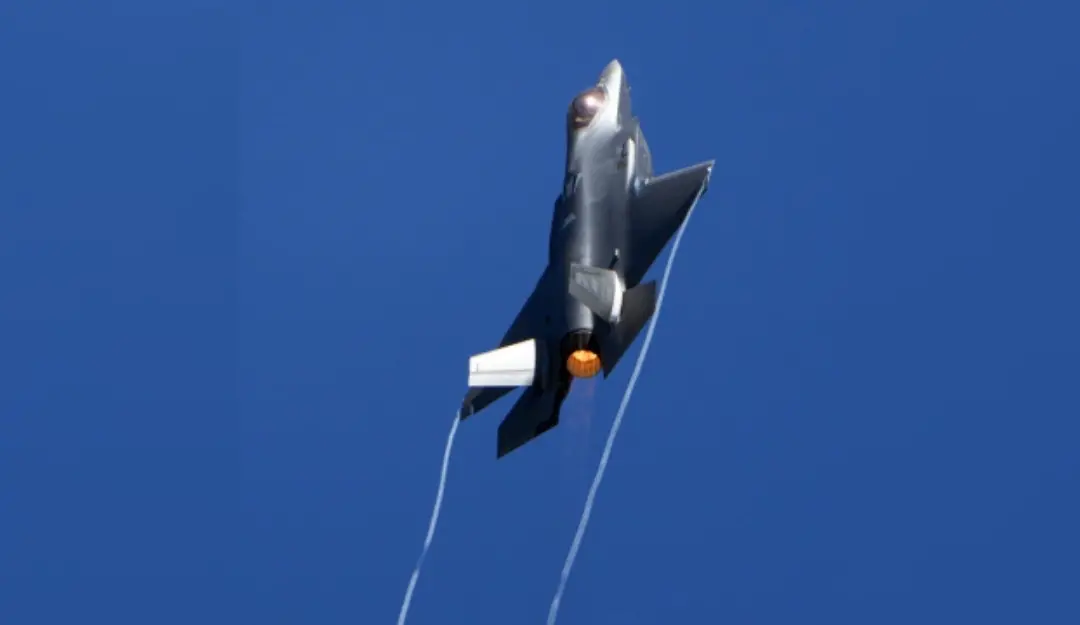
United States President Donald Trump has announced plans to sell F-35 Lightning II stealth fighter aircraft to India, marking a significant step in military cooperation between the two nations. Interestingly, these advanced jets are also participating in the Aero India 2025 airshow in Bengaluru.
"This year, we are set to boost military sales to India by several billion dollars," Trump stated. "We are also taking steps to eventually supply India with F-35 stealth fighter jets."
In addition to defense deals, Trump revealed that India has agreed to purchase more oil and gas from the US. This move aims to reduce the trade imbalance between the two countries. A trade imbalance occurs when one country imports more from another than it exports, creating a trade surplus for one side and a deficit for the other.
The United States views India as a key strategic partner in countering China's growing influence in the Indo-Pacific region. Both nations, along with Japan and Australia, form the Quad security alliance, working together to enhance regional stability.
India shares a tense 3,488-kilometer (2,167-mile) border with China, and tensions escalated in 2020 when a violent clash resulted in the deaths of over 20 Indian soldiers in Ladakh's Galwan Valley. Given these security concerns, India's defence acquisitions have been a major priority. While India has been purchasing weapons from the US for years, Russia has traditionally been its primary defence supplier.
If India acquires the F-35, it would mark a significant milestone for New Delhi, as only a few countries—including Israel, Japan, and NATO allies—are currently authorized to purchase these cutting-edge fighter jets.
The F-35 fighter jet is currently used by the armed forces of several countries, including Australia, Belgium, Canada, Denmark, Finland, Germany, Israel, Italy, Japan, the Netherlands, Norway, Poland, South Korea, Singapore, Switzerland, the United Kingdom, and the United States.
However, India's Foreign Secretary Vikram Misri clarified that discussions about acquiring the F-35 remain at a preliminary stage, with no formal procurement process initiated yet.
The White House has not responded to requests for comments on Trump's statement regarding the potential sale.
In the US, foreign military sales, especially for high-tech platforms like the F-35, are conducted through government-to-government agreements. The US Department of Defense oversees these transactions to ensure they align with American foreign policy and security interests.
The offer of F-35 jets comes at a time when Russia has shown interest in supplying India with Su-57 stealth fighters and supporting India’s efforts to develop its own AMCA fighter jet program.
India's F-35 Deal: Challenges and Impact
If India acquires the F-35, it would be a major technological boost for the Indian Air Force (IAF), strengthening its air combat and surveillance abilities. Currently, the IAF operates a mix of Russian, French, and Indian-made fighter jets, including the Su-30MKI from Russia, Rafale and Mirage 2000 from France, and the indigenous Tejas.
While these jets are highly capable, they lack the stealth technology and advanced sensor systems that set the F-35 apart.
However, this possible deal brings up some important questions. One major concern is how India would fit the F-35 into its air force, which mainly operates Russian-made jets. The Indian Air Force (IAF) has infrastructure designed for Sukhoi and MiG fighters, so adding the F-35 would require major changes in logistics, maintenance, and support systems.
India's ongoing purchase of Rafale jets from France and its efforts to develop its own fighter jets, like the AMCA (Advanced Medium Combat Aircraft), make this decision even more complex. Bringing in the F-35 would mean major changes to India's air combat strategy. The big question is whether New Delhi is ready to adapt to a completely new aircraft system.
Cost is another major factor. The F-35 is among the most expensive fighter jets ever built, with each jet costing between $80 million and over $100 million, depending on the model and extra features.
The overall cost of owning an F-35 goes beyond just buying the jet. Expenses for maintenance, pilot training, and spare parts can be extremely high. With India needing to upgrade its navy and army as well, and working within a limited defense budget, the big question is whether investing in an F-35 fleet would be financially practical.
This deal also has major geopolitical effects. India has always maintained strategic independence, carefully balancing its relationships with the US, Russia, and other key nations. For decades, Russia has been India's main weapons supplier, and buying the F-35 could create tensions between New Delhi and Moscow.
Russia is already providing India with the S-400 air defense system, which has previously caused concerns in Washington. The US even warned of possible sanctions under the CAATSA (Countering America’s Adversaries Through Sanctions Act) because of this deal.
If India decides to buy the F-35, it might have to rethink its dependence on Russian weapons. This is because the US could impose sanctions, or India could face difficulties in making American and Russian defence systems work together smoothly.
Both China and Pakistan will closely monitor this development. China has been rapidly upgrading its air force with the J-20 stealth fighter, and if India acquires the F-35, Beijing may see it as a direct challenge to its air superiority in the region.
Pakistan, India's long-time rival, depends on a mix of Chinese and American jets, including the F-16. If India gets the F-35, Pakistan might respond by strengthening its military partnership with China or acquiring more advanced Chinese J-31 stealth fighters to maintain balance.
The US offering to sell F-35 stealth jets to India might not just be about boosting the Indian Air Force. It could also be a strategic move to reduce India's long-standing defense relationship with Russia.
Lockheed Martin's F-35: A Complete Overview
The F-35 Lightning II, made by Lockheed Martin, is a single-seat, single-engine fighter jet from the United States. It is a supersonic stealth aircraft designed for multiple roles, including air combat and ground attacks. In addition to its fighting capabilities, it can also perform electronic warfare and gather intelligence through surveillance and reconnaissance (spying on enemy activities to collect important information).
The F-35 has three main versions, each designed for specific missions:
* F-35A (Conventional Take-Off and Landing - CTOL): This model operates like a regular fighter jet, requiring a standard runway for take-off and landing.
* F-35B (Short Take-Off and Vertical Landing - STOVL): This version can lift off from short runways and land vertically, making it ideal for aircraft carriers and small airstrips.
* F-35C (Carrier Variant / Catapult-Assisted Take-Off But Arrested Recovery - CV/CATOBAR): Built for aircraft carriers, it has a stronger landing gear and bigger wings to help with take-offs using a catapult system and landings assisted by arrestor cables.
As of July 2024, the cost of an F-35 varies depending on the model. The F-35A, the standard version, costs around $82.5 million (₹688 crore) per jet. The F-35B, which can take off and land vertically, is priced at $109 million (₹910 crore). The F-35C, designed for aircraft carriers, costs about $102.1 million (₹853 crore). These prices cover just the aircraft itself and do not include additional costs like maintenance, training, and support systems.
F-35 Lightning II: Key Features
Role: Multi-role fighter jet
Manufacturer: Lockheed Martin
Engine: One Pratt & Whitney F135-PW-100 turbofan
Thrust: 43,000 pounds
Wingspan: 35 feet (10.7 meters)
Length: 51 feet (15.7 meters)
Height: 14 feet (4.38 meters)
Maximum Takeoff Weight: Around 70,000 pounds
Fuel Capacity: 18,498 pounds (internal)
Payload Capacity: 18,000 pounds (8,160 kg) of weapons
Top Speed: Mach 1.6 (~1,200 mph or 1,930 km/h)
Range: Over 1,350 miles (2,170 km) on internal fuel; unlimited with aerial refueling
Maximum Altitude: Above 50,000 feet (15 km)
Weapons: Can carry weapons internally and externally, depending on mission needs
Crew: Single pilot
The author of this article is a defence, aerospace & political analyst based in Bengaluru.