Explainer: Why India's new VSHORADS missiles are game-changer
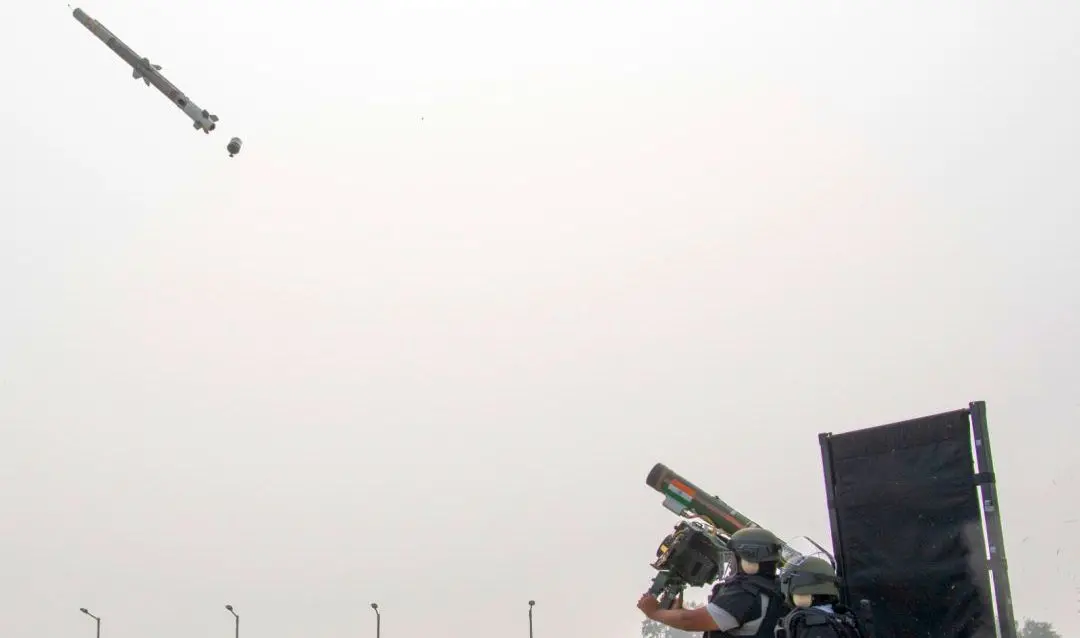
The defence ministry announced that on Saturday, 1st February, three test flights of a short-range air defence missile system were successfully conducted from Chandipur, off the coast of Odisha. The tests were done against fast-moving targets flying at a very low height.
Defence Minister Rajnath Singh praised the Defence Research and Development Organisation (DRDO) and the armed forces for successfully testing the VSHORADS (Very Short-Range Air Defence System) missiles.
The ministry explained that in all three tests, the missiles successfully hit and destroyed the targets. These targets were designed to imitate low-flying drones and had a "reduced thermal signature," meaning they gave off very little heat, making them harder to detect. Despite this challenge, the missiles performed well under different flight conditions and hit their marks.
The tests were conducted in the final setup used for actual deployment. In this setup, two operators managed everything, including preparing the weapon, identifying the target, and launching the missile, the ministry said in a statement.
The VSHORADS is a portable air defence system that can be carried and operated by soldiers (man portable). It has been completely designed and developed in India by the Research Centre Imarat (RCI) with the support of other DRDO labs and Indian industry partners.
According to the ministry, data collected during the tests using various instruments such as telemetry, electro-optical tracking systems, and radar confirmed the VSHORADS missile system's ability to effectively destroy drones and other types of aerial threats.
Telemetry refers to technology that collects and sends information, like speed and position, from the missile during its flight. An electro-optical tracking system is a tool that uses cameras and sensors to visually track the missile and its target. These systems helped confirm the missile's performance.
The missile system is designed to meet the requirements of all three branches of India’s armed forces—the Army, Navy, and Air Force. It can be used effectively by each of them to strengthen their defence capabilities. The VSHORADS missile system is planned to replace the older Russian Igla systems currently used by the Indian Army. While the Igla systems are still functional, they have become outdated due to the fast development of modern aerial threats.
The new VSHORADS system is a major improvement, with advanced targeting and interception features. It ensures that the Indian armed forces are prepared to handle modern and changing threats effectively.
VSHORADS: Compact design and maximum impact
The Very Short Range Air Defence System (VSHORADS) is a fourth-generation,Surface-air-missile , portable air-defense system (MANPADS) developed to tackle low-altitude aerial threats over short distances. It is specifically designed for anti-aircraft warfare and can effectively neutralize drones, helicopters, and other low-flying targets. This advanced system equips the armed forces with cutting-edge technology to address modern threats.
The missile weighs 20.5 kg (45 lbs) and measures 2 meters in length (6 ft 7 in). It has a diameter of 90 mm (3.5 inches) and a wingspan of 32 cm (13 inches). The warhead, weighing 2 kg (4.4 lbs), uses an adaptive proximity fuze.
A proximity fuze is a smart detonation mechanism that allows the missile to explode near its target rather than requiring a direct hit. This increases the chances of successfully destroying fast-moving or small targets by creating a blast radius around them.
The VSHORADS has an operational range of 250 meters to 6 kilometers (820 ft to 20,000 ft) and can travel at a maximum speed of Mach 1.5 (about 1,850 km/h). It is designed to be launched from the shoulder or mounted on a tripod, making it both portable and versatile for use in various combat scenarios. With its advanced features, it sets a new standard for modern air defense in India.
The author of this article is a Defence, Aerospace & Political Analyst based in Bengaluru.