Word of the Day, August 12: ‘Umami’
Word of the Day: UMAMI
Pronunciation: UK /uːˈmɑː.mi/ US /uːˈmɑː.mi/
Meaning
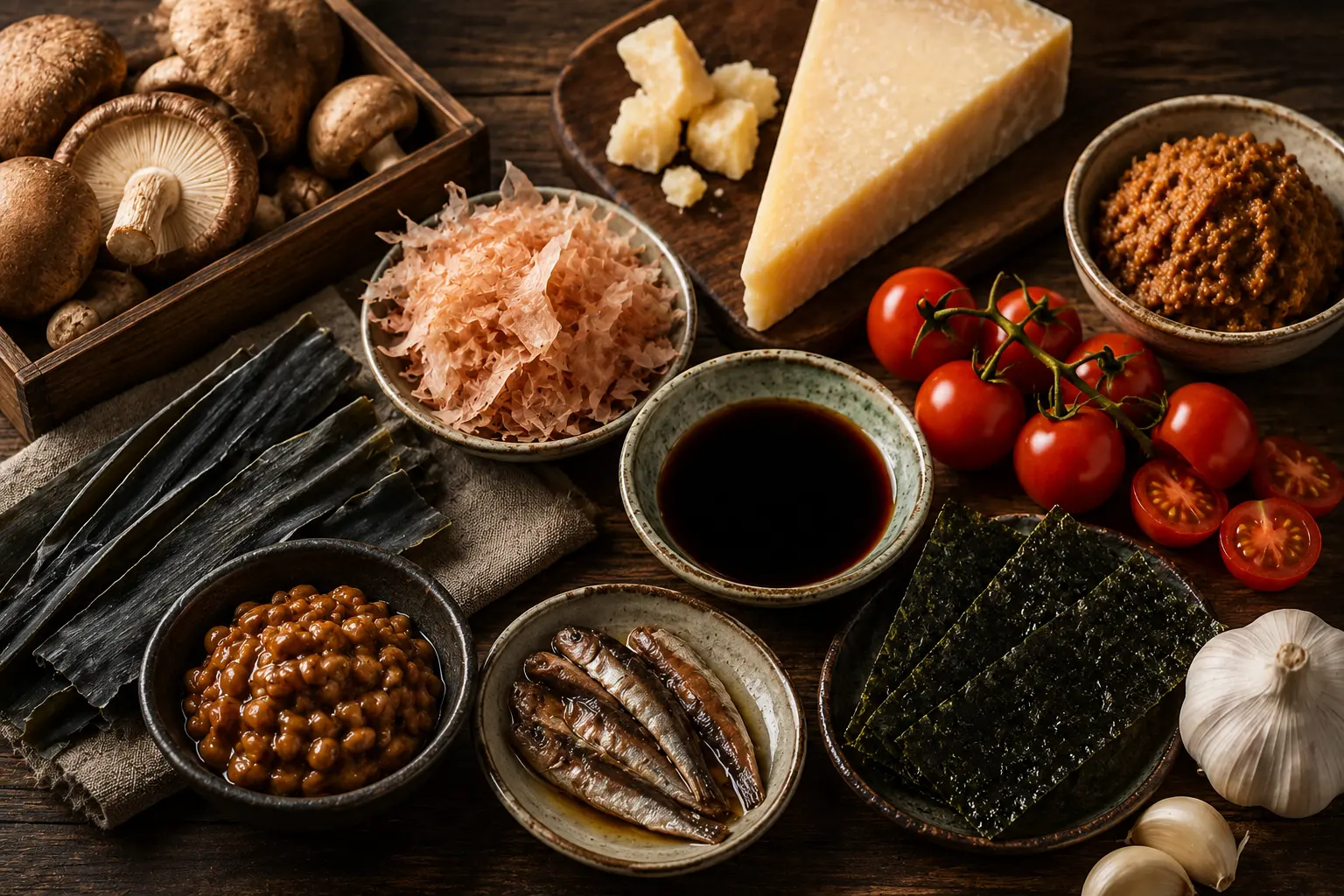
'Umami' refers to one of the five basic tastes, alongside sweet, sour, salty and bitter. It describes a savoury, rich and mouth-filling taste commonly found in foods such as mushrooms, tomatoes, aged cheese, soy sauce, meat, fish and fermented foods.
The word is often used to describe a deep, satisfying savoury quality that is difficult to capture with the other four basic taste categories.
Examples for daily usage
- The mushrooms and parmesan gave the pasta a rich umami flavour.
- Soy sauce adds plenty of umami to the stir-fry.
Origin and history
The word "umami" comes from Japanese and is generally translated as "savoury" or "pleasant savoury taste." It is derived from the Japanese word ‘umai’, meaning "delicious" or "tasty."
Although people had long recognised the distinctive taste of savoury foods, umami was formally identified as a separate basic taste in the early 20th century by Japanese chemist Kikunae Ikeda.
In 1908, while studying the flavour of dashi, a Japanese soup stock traditionally made with ingredients such as kombu seaweed, Ikeda concluded that its distinctive taste was different from sweet, sour, salty and bitter. He identified glutamate as a key substance responsible for this taste and called it umami.
Ikeda later developed a method for producing monosodium glutamate (MSG), a seasoning that provides an umami taste.
Also Read: Word of the Day: 'Smashburger’
Cultural significance and modern usage
Umami is particularly important in Japanese cuisine, where ingredients such as kombu, bonito flakes, miso, soy sauce and shiitake mushrooms are commonly used to create depth of flavour.
The concept has since become widely recognised around the world. Chefs use umami-rich ingredients in cuisines ranging from Italian and French to Indian and Korean cooking.
Today, the word "umami" is used not only by chefs and food writers but also in everyday food conversations. When someone describes a dish as having "depth" or a lingering savoury richness, they may be talking about umami.
Interesting facts
The taste is strongly associated with glutamate, an amino acid that occurs naturally in many foods. Foods can become richer in umami through processes such as fermentation, ageing, drying and cooking.
Parmesan cheese, tomatoes, mushrooms, seaweed and soy sauce are naturally rich in compounds associated with umami.
Although the term was coined in Japan, the taste itself is not exclusive to Japanese food. Umami-rich ingredients appear in cuisines around the world.
Examples from food and popular culture
- Umami by Jacob Grant – In this 2024 children's picture book, a penguin named Umami grows tired of eating the same food and travels around trying new flavours. The story eventually brings her back to her namesake, the savoury fifth taste.
- Umami by Laia Jufresa – The word is central to the 2015 novel. The story is set around five houses in Mexico City, each named after one of the five basic tastes: sweet, salty, bitter, sour and umami. The novel uses the idea of taste as a framework for exploring grief, memory, family and human relationships.
- Umami directed by Slony Sow – The 2022 French-Japanese film starring Gérard Depardieu follows a French chef who travels to Japan after being defeated by a Japanese chef years earlier.
Synonyms
Umami does not have exact synonyms because it refers to a specific taste, but related descriptions include:
- Savoury
- Rich
- Deep
Read more Word of The Day here