Gandhi Jayanti: 5 books by Mahatma Gandhi that offer a closer look at his life and ideas
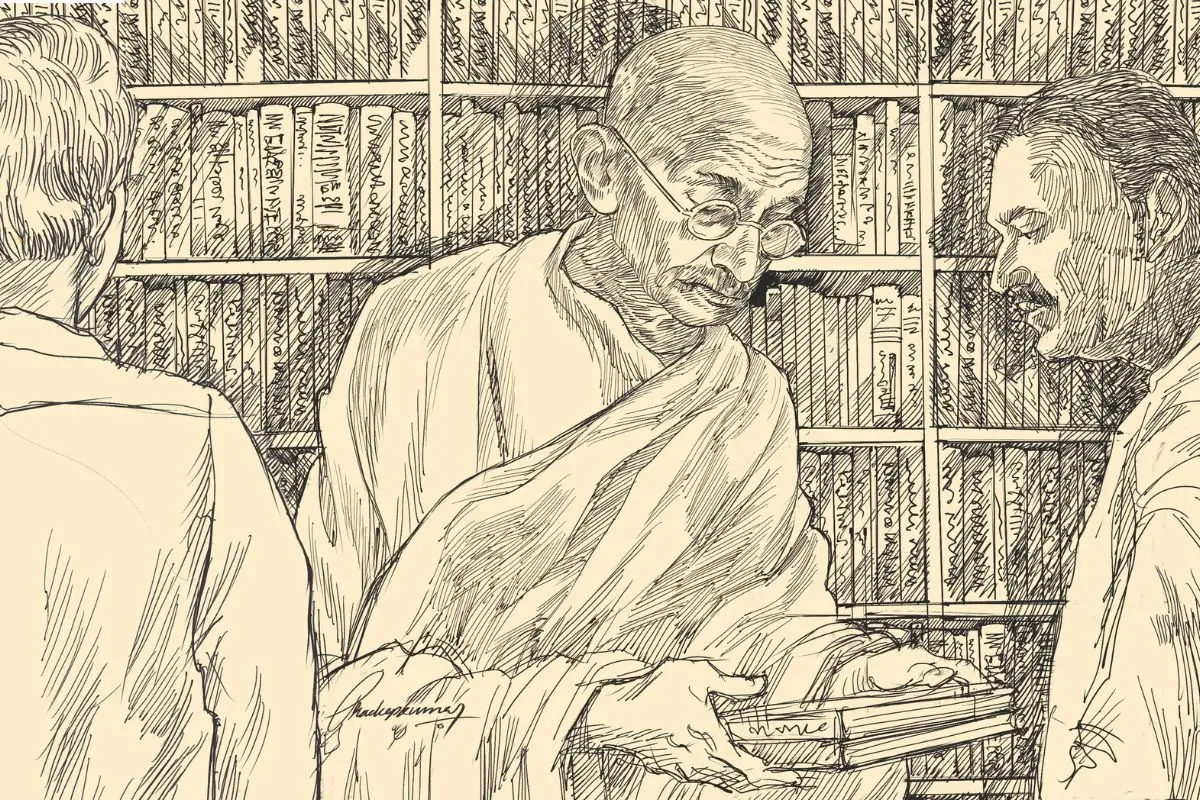
Mahatma Gandhi is remembered primarily as the leader of India’s freedom movement, but his legacy extends far beyond the political history of the country. He was also a prolific writer whose works explored everything from truth and self-discipline to social reform, health and the meaning of independence.
Gandhi used writing as a way to examine his own beliefs and question the society around him. His books offer an insight into the ideas that shaped his understanding of freedom — not simply as liberation from colonial rule, but as a way of life rooted in responsibility, equality and self-reliance.
This Gandhi Jayanti, here are five books that offer a closer look at Gandhi beyond the familiar historical narrative.
1. The Story of My Experiments with Truth
If you want to understand Gandhi the person rather than simply Gandhi the political leader, The Story of My Experiments with Truth is a natural place to begin.
First published in instalments between 1925 and 1929, the autobiography follows Gandhi from his childhood in Porbandar through his years in England and South Africa, tracing the experiences that influenced his philosophy.
What sets the book apart is its unusually candid tone. Gandhi writes about his failures, doubts, relationships, religious beliefs, experiments with food and efforts at self-discipline, while repeatedly returning to his pursuit of truth.
Rather than presenting himself as a flawless historical figure, Gandhi uses the autobiography to examine his own choices and shortcomings. The result is a deeply personal account of a man who viewed self-examination as part of his lifelong search for truth.
2. Hind Swaraj or Indian Home Rule
Written in 1909, Hind Swaraj or Indian Home Rule captures Gandhi’s ideas about what independence should mean for India.
Presented as a conversation between an editor and a reader, the book goes beyond the question of ending British rule. Gandhi questions Western civilisation, industrialisation and the growing emphasis on material progress, while putting forward his own understanding of swaraj.
For Gandhi, self-rule was not simply about replacing foreign rulers with Indian ones. It also involved individual responsibility, self-restraint and the ability to govern one’s own actions.
The book provides an early and important insight into Gandhi’s political and social thinking — including ideas that would later become central to his vision of an independent India.
3. Satyagraha in South Africa
Long before he became the face of India’s freedom struggle, Gandhi was developing the ideas that would eventually define his approach to resistance.
Satyagraha in South Africa documents his experiences in the country between 1893 and 1914, including the discrimination faced by the Indian community and the campaigns organised against discriminatory laws.
Gandhi recounts how collective action, civil resistance and non-violence evolved through these struggles. The book offers an account of satyagraha not simply as a political slogan, but as a method that demanded discipline, sacrifice and conviction from those who practised it.
For readers interested in how Gandhi’s philosophy of non-violent resistance took shape, the book provides an important account of its early development.
4. Constructive Programme: Its Meaning and Place
What happens after a country wins its freedom?
For Gandhi, political independence was only one part of the transformation India needed. In Constructive Programme: Its Meaning and Place, he turns his attention to the social and economic work he believed was essential to building an independent nation.
The book discusses issues including communal harmony, the eradication of untouchability, women’s empowerment, khadi, village industries and basic education.
Instead of focusing on protests, negotiations and political leadership, Gandhi places ordinary citizens at the centre of nation-building. His argument is that independence must also involve changing the social conditions within communities.
The work therefore offers a different perspective on the freedom struggle- one centred on the everyday effort required to create the society Gandhi envisioned.
5. Key to Health
Gandhi’s writings were not limited to politics, society and the freedom struggle. Key to Health offers a glimpse into his personal ideas about health and simple living.
Written during his imprisonment at Aga Khan Palace between 1942 and 1944, the book brings together his thoughts on diet, exercise, hygiene, fresh air and self-discipline.
Gandhi viewed health as closely connected to everyday habits and believed in moderation, simplicity and self-reliance. The book reflects the same emphasis on personal discipline that runs through much of his other writing.
Some of Gandhi’s health-related views reflect the medical knowledge of his time and should therefore be read in the context of modern scientific understanding. Even so, the book remains an interesting window into his personal routines, experiments and beliefs about well-being.
Beyond the familiar Gandhi
Gandhi’s image is deeply embedded in India’s history - from the freedom movement to the familiar stories of his campaigns and principles. His books, however, offer something more personal: a chance to encounter the questions he asked of himself, the society around him and the idea of freedom itself.