Aero India 2025: The story of Russian Su-57 stealth fighter jet
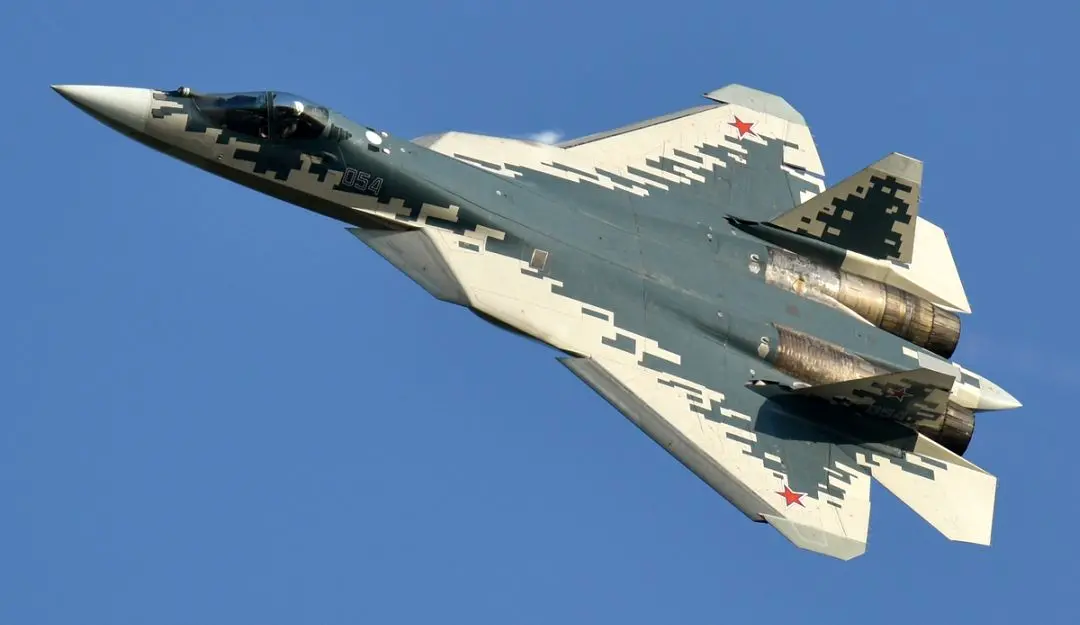
Aero India 2025 is set to be a landmark event in the aerospace and defence industry, drawing attention from global players. One of the major highlights will be Russia’s announcement to showcase its advanced Sukhoi Su-57 fighter jet -- a fifth-generation stealth aircraft -- at the air show in Bengaluru. Renowned for its radar-evading capabilities, exceptional agility and advanced technology, the Su-57 promises to steal the spotlight as an example of cutting-edge aviation engineering.
The decision to bring the Su-57 to Aero India has sparked significant excitement among Indian defence enthusiasts and also captured the interest of American defence companies, such as Lockheed Martin and Boeing. Their officials are expected to attend, offering them a rare chance to observe the Su-57 up close. This opportunity is, particularly, noteworthy as the aircraft is rarely displayed outside Russian territory, making its appearance at the event even more intriguing. It will also allow for comparisons with Western fighter jets, such as the F-35.
Meanwhile, Lockheed Martin, which is in India to promote its F-21 fighter -- a customized version of the F-16 tailored to Indian requirements -- has not confirmed whether it will bring the F-35A Lightning II to this year’s air show, unlike in the previous editions. Despite this uncertainty, the Su-57’s presence has already generated significant buzz and is expected to draw attention for its stealth design, weapon integration, operational capabilities and overall performance.
For American officials from Lockheed Martin and Boeing, this event may be their first opportunity to examine the Su-57 in such detail. This close observation could provide valuable insights into Russian military advancements and influence their strategic planning and future development efforts.
Russia’s decision to feature the Su-57 is also seen as a strategic move to strengthen its defence ties with India -- a long-standing partner. Additionally, the display acts as a subtle form of diplomacy, showcasing Russian technological prowess to potential buyers and international partners, including observers from the US.
With the F-21 taking center stage alongside the Su-57, Aero India 2025 is shaping up to be an exciting platform for showcasing advanced fighter jets. While the absence of the F-35A may be noted, the spotlight will, possibly, remain on the Su-57’s advanced features, offering defence analysts and engineers from around the world a unique opportunity to study, and compare, some of the most sophisticated aviation technologies in the world.
The Sukhoi story
The United States and its North Atlantic Treaty Organisation allies have the Lockheed Martin F-35, a fifth-generation stealth multirole fighter for all-weather combat. Russia’s counterpart to that is the Sukhoi Su-57, known by its NATO reporting name, ‘Felon’.
Back in 1979 -- many years before the collapse of the Soviet Union -- the Kremlin recognized the need for a fifth-generation fighter jet with stealth features that could handle multiple roles, including ground attacks. By 1983, both the Mikoyan and the Sukhoi started working on separate designs to meet these requirements.
After the Berlin Wall fell in November 1989, Soviet leader Mikhail Gorbachev introduced reforms called perestroika -- a policy for restructuring the economy and government, which refers to bringing about the restructuring of the political economy of the Soviet Union in an attempt to end the Era of Stagnation -- to address years of drying up of the economy and bring about change.
Glasnost, too, was introduced to increase openness and transparency in government institutions and activities in the erstwhile Soviet Union. It reflected a commitment of the Gorbachev administration to allow Soviet citizens to discuss publicly the problems of their system and potential solutions.
In August 1991 -- during a time of political unrest -- Russia, Ukraine and Belarus announced the dissolution of the Soviet Union.
Financial constraints delayed project
Due to serious financial problems, Russia decided to cancel Mikoyan’s project and focus on Sukhoi’s plan to develop a new aircraft. This aircraft was designed to replace the older Su-27 and MiG-29 fighter jets in the Russian fleet.
Sukhoi designed the aircraft using the impressive Su-27 as a base, but included advanced upgrades. This approach helped lower development costs and reduce the risks involved in building a completely new aircraft. The aircraft was first known as the T-50 before being renamed the Su-57. It faced many delays but eventually had its first flight on January 29, 2010.
Ten prototype aircraft were built for testing, but structural cracks were found in their frames during the process. This caused more delays for the project, and resulted in a redesign that used more composite materials -- and slightly increased the wingspan.
More problems, and accidents, during testing delayed the Su-57’s introduction, moving it from the planned 2015 to 2020.
And high costs of building the Su-57
Another challenge for the aircraft was its higher cost compared to the Su-35S and Su-30SM, which led the Russian government to delay its production.
* Su-35S: The Su-35S is a 4.5-generation multirole fighter jet designed for air superiority and ground attack missions. It features advanced avionics, powerful engines and enhanced manoeuvrability
* Su-30SM: The Su-30SM is a 4+ generation twin-seat fighter aircraft used for air defence, ground attack and reconnaissance. It comes with modern radar systems and long-range capabilities, and supports advanced weapons
In 2019, things improved significantly when Russian President Vladimir Putin announced plans to buy 76 Su-57 jets and deliver them to the Russian Air Force by 2028. The Su-57 entered production and the first aircraft was delivered to the Russian Air Force in late-2019.
After Russia invaded Ukraine in February 2022, Western sanctions and the country’s inability to trade in US dollars disrupted the production of the Su-57. Russia is unable to get the semiconductors and advanced machinery required to build the Su-57 from the European Union. The exact number of Su-57s in the Russian Air Force is unknown. But reports from Simple Flying suggest that Russia is reluctant to use the jet in combat. The country is also concerned that the jet’s sensitive technology could fall into Western hands and that losing one in combat could hurt its chances of future export sales.
Key features/specifications of the Su-57
Crew: One
Length: 20.1 metres
Wingspan: 14.1 metres
Height: 4.6 metres
Wing Area: 78.8 sq. metres
Empty Weight: 18,000 kg
Gross Weight: 25,000 kg
Maximum Takeoff Weight: 35,000 kg
Fuel Capacity: 10,300 kg
Power Plant: 2×Saturn AL-41F1 after-burning turbofan engines
Maximum Speed: Mach 2.0 (approximately 2,470 kilometres per hour, depending upon altitude and atmospheric conditions
Range: 3,540 kilometres
Service Ceiling: 66,000 feet
The author of this article is an award-winning Science Writer and a Defence, Aerospace & Political Analyst based in Bengaluru.