Why engineering graduates struggle to find jobs: NIT Calicut director explains theory-practice gap
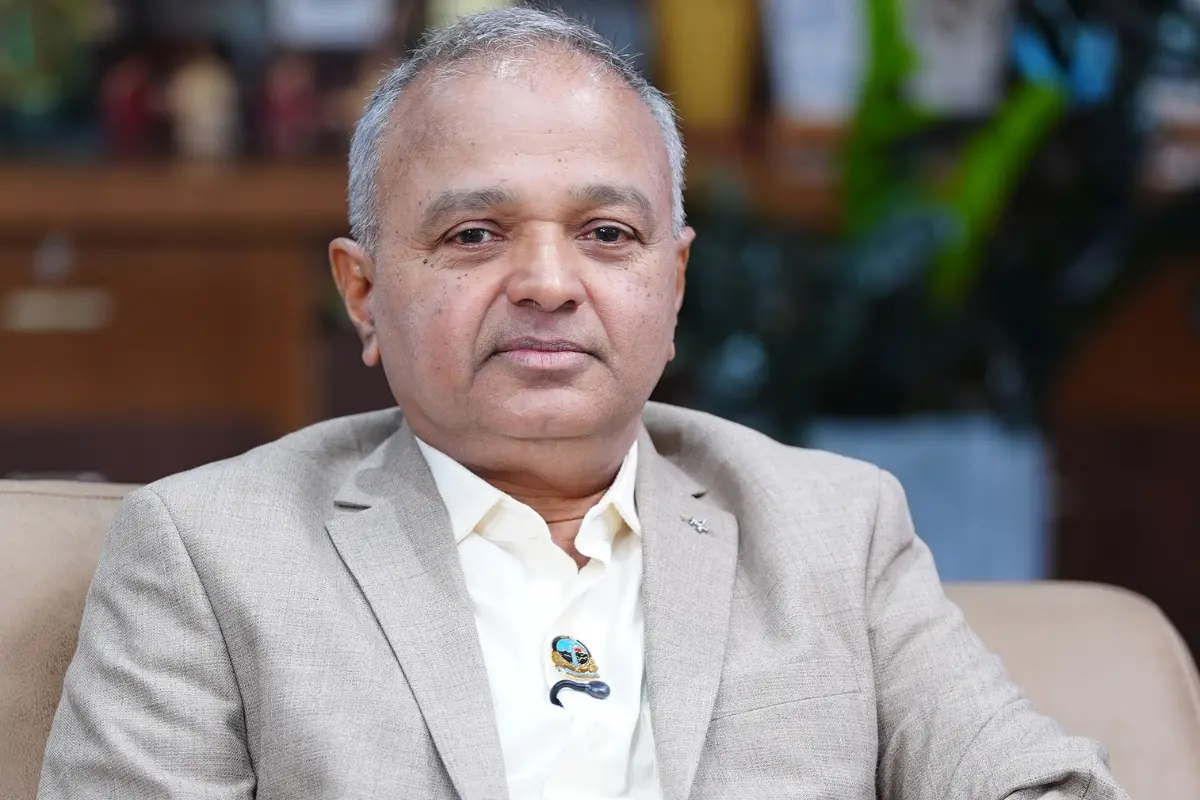
NIT Calicut Director Prof. Prasad Krishna speaks to Mathrubhumi about engineering education, placements and research.
What should students consider when choosing an engineering branch?
AI and machine learning are tools or techniques. For the country's progress, core branches such as computer science, civil, mechanical and electronics engineering are essential. Once students have a strong understanding of the fundamentals, they can learn everything else.
The objective of engineering education at institutions such as the Indian Institutes of Technology (IITs) and National Institutes of Technology (NITs) is to provide students with a foundational degree. Students should give importance to the faculty, learning environment and overall quality of the institution.
At national-level institutions, the reputation of the institution should take precedence over the choice of branch. Even branches that students may consider to have limited opportunities gain greater acceptance when pursued at these institutions.
Moreover, students who study core engineering branches can move to newer disciplines at the master's level. They can also pursue combinations such as a major degree in mechanical engineering and a minor in AI and machine learning.
IIT Ropar has decided to award PhDs based on products rather than theses. What is the significance of this decision?
It is a very practical decision. This was one of the decisions taken at the last NIT Council meeting.
Countries such as Germany, Japan and China award PhDs based on products rather than theses. Their primary consideration is whether a candidate can solve a problem relevant to their country. This can be in any field.
The government provides funding for such research. A PhD programme begins only after approval from a panel comprising experts from both industry and academia.
Furthermore, other companies take up the technology transfer after the PhD is completed. Candidates can also choose to launch startups and create employment opportunities for others.
A similar approach is followed at the master's level as well. This model can help address the situation in which PhD graduates remain unemployed. In Germany and Japan, companies recruit candidates who have completed their PhDs through such programmes. This practice is still limited in India. Industries must actively recruit PhD holders.
IITs and NITs, which traditionally focused on technology and science disciplines, have also introduced humanities and teacher education programmes. How do you view this development?
Addressing a problem in society requires a multidisciplinary approach. For instance, a project team cannot consist only of mechanical engineering students. It also needs students from computer science, electronics and other disciplines. This applies to every field.
NIT Calicut has more than 24 multidisciplinary centres. It was the first NIT to introduce teacher education. We will also be launching a bachelor's programme in liberal arts.
There is a perception in society that students opt for a BA only when they cannot get admission to any other course. That is wrong. We need all disciplines.
While some say there are not enough jobs, companies complain that they cannot find candidates with the right skills. What is the reason for this mismatch?
Too much importance is given to theory here. Theory and laboratory work must go hand in hand. This helps students understand not only the concepts but also how to apply them in practice.
In Germany, companies provide their prototypes to technical universities. The universities work on improving them and developing new innovations. The academia-industry relationship there is very strong.
Students must also stay informed about developments around the world. Internships alone are not enough. They need to study each subject, gain practical training and attend lectures by experts from their respective fields.
Industry experts are part of the curriculum committee at NIT Calicut. They suggest what new topics and developments should be incorporated into the syllabus. This helps students stay informed about global developments while pursuing their studies.
The relationship between academia and industry must be strengthened.