Bhargavastra: India’s answer to rogue drone swarms
Imagine dozens of enemy drones approaching an Indian military installation together. Some carry explosives, others collect secret information, while a few can identify and attack targets without human instructions. Using expensive conventional missiles to destroy every inexpensive drone could quickly drain military resources and defence budgets. India has now developed a homegrown answer to this growing battlefield challenge.
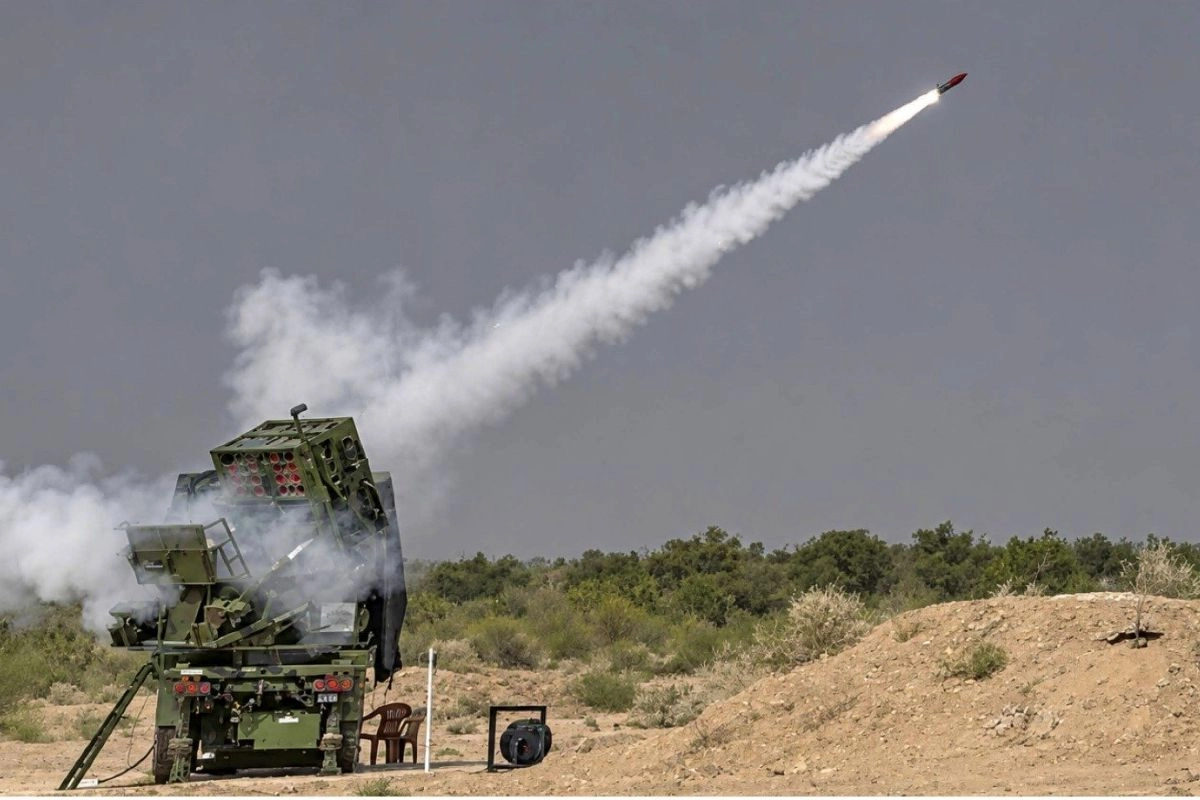
Bhargavastra, India's first indigenously designed and developed two-layer, vehicle-mounted counter-swarm drone system, has successfully completed its development trials at the Pokaran field firing ranges in Rajasthan. Conducted between November 20 and 24, 2026, these trials mark an important milestone in strengthening India's air defence capabilities.
Developed by Solar Defence and Aerospace Limited, an Indian private-sector defence manufacturer, Bhargavastra takes its name from a mythological weapon associated with Lord Parashurama, also known as Bhargava because of his lineage from the revered sage Bhrigu. Parashurama symbolises courage, extraordinary warrior skills and the protection of righteousness. The name aptly reflects the system's defensive purpose.
Many existing anti-drone systems rely on electronic jamming, which interrupts communication between drones and their operators or disrupts their navigation systems. However, modern autonomous drones can continue attacking without receiving external instructions.
Bhargavastra addresses this problem through a hard-kill mechanism, meaning it physically destroys enemy drones rather than merely interfering with their electronic systems.
It can engage individual drones, coordinated groups of drones, drones carrying weapons and loitering munitions. Loitering munitions are flying weapons that remain airborne while searching for targets before attacking them.
Bhargavastra combines two different types of indigenously developed weapons to provide two layers of protection.
The first layer uses unguided micro-rockets. Unlike guided missiles, these rockets cannot change direction independently after launch. Designed primarily to counter drone swarms, they have a reported range of 2.5 kilometres and a lethal radius of approximately 20 metres, meaning an explosion can destroy or damage drones within about 20 metres.
The second layer uses precision-guided micro-missiles capable of engaging targets up to 2.5 kilometres away. These missiles can steer themselves towards individual targets, making them suitable for intercepting drones that frequently change direction or carry particularly dangerous weapons.
Published descriptions indicate a launch capacity of 64 or more miniature weapons. Earlier trials demonstrated the firing of two rockets within two seconds, highlighting the system's ability to respond rapidly when several threats appear together.
However, destroying drones first requires detecting them. Unlike large aircraft, small drones reflect very little radar energy. Their radar signature may resemble that of a small bird, making detection difficult. Engineers call this a low radar cross-section.
Bhargavastra's radar can reportedly detect small drones at distances ranging from six to ten kilometres, depending on their characteristics.
Specialised cameras and infrared equipment help identify drones through visible images and the heat they produce. Passive radio frequency sensors listen for electronic signals emitted by drones without transmitting signals themselves. This helps prevent the sensors from revealing their presence through their own radio transmissions.
Information from these devices reaches the Command and Control Centre, which functions like the brain of the entire system. It identifies and tracks flying objects, assesses threats, provides military personnel with continuously updated information and assigns targets to weapon launchers.
Bhargavastra is also designed to connect with the Indian Armed Forces' wider Command, Control, Communications, Computers and Intelligence (C4I) networks. Simply put, this allows different military systems to share information and work together.
Another major advantage is mobility. Mounted on vehicles, Bhargavastra can be relocated according to military requirements. It is designed to operate across deserts, plains and mountainous regions at elevations of up to 5,000 metres above mean sea level, making it particularly valuable across India's diverse border terrain.
The economic advantage is equally important. Imagine destroying an enemy drone costing a few lakh rupees with a conventional interceptor missile costing several crores. Repeated attacks could make such defensive operations financially unsustainable. Bhargavastra offers a potentially more economical alternative, although its actual interception costs have not been publicly established.
Recent conflicts have demonstrated how coordinated drone swarms can overwhelm conventional air defence networks. Dedicated counter-drone systems are therefore becoming increasingly important in modern warfare.
Bhargavastra also represents the growing contribution of India's private defence industry to Atmanirbhar Bharat, demonstrating that indigenous military innovation need not rely solely on public-sector manufacturers or foreign suppliers.
For Indian soldiers guarding remote borders and protecting vital military installations, such technological advances could provide an additional layer of security. Named after a weapon associated with Lord Parashurama, Bhargavastra brings together India's ancient warrior heritage and modern engineering, reflecting the nation's determination to protect its defenders through indigenous technology, innovation and self-reliance.