When a singer terrifies the orthodoxy
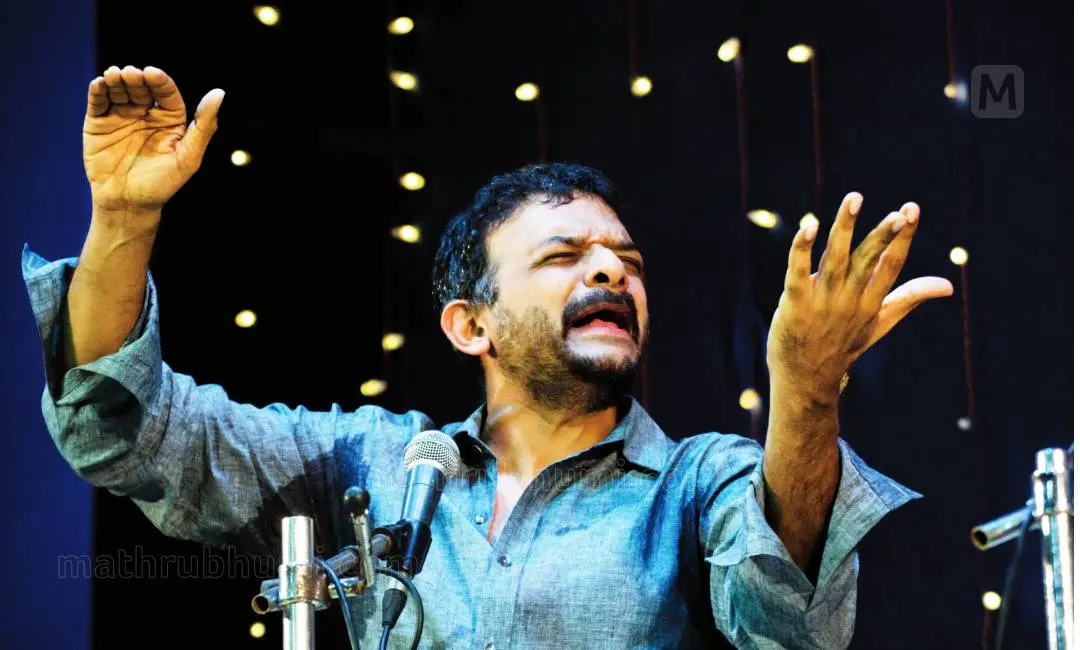
No contemporary artist has challenged India's social, political, and cultural orthodoxy as profoundly as the eminent musician, author, and activist T.M. Krishna. Perhaps only the brilliant writer-activist Arundhati Roy can match him in embodying the proud legacy of India's cultural leaders—those unafraid to confront authority with probing and inconvenient questions. In an age where careerism is often celebrated as a virtue, it takes extraordinary courage and conviction to prioritize ideals over personal gain, resist the allure of aligning with the powerful, and embrace the risks of being a vocal and constant critic of the establishment.
The recent civil suit filed against the Chennai-based 95-year-old Music Academy's decision in March this year to confer its “Sangita Kalanidhi MS Subbulakshmi” award along with the main Sangita Kalanidhi title to Krishna, has once again exposed the pervasive intolerance of the orthodoxy towards the Magsaysay winning Krishna's outspoken social, political, and cultural views.
Though the Madras High Court dismissed the arguments against awarding Krishna the title, it barred the mirror award being named after Subbulakshmi. The suit was filed by Bengaluru-based V. Shrinivasan, Subbulakshmi's grandson, who raised several allegations against Krishna. Although Justice G. Jayachandran rejected the allegations, he upheld the plaintiff's argument that naming the award after his grandmother would violate her expressed wishes in her will. According to Shrinivasan, Subbulakshmi had executed a will in 1997, which prohibited any trust, foundation, memorial, statue, or bust from being created in her name. The court cited this as the reason for rejecting the naming of the award after her. However, it clarified that none of the allegations against Krishna were sufficient to disqualify him from the prize, which remains the prerogative of the Academy.
The Sangita Kalanidhi title is considered the highest accolade in Carnatic music. The MS Subbulakshmi prize was instituted as a mirror award by The Hindu Newspaper Group (THG) in 2005, a year after her death. The THG's chairman, N. Murali, is also the present president of the Academy. The award is presented at the Academy’s annual music conference in December. However, Shrinivasan approached the court only after Krishna was selected for the prize, despite the award having been given in Subbulakshmi’s name since 2005. Moreover, the number of awards, concerts, and organizations named after Subbulakshmi—especially since her demise—are innumerable. Even this writer had the good fortune to win a journalism award named after the legendary singer from an organization based in Varkala.
Though Subbulakshmi’s will was a deciding factor in the case, the reasons Shrinivasan put forward in the court against the Magsaysay-award-winning Krishna's selection were baffling. One of his accusations was that Krishna was an atheist and therefore should not be given a “Bhakti award.” This reminded me of a question I asked Krishna in an interview in 2020 at the Mathrubhumi International Festival of Letters—whether he considered himself an atheist. Krishna's answer was that he never believed in the binary of atheist vs. believer. Krishna has never claimed to be an atheist, though he is a vocal opponent of using religion and gods for exploitation or exclusion.
Shrinivasan’s other charges were equally ridiculous and even deliberate falsehoods. He accused Krishna of making “vile, vituperative, and scandalous” attacks on the late Subbulakshmi over the past decade. “The statements of Krishna were downright disgraceful, questioning the credibility of the renowned singer at the altar of cheap politics,” Shrinivasan claimed. The “evidence” Shrinivasan presented in court were two articles and a lecture by Krishna on Subbulakshmi. The articles had appeared in The Caravan (2015) and The Wire (2016), while the lecture was delivered in Hyderabad. Interestingly, these pieces actually disprove Shrinivasan’s allegations. They are testimonials to Krishna’s abiding admiration for Subbulakshmi's musical genius. Krishna, however, judiciously refrained from entering the conflicting camps—those who either offered encomiums to MS or dismissed her as a hoax. Instead, while praising MS as one of the greatest singers of our time, Krishna insightfully explored the deliberate Brahminisation/Sanskritisation of her persona and music—processes that translocated them from their original Devadasi traditions under the influence of caste and patriarchy. Krishna raised a key question: would a lower-caste woman with darker skin ever have attained MS’s cult status, even with equal musical talent?
Shrinivasan even stated a deliberate falsehood that Krishna had called Subbulakshmi “one of the greatest hoaxes of the 20th century in the world of Carnatic music.” This was, in fact, a statement made by an anonymous young musician who claimed that “packaging and marketing” had made MS the global face of Carnatic music. Krishna’s Caravan article directly addresses this claim: “The Carnatic hinterland would not employ the word ‘hoax’ to describe her, but would consider with varying levels of empathy the hypothesis that she was stage-managed,” Krishna wrote. While acknowledging that MS’s husband, T. Sadasivam, played a key role in marketing her, Krishna made it clear that to claim what he sold was intrinsically empty was unacceptable.
Krishna also questioned a section of Carnatic music connoisseurs who praised only MS's voice and presentation, but not her music. He underscored that MS's original persona, as well as her free-spirited and intrinsically delightful music, had transformed after her marriage to Sadasivam. She was re-imagined and reinvented as a demure Brahmin woman and a devotional singer, a transformation that elevated her to the status of a living deity. Though Krishna may be the first to examine how MS's music and persona metamorphosed under Sadasivam’s direction, others, like MS’s biographer T.J.S. George, have written extensively about her Devadasi past, her make-over as a star, and her relationship with musician G.N. Balasubramaniam. Perhaps Krishna's own Brahmin background and musical acclaim provoked Shrinivasan further.
Shrinivasan also charged that Krishna had called MS a "Barbie doll." Like his criticism of MS as a “hoax,” Krishna had in fact criticized those who treated her like a “saintly Barbie doll,” incapable of considering her music with seriousness. He questioned the dishonesty of those who, until recently, had dismissed her music but suddenly began extolling her greatness.
Shrinivasan’s suit is only the latest in a series of attacks against Krishna, coming not only from the Carnatic music establishment but also from the BJP. The Sangh Parivar has long abhorred Krishna’s critiques of Hindu majoritarian politics and his stance against the casteist and patriarchal forces within the music world. Krishna has consistently written and campaigned against the systematic marginalization and even ostracization of lower-caste communities, such as the Devadasis and the Ishai Vellalars, once the doyens of the Carnatic music world. Since 2015, Krishna has refused to participate in the elite Chennai Music Season (Marghazhi) to protest its Brahmin domination, and instead, has conducted an alternative festival in a fishing hamlet with musicians from lower-caste communities. He has been vocal in supporting the women who joined the “Me Too” movement and accused several prominent musicians of sexual misconduct, and he has also campaigned for LGBTQ+ rights. Krishna was even reviled for including Christian devotional songs in his concerts during the Christmas season, while his performances have featured works by figures such as Sree Narayana Guru and Perumal Murugan.
The first salvo against Krishna’s selection for the award came from five Carnatic musicians, including the singer-sisters Ranjani and Gayatri, who declared their intention to boycott the award ceremony in protest. Other protesters included Chitraveena Ravikiran and the Trichur brothers (Srikrishna Mohan and Ramkumar Mohan), who accused Krishna of dividing the music world along caste and communal lines. Ranjani and Gayatri's bizarre complaint was that Krishna should not be chosen for the award because he had “glorified” Periyar E.V. Ramaswami Naicker, who allegedly called for the genocide of Brahmins. Periyar, a prominent social reformer and leader of the anti-caste Dravidian movement, was also the godfather of the Vaikom Satyagraha, a historic struggle against caste-based restrictions in Kerala. Krishna's “crime,” according to these two singers, was his admiration for Periyar and his dedication of a song to him on the centenary of the Vaikom Satyagraha.
Krishna’s defenders, including Tamil Nadu Chief Minister M.K. Stalin and DMK leader Kanimozhi, have condemned the attacks on him and lambasted those who targeted Periyar. The saga of a musician becoming the bugbear of political and social orthodoxy highlights the continued tension between artistic freedom and entrenched power structures.