Mammootty's Revolution
From books to movies to television, the stories we consume have the power to shape how we see other people—and ourselves. Keely Weiss and Daniel Taroy, 45 Best LGBTQ Films, Bazaar 2022.
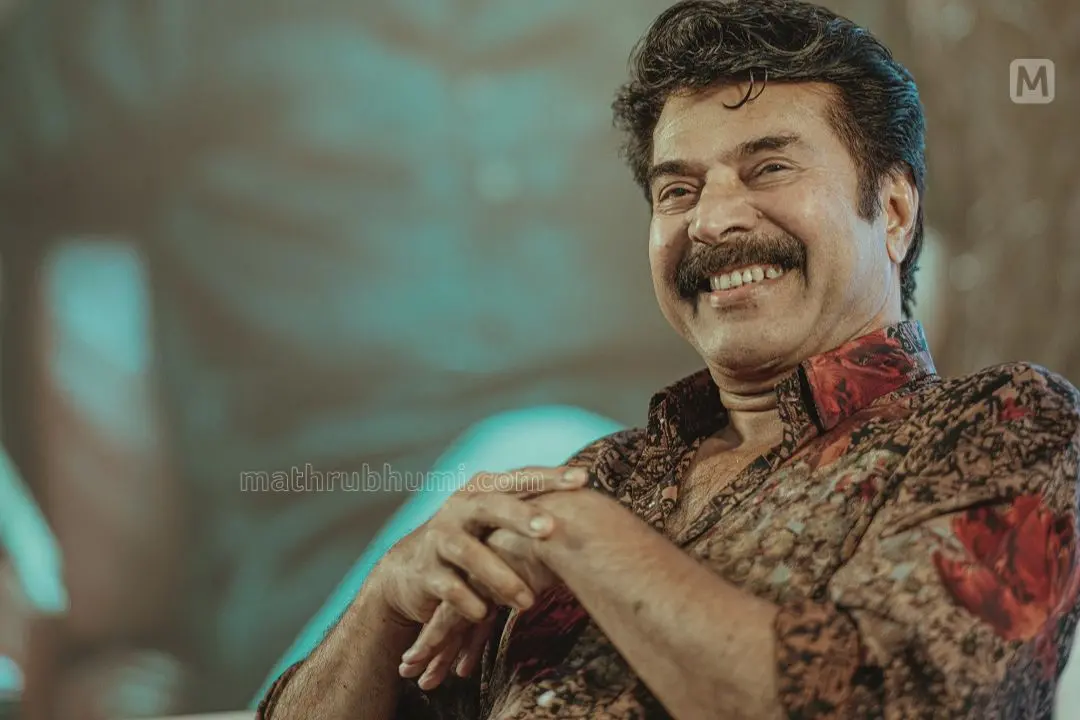
At 72, Mammootty has created a revolution. His historic performance as Mathew Devassy, the middle-aged Roman Catholic homosexual protagonist in the film "Kaathal-The Core'' has considerably advanced an ongoing social revolution—a revolution to normalize and legitimize the rights of sexual minorities in Kerala.
The exceptionally sensitive film would be a milestone in Kerala society's path toward overcoming its prejudices and discrimination against the queer community."Kaathal-The Core'' is poised to catalyze social acceptance, paving the way for the LGBTQ+ community to claim their rightful place in a democratic and inclusive society.
Indisputably, Mammootty's "audacious" portrayal of the iconic role has significantly elevated the film as a driving force for reshaping societal perspectives. His immense commercial/critical success, widespread social admiration as a role model, and his identity as a practicing Muslim collectively foster a more democratic society that embraces the diversity of sexual orientations. Mammootty's active participation in this transformative project challenges prevailing societal norms and underscores the transformative potential when influential figures advocate for inclusivity and understanding.
"Kaathal" breaks new ground by addressing same-sex affairs and championing the rights of the LGBTQ+ community with a level of maturity, empathy, and sensitivity previously unseen in the industry. Notably, "Randu Penkuttikal" (1978), directed by Mohan and adapted from VT Nandakumar's eponymous novel, was an early contributor to portraying lesbian relationships in Malayalam cinema. However, it's crucial to recognise that the film's narrative took a different trajectory despite being ahead of its time. Although the two women initially relish their socially unaccepted relationship, it ultimately evolves into an unrequited passion rather than a mutually engaged lesbian affair. "Kaathal" emerges as a significant evolution in the cinematic landscape by presenting a more nuanced and affirming perspective on same-sex relationships in Malayalam cinema.
"Deshadanakkili Karayarilla" (1986), directed by P Padmarajan, is often acknowledged as one of the early Malayalam films exploring lesbian relationships. However, the portrayal in the film leans more towards a "womance" – a close but nonsexual friendship – rather than a fully realized and sexual lesbian relationship.
Subsequently, Lal Jose's "Chanthupottu" (2005) took a different approach, marking a regression in the portrayal of different sexual orientations or ambivalent sexuality. Despite claiming to be "sympathetic" to the character Radhakrishnan (Dileep), who was raised in a feminine manner by his grandmother, the film ultimately caricatured the "abnormality" associated with a man displaying effeminate traits. By the conclusion, the narrative seemed to prioritize "normalizing" Radhakrishnan, reinforcing traditional gender norms and questioning the authenticity of his identity.
"Chanthupottu" not only perpetuated stereotypes surrounding sexual minorities but also, when viewed in the context of the broader societal landscape, reflected a regressive trend during a period when the century-long hegemony of Renaissance values was undergoing a retreat in Kerala society. The film, unfortunately, contributed to the derogatory labeling of sexual minorities, further hindering the progress towards a more inclusive and understanding society.
Indeed, contemporary Malayalam parallel cinema has made significant strides in addressing LGBTQIA+ subjects. Films such as "Iratta Jeevitham" (2017) by Suresh Narayanan and "Moothon" (2019) by Geethu Mohandas have gained international recognition, being listed among the British Film Institute's Ten Best Indian Films on LGBTQIA+ (lesbian, gay, bisexual, transgender, queer, intersexual and asexual) in 2023. This recognition underscores the growing importance of diverse narratives within the Indian cinematic landscape.
It's noteworthy that while these films have achieved acclaim, Deepa Mehta's "Fire" remains the sole Indian entry among the 200 All-Time Best LGBTQ films listed by the film website Rotten Tomatoes. This comprehensive list spans from the German "Madchen in Uniform" of the 1930s, which the Nazis banned.
"Kaathal" is distinctive in this context as it operates within the popular format, allowing it to connect with a broader audience. Its unique ability to navigate within mainstream cinema contributes to reaching a larger and more diverse viewership. This approach suggests a new understanding and acceptance of LGBTQIA+ themes can be cultivated by extending beyond cineastes and festival-hoppers to engage with the broader public and shape a more inclusive cultural narrative.
"Kaathal" breaks away from conventional stereotypes, presenting Mathew Devassy as a gay character who defies expectations. Physically and temperamentally, he embodies the societal ideals of a "perfect male"—a dutiful son, a considerate husband, an affectionate father, and a concerned citizen. His character boasts exemplary qualities and progressive views, positioning him as a viable electoral candidate for the local Left party.
However, beneath this public facade, Devassy grapples with the internal conflict of his repressed sexual orientation, adhering to the norms of a heteronormative society. Compounded by his membership in the conservative Roman Catholic community led by a powerful Church, his struggle intensified. The film sheds light on the profound agony experienced by Devassy's heterosexual wife, Omana (Jyotika), who is denied her legitimate sexual and conjugal rights by her gay husband.
"Kaathal" courageously addresses the seldom-discussed topic of a married woman's sexual rights, emphasizing that depriving her of these rights constitutes cruelty. Notably, the film highlights how the repression of those with different sexual orientations in a heteronormative society can inadvertently victimize heterosexual individuals as well. The narrative thus unravels the complex layers of societal expectations and the collateral impact on individuals navigating the intricacies of their identities and relationships.
"Kaathal" introduces Thankan as the film's third major character, once a lover of Devassy. Coming from a lower social class than Devassy, Thankan becomes a poignant symbol of the societal stigma, discrimination, and invisibility faced by sexual minorities. The film underscores the harsh reality that individuals like Thankan, due to their socio-economic status, endure even greater challenges in confronting their sexual identity, shedding light on the intersectionality of the issue.
The narrative also delves into the plight of Mathew's elderly father, who becomes another victim of the heteronormative society. Desperate to shield his son from societal judgment, the father endeavors to "normalize" Devassy by arranging a marriage to a suitable woman. However, in his twilight years, the father undergoes profound mental anguish as he witnesses the misery of both his son and daughter-in-law trapped in a loveless marriage. The film poignantly illustrates the far-reaching consequences of societal expectations and the heartbreaking impact on the lives of those entangled in the complexities of unconventional relationships. Through these interconnected characters, "Kaathal" offers a nuanced exploration of the multi-layered struggles faced by individuals and their families within a society that often refuses to accept and understand diverse forms of love and identity.
Jeo Baby and his team deserve commendation for their adept and nuanced approach to crafting "Kaathal," showcasing a rich visual language that elevates the film's storytelling. Baby, known for his earlier bold work in "The Great Indian Kitchen," displays a subtle yet equally radical political narrative in this film. Unlike his previous more overt approach, "Kaathal" navigates the complexities of its subject matter with finesse.
While some critics have raised questions about the absence of explicit physical scenes between Devassy and Thankan, it's essential to acknowledge and applaud Baby and the scriptwriters' convincing portrayal of the passion and intensity within the relationship. The film skillfully conveys the depth of their connection through Mammootty's performance, compensating for explicit scenes with his understated yet powerful expressions, meaningful glances, choked words, an occasional scream, and languid body language. Mammootty's portrayal adds a layer of emotional richness to the narrative, demonstrating that a film can evoke intense emotions without relying on explicit visuals. The director and actor's collaboration in "Kaathal" exemplifies a sophisticated and effective storytelling approach that resonates with the audience on a profound emotional level.
Mammootty and Mohanlal's enduring reign as superstars in the highly dynamic cinema industry is a remarkable feat, spanning over four and five decades, respectively. This longevity is exceptionally rare, as many stars, both in India and internationally, often find themselves transitioning to roles as fathers or uncles of younger heroes by the end of their prime.
In the Indian context, age-defying superstars like Amitabh Bachchan and the late Dilip Kumar stand out as exceptions. Bachchan, for instance, played a hero at the age of 77 in "Badla" (2019), while Dilip Kumar featured as a hero in his last film at the age of 76 in "Qila" (1998). These instances are unique in the Indian film industry.
In Hollywood, a handful of actors, including Clint Eastwood, Mel Brooks, Dustin Hoffman, Al Pacino, and Robert De Niro, remain active well into their nineties and eighties. Eastwood, at 93, even directed and starred in a film just two years ago.
However, their continued status as Malayalam cinema's most sought-after stars sets Mammootty and Mohanlal apart, consistently playing lead roles in four to five films annually. Their ability to maintain this level of popularity and demand, coupled with their consistent presence as protagonists, distinguishes them in an industry known for its ever-changing dynamics and preferences.
Mammootty's approach to his career sets him apart from most superstars who may become confined by their established image. He consistently challenges norms and subverts stereotypes, demonstrating a willingness to step out of his comfort zone. His openness to collaborating with newcomers, as long as they offer a unique story and a compelling role, showcases his commitment to diverse and innovative storytelling.
While not every experiment may have succeeded, Mammootty remains undeterred in pursuing new challenges. Despite being revered as an icon of masculinity, he embraces roles that depict broken, weak, hated, defeated, or gawky characters. This adds depth to his filmography and showcases his versatility as an actor.
One of Mammootty's commendable qualities is his readiness to reinvent and reimagine himself, even in the later stages of his career. Deliberately opting for different roles and diverse narratives, he avoids repetition, ensuring that he stays fresh and relevant. This is a testament to his dedication to the craft and to his own artistic evolution. However, this writer believes that, at this stage of his career, Mammootty no longer needs to indulge in mediocre films.
One also hopes that Malayalam’s other equally talented superstar, Mohanlal, takes a page from his compatriot’s playbook on reinventing and reimagining oneself on screen.