Anna Mani: The forgotten diamond
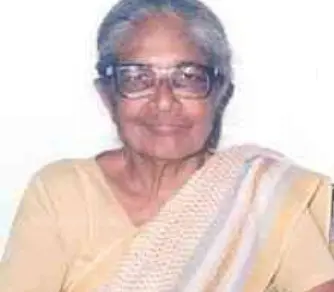
“You seem to know precious little about physics,” remarked CV Raman — the celebrated physicist and Nobel laureate, equally notorious for his disdain for women’s intellect — to a young Malayali researcher. Yet, while Raman understood better than anyone how light would traverse, the great scientist could hardly foresee the young woman’s future journey. For, she would go on to become India’s foremost woman physicist. This is the remarkable story of Anna Modayil Mani.
Malayali women’s role in shaping Kerala’s modernity has long been celebrated. Yet, the paradox is glaring: their absence in positions of power remains striking in a state that prides itself on gender justice. Against this backdrop, the lives of two Malayali women born in pre-independence India — E.K. Janaki Ammal (1897-1984), the pioneering botanist, and Anna Mani (1918-2001), the trailblazing physicist and meteorologist — stand out as exceptional stories of women who breached the most impregnable male bastion: science.
Both achieved distinction in the mid-20th century, in fields still dominated by men. Their extraordinary lives remained largely uncelebrated until recently. Two new biographies — Savithri Preetha Nair’s Chromosome Woman, Nomad Scientist (Routledge, 2023) on Janaki Ammal, and Asha Gopinathan’s Anna Mani: The Uncut Diamond (National Book Trust, 2025) — now restore them to public memory.
Nair’s 611-page tome on the Thalassery-born Janaki Ammal is the most comprehensive account of her life and work, richly documenting her scientific explorations. Ammal’s achievements — from being honoured with a Padma Shri to having magnolia species named after her by the British Royal Horticultural Society — have slowly begun to gain recognition.
In contrast, Anna Mani’s legacy has remained far less visible, despite her being known as the Mother of Indian Meteorology. Long before “Make in India” became a political slogan, Mani was indigenously developing scientific instruments that made India self-reliant. Gopinathan’s meticulously researched biography finally gives her story the attention it deserves.
Interestingly, one of the very few earlier writings in Malayalam on this physicist from Peermedu, who went on to become the first woman to become a Director at the Indian Meteorological Department (IMD), Pune and headed many international bodies on climatology and geosciences, was by Gopinathan’s late mother, Dr K. Saradamoni, a renowned sociologist. Perhaps the only significant earlier work that covers the lives and struggles of several Indian women physicists, including Anna, is Abha Sur’s brilliant Dispersed Radiance: Caste, Gender, and Modern Science in India (Navayana, 2011).
Gopinathan has made a conscious effort to also write about the several people who made Anna’s work possible, including not just her famous mentors like Raman and associates like Vikram Sarabhai, but also her subordinates, such as carpenters and office assistants, her devoted housekeeper Yashoda Baip, her pet dog Chikki and even her pale green Morris Minor.
Gopinathan’s decade-long research involved reading Anna’s scientific papers and personal letters, interviewing family and colleagues across continents, and visiting every institution she had worked in. The biographer’s biggest challenge, as she notes, was the absence of proper archives for Indian scientists, particularly women. Her book is remarkable for translating Anna's complex scientific work into lucid language without diluting its rigour, while also revealing her personal side — wit, discipline, love of nature, passion for Western classical music, bird watching and photography.
Born in 1918 in Peermedu, a misty plantation town in Idukki, Anna was the seventh of eight children in a well-educated Syrian Christian family. Her father, Modayil Pothen Mani, was the first Indian Executive Engineer of the Travancore Public Works Department and mother Annamma, a homemaker. Her rationalist father and educated milieu could not, however, shield her from gender discrimination. Only her brothers were sent abroad for higher studies; Anna’s relatives wanted her to become a nun — a matter of prestige among Kerala Christians.
But Anna defied expectations. She studied at the Women’s Christian College in Madras and graduated in 1939 with honours in Physics, Chemistry and Mathematics. A brilliant student and voracious reader, she developed a fascination for instrumentation while working as a demonstrator at the college.
Her life changed when she joined the Indian Institute of Science (IISc), Bengaluru, in 1940 for doctoral research under C.V. Raman. The Nobel laureate was then the towering figure of Indian science — admired and feared in equal measure. After a three-hour interview, he told her, “You seem to know precious little about physics.” Yet he admitted her to his laboratory, where he demanded unlearning and original thought even as he held deeply regressive views about women in science.
Only a few years earlier, Raman had notoriously refused admission to another woman, Kamala Sohonie, solely because of her gender. Kamala staged a satyagraha outside his office until he relented, admitting her on humiliating probationary terms. Her stellar performance forced Raman to change his stance, and subsequent years saw three women — Lalitammal Doraiswamy, Sunanda Bai, and Anna Mani — join his department.
Even so, Raman’s lab was steeped in moral policing: men and women were barred from interaction. Despite their impressive work, both Anna and Sunanda were denied doctorates on technical grounds — Anna for not holding a formal postgraduate degree, though her honours degree was equivalent. Sunanda, tragically, took her own life later. Lalita had discontinued her studies to marry S.Chandrasekhar, the future Nobel Laureate, and moved abroad. Anna, however, continued her research, earning praise from Raman himself for her thesis on “Luminescence of Diamonds” submitted to the University of Madras in 1945 — but never awarded a PhD.
That same year, Anna left for England for post-doctoral work in meteorological instrumentation, reluctant at first to accept British help given her nationalist leanings. The year-long course exposed her to cutting-edge laboratories and factories manufacturing meteorological instruments, sparking a new direction in her scientific career.
She returned to India in 1948 — on the day Gandhi was assassinated — and joined the India Meteorological Department (IMD) in Pune as a Meteorologist, Grade II. At the time, India depended entirely on imported instruments. Anna’s task was to develop them indigenously. Within five years, she and her team achieved full self-reliance in surface instruments, ranging from barometers to temperature-controlled pendulum clocks. By 1953, she headed the division, and by 1960, she was Director of the IMD Instruments Division.
Her workshop became legendary: “IMD Pune had the unique distinction of being the only meteorological office in the world where any surface instrument could be designed, manufactured and repaired,” wrote Gopinathan. Mani, the perfectionist, would often appear at night for surprise inspections, her loyal dog in tow. She was exacting but fair — an embodiment of discipline and dedication.
Her work extended far beyond instrumentation. She published extensively on cloud physics, atmospheric electricity, ozone, and radiation, and represented India in international scientific forums. Yet, even at her peak, she was not spared gender prejudice. In the 1960s, though she headed the IMD team for the International Indian Ocean Expedition, she was barred from boarding the research vessel INS Kistna — women were not permitted on naval ships.
Few know of Anna’s pivotal role in the birth of India’s space programme. When Vikram Sarabhai set up the Thumba Equatorial Rocket Launching Station in Thiruvananthapuram in the early 1960s, he turned to Anna — an old acquaintance from his student days — to establish its meteorological infrastructure. She arranged the transfer of a 200-foot tower from Pune and oversaw its installation in Thumba. Yet, her name finds no mention in the Space Museum there today.
In the 1970s, she led the development of India’s first ozone-measuring instrument and represented India in the International Ozone Commission. After retiring in 1976 as Deputy Director General (Instruments) at IMD, she returned to the Raman Research Institute as a visiting professor and developed India’s first millimetre-wave telescope to measure atmospheric water vapour.
A passionate environmentalist, Anna spent her later years researching renewable energy, setting up a solar and wind energy division in Bengaluru, compiling two volumes on solar radiation for the Department of Science and Technology, and later four volumes on wind energy resources. Her health eventually forced her to retire and return to Thiruvananthapuram, where she lived with her sister until her death in 2001.
As Gopinathan asks, will the revered Indian Institute of Science — founded in 1909 by Jamshedji Tata, inspired by Swami Vivekananda — show the grace to posthumously award the doctorate it denied to Anna Mani and Sunanda Bai eight decades ago? Unlikely. For not only in “conservative India,” but even across much of the Western world of science, things have not changed as radically as one might wish. The die-hard patriarchy that Anna Mani encountered in the 1930s — even among Nobel laureates — has proved astonishingly resilient, surviving almost a century on. In 2015, the Nobel Prize winning British biochemist, Sir Tim Hunt, told a global conference; “the trouble with girls in labs is that you fall in love with them, they fall in love with you, and when you criticise them, they cry.” His remarks, echoing Raman’s era, caused a global uproar and forced an apology — proof that even a century later, women in science still fight the same battles.
Forget the rest of the world — will Kerala, the land that produced Anna Mani and Janaki Ammal, ever commemorate these two trailblazing Malayali women who lit the path for generations to come?