The silent storm: How AI is quietly rewriting India’s destiny
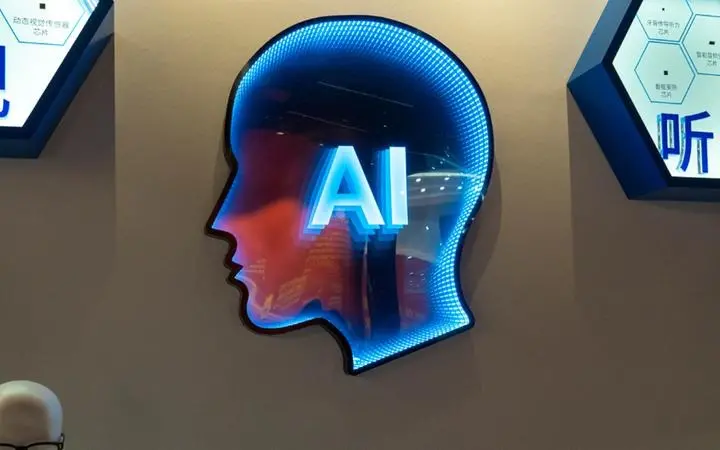
As India accelerates its digital transformation, artificial intelligence (AI) is being woven into the fabric of healthcare, education, agriculture, and governance. The promise is dazzling: a smarter, more efficient, and globally competitive India. Yet, beneath this glittering surface lies a growing shadow.
Indeed, AI has already begun proving its worth in conservation efforts. Conservation organizations like Voices for Asian Elephants, are harnessing AI-powered EleSense technology to help prevent endangered elephants from being struck down on India’s deadly train tracks—using real-time data to detect elephant presence and alert authorities. Tools like these demonstrate AI’s enormous potential for preserving biodiversity and supporting human-wildlife coexistence.
But even as we marvel at such applications, we must confront the darker underbelly of this revolution. Because AI is no longer just a tool; it is becoming a force that shapes how we think, feel, and even trust each other. And in a country as vast, diverse, and vulnerable as India, the risks are not only real—they are urgent.
Voice Cloning and Deepfakes: A New Face of Fraud
India has witnessed a surge in AI-driven frauds, particularly through voice cloning and deepfake technology. In recent months, reports have emerged of cybercriminals using AI to mimic voices of CEOs, relatives, or government officials to deceive people into transferring money. For instance, two individuals in Bengaluru were scammed out of nearly ₹95 lakh through deepfake videos impersonating business leaders N. R. Narayana Murthy and Mukesh Ambani.
Voice, once considered an intimate marker of identity in Indian households, is now weaponized. Imagine a mother in Kolkata getting a desperate call from her son, claiming to be in trouble—and it’s not him. Or a government official’s voice used to manipulate rural populations during elections. The potential for misuse is vast, especially in a country with low digital literacy and high smartphone penetration.
In India’s multilingual, trust-based society, where oral communication holds cultural and emotional weight, voice cloning doesn’t just defraud—it violates.
Cybersecurity and the Rise of AI-Enabled Threats
India is the world’s third-largest internet market, with over 900 million users expected by 2025. As digital access expands, so does vulnerability. According to the Indian Computer Emergency Response Team (CERT-In), cyberattacks have increased by over 300% in recent years, many now powered by AI tools that can scan, exploit, and infiltrate systems in seconds.
Public infrastructure, such as Aadhaar-linked services, financial networks, and even electoral systems, could become prime targets. With AI-fueled phishing attacks and ransomware now being sold as plug-and-play kits on the dark web, a digitally ambitious India cannot afford to be digitally naive. And in a nation where data protection laws are still evolving, the citizens—especially the poor—often lack the tools or recourse to defend themselves.
Dehumanisation in an Emotionally Numb Age
In India, where tradition and interpersonal relationships are deeply embedded in daily life, AI’s mechanisation of human roles has subtle but significant consequences.
Already, AI is being deployed in classrooms to assess students, in call centers to automate customer service, and in banks to evaluate loans. While these uses may boost efficiency, they often come at the cost of empathy. When a farmer in Odisha calls a helpline and hears a robotic voice instead of a human being, the human connection is lost—and with it, trust.
More troubling is the emotional detachment AI fosters. In a society already grappling with rising rates of loneliness, especially among the elderly and urban youth, AI chatbots and companion robots may fill a void—but they also reinforce it. Emotional labor—caring, listening, comforting—is being digitized, reduced to code.
And this shift is happening at a time when we most need each other—when climate disasters displace families, when misinformation divides communities, when children grow up more fluent in algorithms than empathy.
Job Losses and Widening Inequality
India’s demographic dividend—its vast, young workforce—is its strength. But it is also its vulnerability. As AI displaces human labor in sectors like content creation, data entry, logistics, and retail, millions of jobs are at risk. And unlike past industrial revolutions, where new industries emerged to absorb displaced workers, AI disproportionately favors high-skilled, urban labor while rendering many mid- and low-skilled roles obsolete.
According to a report by Drishti IAS, automation threatens 69% of jobs in India over the next 20 years, posing a significant challenge to employment. For informal workers—who make up 90% of India's labor force—the threat is harder to measure but no less severe.
Without robust skilling programs, universal social protections, and inclusive policy frameworks, AI will deepen India’s already stark socioeconomic divides. In effect, we are at risk of creating a digital caste system—where a few write the algorithms, and the rest are written off by them.
A Call for Ethical Leadership—and Human Connection
India stands at a critical crossroads. Our embrace of technology must not outpace our commitment to ethics, equity, and empathy. We need urgent regulatory frameworks that can keep pace with innovation. We need digital literacy embedded in every school curriculum and rural outreach programs to ensure people understand what AI is—and what it is not.
More importantly, we need a public conversation. Not just among policymakers and technocrats, but across communities, faith leaders, educators, and artists. Because AI is not only a technological issue—it is a moral one. It challenges how we define identity, trust, and value.
We must ask ourselves: What kind of society are we building? One where voices are real but hearts are absent? One where machines simulate emotion but people forget how to feel?
This is not a rejection of AI. It is a plea to humanize its use. Because at the end of the day, artificial intelligence cannot replace human wisdom. It cannot cradle a crying child, or sense the pause before an elderly parent says they miss you, or see the tears behind a farmer’s forced smile.
Only we can do that. And we must—before we forget how
(The author is Founder & Managing Director of Voices for Asian Elephants, a journalist, and author of Gods in Shackles – What Elephants Can Teach Us about Empathy, Resilience, and Freedom)