Machines of tradition, souls of giants
Did the Scientific Revolution, the dawn of human knowledge and exploration, unintentionally lead us to misunderstand the true nature of life? What began as a noble quest to decode the mysteries of existence has often stripped living beings of their inherent worth, treating them as parts of a vast machine meant for human benefit. This mechanistic worldview has seeped deeply into our psyche, pushing us to see nature as something we can control, disassemble, and exploit without moral consequence. Today, this mindset places India’s Asian elephants—the epitome of wisdom, strength, and emotional depth—into the role of mere tools, robbed of agency and compassion. Mechanistic thinking blinds us to their suffering, allowing exploitation for the sake of profit, power, and spectacle, all in the name of progress and tradition.
Sacred Yet Sacrificed: The Plight of Kerala’s Temple Elephants
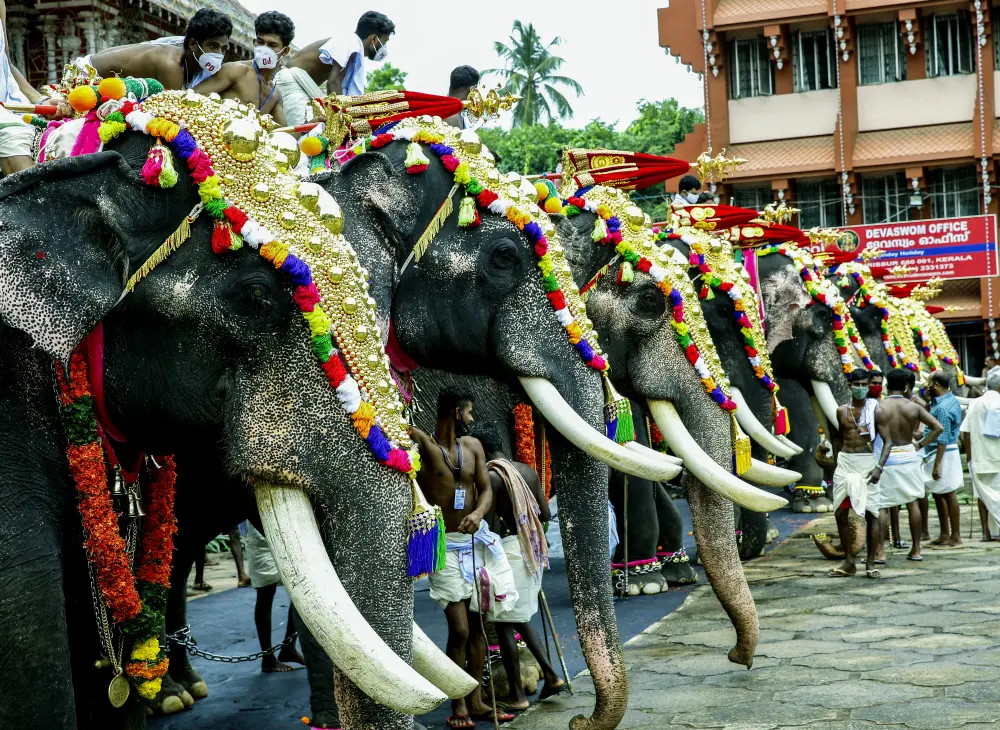
In Kerala, the deeply cultural and symbolic reverence for elephants is paradoxically paired with a brutal disregard for their well-being. These majestic animals, whose presence was once celebrated as sacred, are now treated like machines, forced to comply with traditions that view them as mere accessories to human celebrations. Chained for hours, decked in heavy attire, and paraded through temples under the unrelenting sun, they are torn from the natural world and confined to an existence of suffering and solitude. The Scientific Revolution’s legacy is seen in these practices, where even creatures of deep social intelligence are broken and controlled, as if their hearts and minds are irrelevant. Instead of symbols of divine strength, they are reduced to disposable elements in cultural pageantry, suffering in silence for human pride and profit.
Infrastructure and Fragmented Lives
The mechanistic view extends beyond cultural spectacles to the physical landscapes elephants once called home. Human expansion, framed as a triumph of progress, has fragmented the lush habitats elephants depend on, replacing ancient forests with roads, railways, and farms that slice through their territories. With habitats lost and paths blocked, elephants are left like broken cogs in a machine, trying to fit into a world reshaped for humans alone. They suffer tragic, avoidable deaths as they attempt to cross train tracks or busy highways in their quest for food, water, and family. The Scientific Revolution's reductionist view regards nature as a series of replaceable parts, failing to see that these creatures are not machines—they are families, they grieve their dead, and they remember. The suffering of each lost elephant is a tear in the delicate fabric of our shared existence.
Elephants Are Not Machines: Recognizing Their Intelligence and Social Bonds
Asian elephants are among the most intelligent, emotionally complex animals in the world, living in close-knit family groups and demonstrating empathy and grief. But to the mechanistic mindset, such traits mean nothing. These animals are seen as tools to be utilized, tamed, and controlled, their deep social and emotional bonds disregarded as irrelevant in the face of human demands. Yet to those who truly see, elephants are so much more: matriarchs guide their families through wisdom gained over generations, and their complex relationships offer profound lessons on love and resilience. The Scientific Revolution may have taught us to control and harness life, but it has also deprived us of reverence for it, reducing these majestic beings to commodities for the sake of convenience and gain.
The Cruel Price of Commodification
The mechanistic worldview pervades every aspect of captive elephants' lives, justifying relentless cruelty and exploitation. Taken from the wild at a young age, elephants are “trained” to comply through violence, stripped of any semblance of autonomy, and bound to a life of servitude for human gain. To the profit-driven, machine-like thinking that emerged from the Scientific Revolution, these animals are mere products, their lives valuable only for the functions they serve. Forcing elephants into repetitive performances and heavy labor reflects a tragic blindness to their individuality and sensitivity as if their emotions are mere illusions and their suffering an acceptable side effect. Yet elephants in the wild roam miles each day, engage in play, mourn their dead, and celebrate births. By depriving them of this life, we deny their essence, as if they are only animated tools, undeserving of a life that is rightfully theirs.
A Call to Transform Our Relationship with Elephants and Nature
If humanity is to redeem itself, we must discard this outdated view that animals are soulless, machine-like entities and begin to see them as beings with intrinsic value. Asian elephants are not mere resources for human consumption; they are individuals with family structures, emotions, and an irreplaceable role in their ecosystems. A mechanistic worldview only limits us, preventing us from embracing the understanding that every species is part of a greater whole, an interconnected web of life. Recognizing that elephants are not cogs in a machine, but dynamic beings is essential to reshaping our relationship with the natural world. It requires shifting away from the “machine” mindset toward one that values preservation over exploitation, and respect over control.
Organizations like Voices for Asian Elephants offer hope, proposing innovative solutions like robotic elephants to replace real animals in festivals, showing that we can honor tradition without sacrificing compassion. By embracing alternatives that respect elephants’ autonomy, we move away from the heartless rationalization that began centuries ago and toward a future where all life is celebrated for its uniqueness.
Finding Hope in a Heartfelt Change
The fate of the Asian elephant is deeply tied to the fate of humanity. If we continue to view animals as mere machines, stripped of their soul and dignity, then we fail to see the beauty of the intricate web we are part of. The mechanistic view that came from the Scientific Revolution taught us to manipulate and exploit, but it also blinded us to the sanctity of life. We forget that we are merely one strand in this magnificent tapestry and that by disregarding the welfare of other species, we ultimately unravel our own.
The story of the Asian elephant should be a call to our deepest sense of compassion and accountability. These beings are not tools for human use; they are sacred, intelligent, and deserving of freedom. If we do not change our ways, we risk losing not only them but the world they—and we—need to survive. The question is, can we see beyond the mechanistic view that blinds us, to recognize the profound beauty in every living being? Can we choose to live not as exploiters, but as protectors, leaving behind a world where elephants roam free, untamed, unshackled, and truly seen?