Netanyahu’s endgame; Who decides when the Gaza War is over?
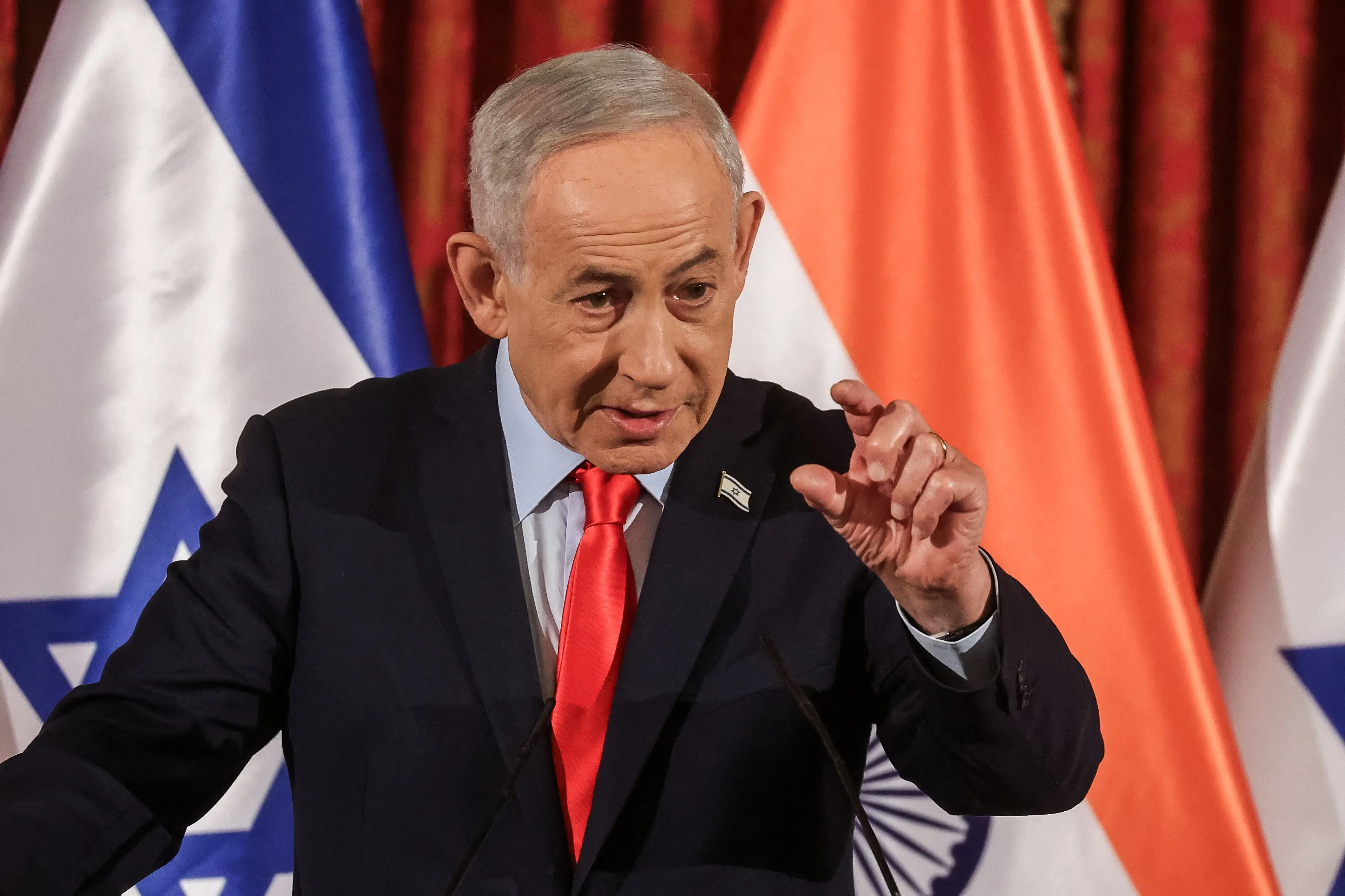
There is something almost exquisitely absurd about the present Middle Eastern predicament. Two men who have spent an extraordinary amount of political capital demonstrating that they know how to start wars are now discovering the rather inconvenient truth that wars have to end. Donald Trump wants to get out of Iran without looking as though he is getting out of Iran, while Benjamin Netanyahu wants to get out of Gaza without actually getting out of Gaza. Between them now sits Jared Kushner, carrying what appears to be the family diplomatic first-aid box, having met Hamas in Cairo and then spent almost four hours with Netanyahu in Jerusalem trying to rescue Trump’s increasingly complicated Gaza plan. The meetings ended without a breakthrough, but something more interesting may have happened. Hamas has agreed in principle to disarm, surrender the administration of Gaza to a technocratic Palestinian authority and allow an international mechanism to deal with its military infrastructure. Netanyahu, however, insists that Israel will not withdraw until Hamas is completely disarmed. On the surface, this sounds like a disagreement about security, but beneath it lies the real argument: who decides when the war is actually over? Hamas wants disarmament and Israeli withdrawal to proceed as part of the same process. Netanyahu wants disarmament to precede withdrawal. That’s a minor difference large enough to keep an entire war alive!
Washington now appears to be offering Netanyahu a way around his own objection. Reports say Kushner and Netanyahu discussed putting an American general in charge of verifying Hamas’s disarmament. At the same time, Kushner has suggested that progress could begin within about 30 days, with tunnel dismantling potentially taking 60 to 90 days. In other words, Washington is effectively telling Netanyahu that if the problem is whether Hamas can be trusted to disarm, let an American mechanism verify it. That is potentially a pretty clever compromise because it removes Netanyahu’s most convenient objection. If Hamas refuses to disarm, Israel has every justification to continue fighting. If Hamas begins surrendering weapons and an American-led mechanism verifies the process, the argument that Israel must continue fighting because nobody knows whether Hamas is actually disarming becomes considerably harder to sustain. The goalposts, for once, may acquire a measuring tape. And that is precisely why Netanyahu’s position has become so delicate. He cannot simply reject the American proposal without appearing to reject the very conditions he has spent years insisting upon. Hamas must disarm, Hamas must cease to govern Gaza, Gaza must be demilitarised, and Israel must be secure. The difficulty begins when Washington says, “Very well, let us now build a mechanism that accomplishes precisely that.”
There is another awkward development. Trump has publicly said that Israel should stop striking Gaza even as Kushner was attempting to negotiate the implementation of his plan. Yet on August 18, an Israeli airstrike killed at least six Palestinians in Gaza, according to Palestinian health officials, with Israel saying that the target included Hamas commanders. The symbolism is hard to miss. The American president is attempting to negotiate an end to the war while his principal ally continues to prosecute it. Are their interests beginning to diverge? Trump desperately needs an ending. Netanyahu desperately needs security to remain sufficiently unfinished to justify his continued political indispensability.
That does not mean Netanyahu deliberately started or prolonged wars merely to escape his corruption trial. Or, let’s put it this way: there is no evidence to establish such a proposition, and political analysis should not become conspiracy theory merely because conspiracy theory is more entertaining. But the political reality is less controversial. Netanyahu’s corruption cases remain a serious liability, his trial continues, and Israel is heading towards an election on October 27. A continuing national-security crisis changes the political question from whether Netanyahu should answer for his record to whether Israel can afford to change its leadership while the country remains under threat. Then there is October 7. Again, there is no established evidence that Netanyahu deliberately enabled the Hamas attack. But the catastrophic failure of Israel’s intelligence and security establishment raises an entirely legitimate question about political responsibility. How did Hamas penetrate a supposedly formidable security apparatus, overrun military positions and remain operational long enough to inflict such devastation? The answer may ultimately be institutional failure rather than conspiracy. Either way, Netanyahu faces an uncomfortable political reckoning once the guns fall silent. Peace can therefore be rather bad news for a politician whose political fortunes have become intertwined with permanent emergency.
Trump has his own problem. The Iran war has not turned into the neat demonstration of overwhelming American power that military adventurism tends to promise before the first missile is fired. The United States is still looking for a diplomatic exit, the Strait of Hormuz remains deeply disrupted, and Trump is simultaneously demanding negotiations and threatening Oman, one of the principal channels through which those negotiations have historically been conducted. That’s like setting fire to the house, threatening the neighbour who offers to bring a hose, and then complaining that nobody is helping you put the fire out!
Gaza offers Trump something he badly needs: an ending that can be marketed as a victory. If Hamas disarms, leaves government, a technocratic Palestinian authority takes over, reconstruction begins, and Israel ultimately withdraws, Trump can claim that his coercive diplomacy produced the peace everyone else failed to deliver. The fact that the process would also extricate him from an increasingly uncomfortable regional war is merely a pleasant bonus. Netanyahu cannot simply tell Trump to take his peace plan and put it somewhere politically inaccessible. Alienating Trump would be dangerous, and he has to balance two contradictory imperatives. He cannot accept a deal that looks like surrender to the Israeli right, but neither can he openly defy the American president whose support remains strategically indispensable.
The emerging American verification mechanism could therefore be either Netanyahu’s escape route or his trap. If Hamas genuinely begins disarming, and an American mechanism verifies measurable progress, Netanyahu may be able to tell Israelis that he obtained the security guarantees he demanded before allowing withdrawal. But if he continues to insist that Israel must retain complete military freedom until Hamas is entirely and irrevocably eliminated, the American proposal begins to expose the real issue. The argument is no longer simply about whether Hamas will disarm. It becomes an argument about whether Netanyahu is prepared to accept an independently verified end to the war. Because once there is a mechanism for deciding that Hamas has disarmed sufficiently, there is eventually a mechanism for deciding that Israel has fulfilled its obligation to withdraw. And once Israel withdraws, the extraordinary political utility of an endless war begins to disappear.
That brings us back to the central irony. Hamas may be prepared to surrender the weapons that constitute its power. Trump may be prepared to provide Israel with the verification mechanism it says it needs. The international community may be prepared to oversee the transition. Even Gaza’s future administration is being discussed in terms of technocrats rather than Hamas. The person who now has to decide whether the war can actually end is Netanyahu. Trump wants a victory he can take home. Netanyahu wants security he can take to the election. Hamas wants survival without surrendering everything that remains of its political relevance. Everyone wants somebody else to take the first irreversible step.
That is how wars become quagmires. Not because nobody knows how to stop them, but because everybody wants somebody else to stop first. The great irony is that Kushner may now have brought the negotiations to the point where the question is no longer whether Hamas will disarm, but whether Netanyahu will accept someone else measuring the disarmament. If that happens, the goalposts stop moving. And once the goalposts stop moving, somebody eventually has to play the final whistle. That may be precisely what Netanyahu fears.
(The author is a National Award winner for Best Narration and an independent political analyst. Views expressed are personal.)