With just Rs 250, you can invest in India’s Top 50 companies; Here’s how
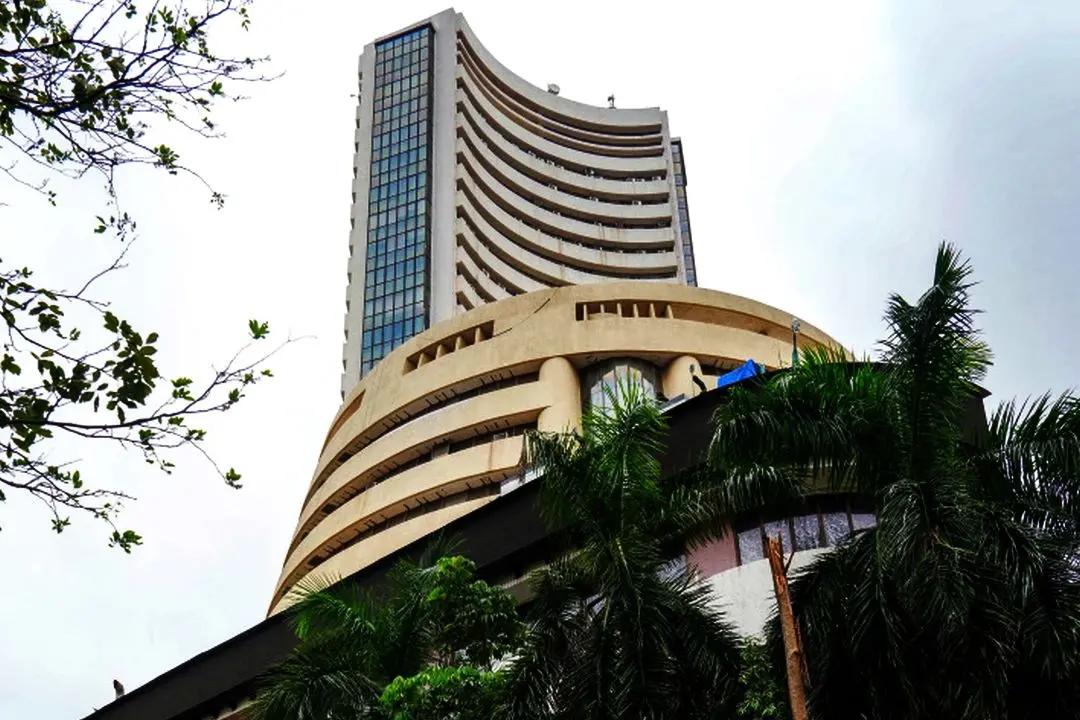
Vimal began his journey in the stock market two years ago. Over this period, he invested around Rs 3 lakh at different intervals. However, most of his investments are still in the red. His portfolio primarily consists of 10 mid-cap and small-cap stocks. Despite the broader market's recovery in recent months, his shares have shown little to no upward movement. Each day, Vimal finds himself staring at the Sensex and Nifty charts, hoping for signs of a turnaround that never seem to come.
What Vimal didn’t realize was that his reliance on the Sensex and Nifty as indicators of his portfolio’s health was misguided. These indices mainly reflect the performance of large-cap companies.
Since his investments were in mid- and small-cap stocks, their performance had little correlation with the movements of the Sensex and Nifty.
Like many retail investors, Vimal misunderstood the market signals and benchmark indices, failing to recognize that different segments of the market behave differently.
Understanding the Indices: Sensex and Nifty
India's two primary benchmark indices are the BSE Sensex and the NSE Nifty. These indices track the performance of some of the country’s largest and most influential companies.
* Sensex, the index of the Bombay Stock Exchange (BSE), is made up of 30 large-cap stocks.
* Nifty, from the National Stock Exchange (NSE), comprises 50 large-cap stocks.
Companies like Reliance Industries, HDFC Bank, TCS, Infosys, ICICI Bank, SBI, and Bharti Airtel are common constituents of both indices. These are the stalwarts of the Indian stock market, and their price movements determine the direction of the Sensex and Nifty.
Because these indices only reflect large-cap stocks, movements in small- or mid-cap stocks don’t impact them. Hence, Vimal’s losses in small and mid-cap stocks remained invisible to the indices. This is why investors must understand what benchmark their investments actually track before drawing conclusions based on headline indices.
Sectoral and Broader Market Indices
Beyond the Sensex and Nifty, there are sector-specific and market-cap-specific indices:
* Nifty Midcap 150
* Nifty Smallcap 250
* BSE MidCap and SmallCap indices
* Nifty IT, FMCG, Auto, Bank, etc., for sectoral trends
These indices give a more accurate picture of how stocks in different categories are performing. As a prudent investor, your portfolio’s performance should be measured against the appropriate benchmark based on your asset allocation.
Diversify and reduce risk with large-cap exposure
For investors looking to reduce risk and benefit from the stability of India’s top companies, large-cap investments offer a relatively safer and more stable alternative. These companies generally have strong fundamentals, consistent earnings, and lower volatility than their mid- and small-cap counterparts.
But here’s the catch: buying individual large-cap stocks can be expensive. A single share of Hindustan Unilever costs over Rs 2,300, and Reliance Industries trades around Rs 1,500. Accumulating shares in even 10 such companies can require a substantial outlay.
So how can an investor with only Rs 250 start investing in India’s largest companies?
Enter ETFs: The affordable gateway to big companies
Exchange Traded Funds (ETFs) offer a low-cost, efficient way to invest in a basket of large-cap stocks. With as little as Rs 250, you can own a piece of all 50 companies in the Nifty.
Popular ETFs include:
* HDFC Nifty ETF
* ICICI Prudential Nifty ETF
* SBI Nifty ETF
* Birla Sun Life Nifty ETF
ETFs allow investors to track the performance of the Nifty index directly. These ETFs are traded on stock exchanges just like individual stocks and provide exposure to all 50 companies in the Nifty in proportion to their index weight.
Why ETFs? The power of low-cost Investing
One of the most compelling reasons to invest in ETFs is the low expense ratio. While actively managed large-cap mutual funds can charge expense ratios up to 2.5%, Nifty ETFs often charge as little as 0.05%.
Here’s why that matters: A lower expense ratio means more of your money stays invested and compounds over time.
A Long-Term Example
Let’s compare two funds:
* Fund A charges an expense ratio of 2%
* Fund B charges an expense ratio of 1%
Assume an investor makes a lump-sum investment of Rs 10,000 and holds it for 20 years with an annual return of 12%.
* Fund A (2%) grows to Rs 64,399
* Fund B (1%) grows to Rs 78,898
That’s a difference of Rs 14,498 or about 18% more in Fund B just because of a 1% difference in expense.
Now, take a monthly SIP of Rs 10,000 over 20 years:
* Fund A (2%) gives ₹73.4 lakh
* Fund B (1%) gives ₹84.25 lakh
The difference? Rs 10.85 lakh.
If instead, you invest in an ETF with an expense ratio of just 0.05%, the difference can exceed Rs 20 lakh over 20 years. That’s the magic of compounding with low-cost investing.
What you need to invest in ETFs
To invest in ETFs, you need:
* A trading account
* A demat account
These accounts can be opened with stockbrokers. Most charge a nominal annual maintenance fee ranging from Rs 300 to Rs 500. Brokerage fees are generally between 0.10% and 0.50% per transaction, though some discount brokers offer zero brokerage.
For example:
* Buying shares worth Rs 10,000 might cost Rs 10 – Rs 50 in brokerage
* Selling the same shares later for Rs 20,000 might cost another Rs 20 – Rs 100
Many investors already have these accounts. If you do, you’re ready to start investing in ETFs immediately. If not, the process is simple and often paperless with online brokers.
Don’t have a trading account? Try Index Funds
If you’re not comfortable opening a trading and demat account, you can still benefit from the power of index investing through Index Funds or Fund of Funds (FoF).
* Index Funds mirror the performance of indices like the Nifty or Sensex, just like ETFs.
* Fund of Funds invest in a portfolio of ETFs.
While the expense ratio of index funds and FoFs is slightly higher than ETFs (typically around 0.5%), it’s still much lower than actively managed mutual funds.
This makes them an ideal choice for:
* Beginners
* Investors without a demat account
* Those preferring a SIP route through traditional mutual fund platforms
Start with as little as Rs 250
The real beauty of ETFs and Index Funds lies in their accessibility. Today, you can start investing in India’s largest 30 or 50 companies with just Rs 250. These companies span across critical sectors – finance, energy, FMCG, telecom, IT, and more – giving you instant diversification.
A monthly SIP of Rs 250 in a Nifty ETF or Index Fund, over time, can build significant wealth. As your income grows, you can increase the SIP amount to accelerate your portfolio growth.
Choose the right path for you
Here’s a simple guide based on your current situation:
* If you already have a trading and demat account: ETFs are your best, most cost-effective route.
* If you don’t have a trading account and prefer convenience: Go for Index Funds or Fund of Funds.
* If you’re focused on long-term, low-cost wealth building: Start SIPs in either option and stick with it.
Remember, investing in the stock market does not require a huge capital outlay. Even Rs 250 can be a powerful step toward owning a diversified, large-cap portfolio. What matters most is starting early, staying consistent, and keeping costs low.
Vimal eventually realized that his entire investment strategy needed a shift – not just in what he bought, but in how he understood the market. For those who don’t want to repeat his mistake, now is the perfect time to rethink your portfolio and align it with your financial goals.