The man no one saw, a tragedy in vesham: Revisiting Vanaprastham
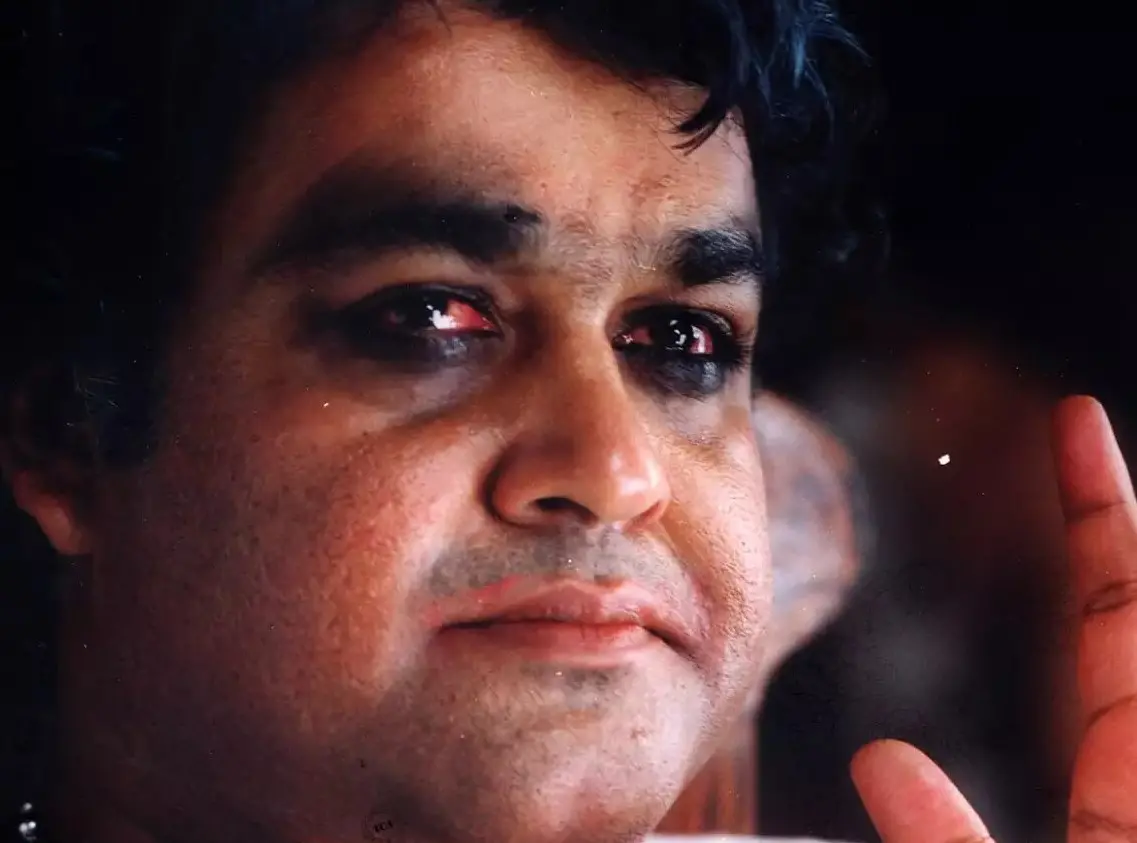
"All the world’s a stage, and all the men and women are merely players;
They have their exits and their entrances, and one man in his time plays many parts…"
— William Shakespeare, As You Like It
Kathakali defines his existence. Each Attam is a step towards immortality, as Arjunan, Bheeman, Krishnan, and Duryodhana. On stage, he is god-like, adorned in the varnish of pacha, kari, kathi, thaadi, and minukku. But when the colours wash off, the mask fades, and the lights go out, an infinite gloom takes over. Kunjikuttan – the man behind the paint – returns to a life of quiet despair. He is haunted by the wound of fatherlessness, bound in a loveless marriage with a woman incapable of affection, and burdened by a mother who has long since retreated into silence. He survives not through joy but duty – an impoverished Kathakali artist struggling to feed his art and his family. And yet, in the dim corridors of his suffering, one light remains: his little daughter. He continues for her alone, the only thread tying him to a world off the stage.
Directed by Shaji N. Karun, with dialogues by Reghunath Paleri, Vanaprastham (Pilgrimage) traces the haunting emotional journey of a Kathakali dancer caught between the sacred theatre of myth and the stark reality of his existence. At its heart lies a profound exploration of identity – a man who lives two lives: one under the painted mask of gods and heroes, and the other in the shadows of unfulfilled desire and emotional isolation. Kunjikuttan's life is a study in paradox – adored on stage, invisible off it; revered in performance, rejected in person. Through his silent battles with inner demons and fragmented relationships, he seeks not fame or transcendence, but something far more human: unambiguous love and belonging. To be seen and accepted – not as Arjunan or Bheeman, not in the hues of pacha, kathi, or minukku, but as himself – as Kunjikuttan. To be seen and embraced in his raw, unvarnished self. That is his only yearning – and his greatest tragedy.
His pensive eyes, bearing the weight of a million attams danced have forgotten how to smile. On rare occasions, they flicker with a faint light, mostly at the sight of his daughter, and sometimes, his mother. But even that fragile joy is threatened. When the daughter expresses a longing to see him perform, his wife, Savitri, cuts through the innocence with a bitter warning: “Poothana’s nipples are full of poison. You want it?” For Kunjikuttan dons only female veshams. And in that choice–whether by talent, compulsion, or fate – lie countless rejections. They have piled upon his soul like dust on an unused mirror.
If he is not seeking escape through performance, then he is chiseling out a new edge to his pain–perfecting a cynicism so sharp it slices into the very art that once gave him solace.
In a moment of weary dejection, he asks Savitri, “Why are you like this?” She meets his question with nothing but derision—her eyes saying what words no longer bother to: You are the reason my life soured. Their conversations, it seems, died years ago. What remains now is silence thick with resentment, and a house echoing with unspoken accusations.
Even the stage, once a place of transcendence, no longer offers refuge. After a stirring performance of Arjuna Vishada Vritham, the king offers applause. But Kunjikuttan, unsoftened, replies: “I shall stay away from the flatteries. I am, of course, hollow and impoverished—but so too is every act I’ve performed this festival season.”
A confession, a lament—and perhaps, an indictment of a life spent becoming everyone but himself.
Enter Subhadra.
Draped in resplendent Kanchipuram silks and antique ornaments, Subhadra—the daughter-in-law of the Diwan—is a figure of contradictions: eccentric, intelligent, and lost in a world of her own making. A writer of fables and folklore, she fantasizes about Arjuna and sees herself as his Subhadra, blurring the lines between literature, myth, and self.
Her entry into Kunjikuttan’s life is framed in pure Santosh Sivan poetry—a long shot gliding down a narrow, carpeted palace corridor, soaked in filtered light and slow movement. She steps into the space between art and reality with the elegance of a dream.
She begins in Manipravalam, bows with grace, and says softly:
“So enthused was I by watching your entire performance that, caught in the moment, I found myself singing… that’s all.”
Kunjikuttan looks at her, half in awe, half in disbelief. He is not accustomed to admiration, especially not from a woman of such stature. In her presence, something shifts.
What follows is not just a conversation, but a dance of language—words flowing in rhythm with Kathakali mudras, gestures replacing emotions too delicate to be spoken outright. A dialogue not only between two people, but between myth and reality, reverence and longing.
Soon, she is a constant presence at his attams—entranced, unblinking, absorbing every movement, every glance, every breath of her Arjuna. Subhadra watches not just a performance, but her imagined myth unfolds, transposed onto the body of Kunjikuttan.
Their love story—tender, forbidden, and quietly subversive—unfolds in whispers of auburn light cast by the kalvilakku, behind colourful curtains that flutter like silken veils of secrecy. The rhythm of slow Chenda beats marks time, as if the gods themselves are watching in hushed complicity. And then, after a performance of Subhadraharanam, Arjuna makes love to Subhadra. Not Kunjikuttan—but Arjuna, god-hero and lover, drawn from epic into flesh. When it is over, he walks out quietly, face still streaked with remnants of pacha, crown in hand, caught somewhere between role and reality. Inside, Subhadra lies still, sated not by Kunjikuttan, but by the Arjuna she has claimed as her own. He was a vessel. She, the dreamer. Between them, only the performance was real.
At first, Kunjikuttan is overcome by awe, by love, perhaps even by hope. But it isn’t until after the child is born that he arrives at her doorstep in his plain clothes, bare-faced and crownless, that the truth cuts through. She doesn’t answer. He waits, then finally says, almost to himself: “No costume, no crown. To have come here as a simple man… was Kunjikuttan’s foolishness.”
The man she admired was never him—it was the vesham, the god-like Arjuna he channeled on stage, the myth she projected onto his body. After relentless letters and unanswered pleas, she agrees to meet him—but only if he comes in his vesham.
He complies. And as he gently picks up the child, she delivers the final wound: “Please see him as my son born to Arjuna, not to Kunjikuttan.”
He stands still, cradling the child. Silenced. Erased. Not a father. Not a man. Just a vessel for someone else's legend. He never truly recovers from that moment.
What remains of Kunjikuttan retreats into the shadows of the vesham. No longer the radiant, dharmic heroes of old. He now turns to the red-faced demons, the tamasic roles—those filled with fury, vengeance, and madness. It is not art anymore. It is an exorcism.
And still, the letters to Subhadra persist—pleading, aching, begging for a glimpse of his son. Each one a whisper into silence. To his friend Raman, he finally says: “The act is over. The one she loved and desired… was not me. From now on, there will be only the Roudra Bhavam.”
Gone is Arjuna. In his place, a man consumed—finding expression only in the grotesque, the fearsome, the damned. Performance becomes punishment. The stage, his purgatory.
Subhadra’s rejection is not a solitary wound—it rips open an older, deeper scar. The pain of being denied by the woman he loves reawakens the ache of being denied by his father. In that moment of collapse, the two betrayals merge into one unbroken silence of disownment. It is a truth too cruel to name, yet it defines his very existence. Born of a ‘lower caste’ mother and a Namboothiri father who refused to acknowledge him, Kunjikuttan has spent his life oscillating between longing and resentment. But now, even the hatred has thinned, replaced by something more haunting: understanding. In a final act of reckoning, he travels to the Ganges to perform his father’s last rites. It is a ritual forbidden to him by the very structures that denied his birth. To do so is a sin—he, the illegitimate child of a caste-crossing union, has no right to such sacred rites. But he goes anyway. Not for absolution. Not for tradition. But because, for once, he chooses to act not as a character in someone else's story, but as a son.
By now, Kunjikuttan is a man hollowed by grief, betrayal, and the slow erosion of self. In one of the film’s most poignant moments, he speaks of death not with fear, but with weary anticipation: “Now all I can see is emptiness. I wait for that divine moment when all sadness and happiness converge into a vacuum.” Yet even in this spiritual desolation, he seeks vindication on the stage, the only place that ever gave him the illusion of control.
And so, in an act both radical and painful, he decides to re-enact Subhadraharanam—this time with his daughter. The performance is more than a myth reborn; it is a reckoning. A haunting echo. This is the final straw for his wife, who walks out on them forever. The home collapses. But the stage remains. As the father and daughter perform the sacred abduction before Subhadra, the very woman who once mythologized the act to satisfy her fantasies, we see something unspoken shift in her. The blood drains from her face. Her gaze falters. Kunjikuttan has turned the mirror back on her. But this time, she is not the dreamer. She is the witness. And for once, she sees not Arjuna, but Kunjikuttan. The man. The father. The wounded vessel.
Subhadra sits at her desk, pen trembling in hand. She writes to her daughter of the memory of a man she once knew only through paint and crown. The words come slowly, heavy with shock, guilt, something almost like grief. Then, a knock at the door.
A voice: “Someone is here to see you.”
She rises abruptly, heart quickening. This time, she dresses not to meet Arjuna, but Kunjikuttan—the man she had never allowed herself to see until now. But as she steps forward, it is not him she finds—only a messenger, and the news he carries. Kunjikuttan is gone. Gone, before her truth could find its voice. Before she could say what he had longed to hear, in vain, for a lifetime: That she saw him. That she loved him, not Arjuna, not the myth, but the flawed, sorrowful man behind the vesham.
Vanaprastham is a meditative tapestry woven with restraint, beauty, and unbearable sorrow. Shaji N Karun directs with immense care, allowing each frame to breathe with subtlety and silence. Mohanlal lives as Kunjikuttan with quiet ferocity, internalizing the anguish of a man whose only escape is performance. Suhasini surprises with her layered portrayal, particularly in the harrowing scene where she watches the father-daughter Subhadraharanam, her face draining of all illusion. The supporting cast, including a few original Kathakali artists, lends authenticity and gravitas. Zakir Hussain’s haunting score, with its soft, deliberate crescendos, becomes the pulse beneath the surface. Prakash Murthy’s art direction gently balances grandeur and decay—the opulence of palaces set against the sparseness of Kunjikuttan’s home. And Santosh Sivan’s cinematography is nothing short of masterful—capturing the ceremonial splendor of the Kathakali stage, the faded finery of a bygone era, and the weight of emotional ruin with a studied finesse.
Together, they create a cinema that does not shout but lingers—like a fading vesham washed away after the final act, leaving behind only the man, the myth, and the silence in between.