Exploring the unseen: Shyamaprasad’s portrayal of women
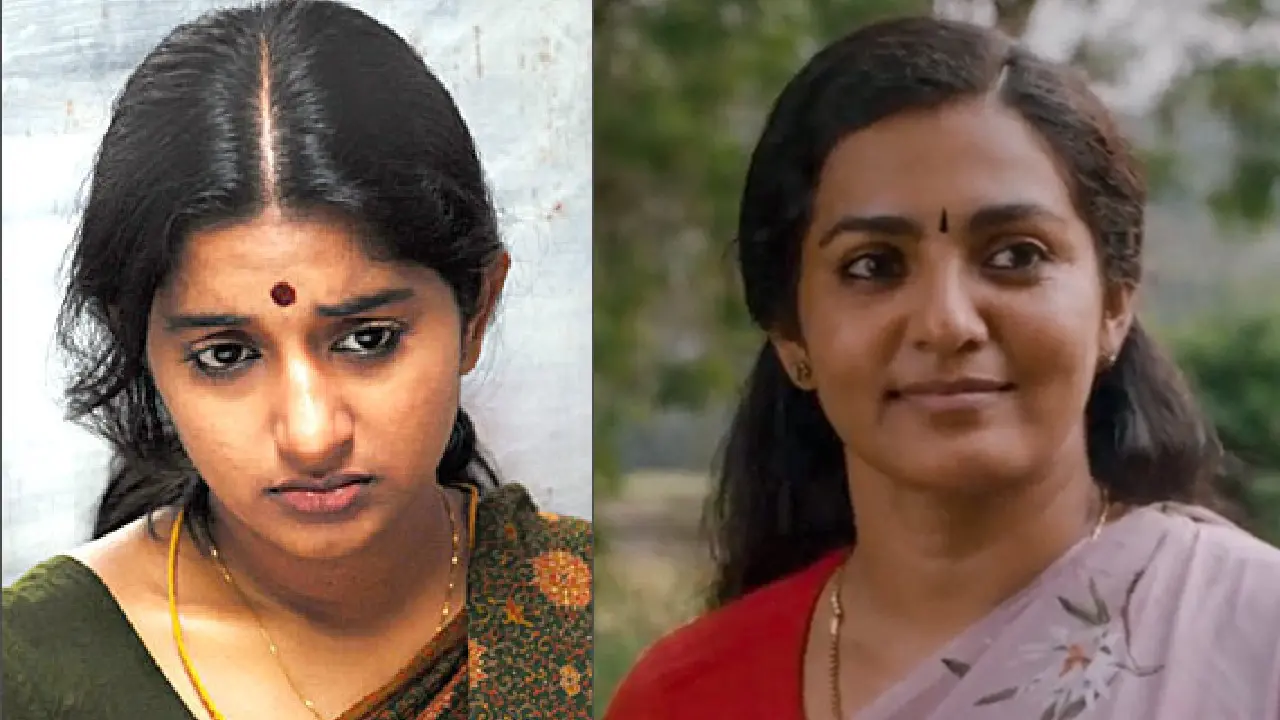
One of the most heartwarming stories in the MT Vasudevan Nair anthology Manorathangal, set in the 80s of central Kerala, pivots around Sudha (Parvathy Thiruvothu). In her early 30s, she works in the government sector in Chennai, is struggling in a loveless marriage, and tries to find solace in music. Though she makes quick visits to her hometown and the familiarity brings her comfort, the weight of expectations and unsolicited advice from family and friends threatens to suffocate her. She knows her 5-year-old marriage, a casualty of her husband’s emotional detachment, has run out of steam. Ironically, wherever she turns, the pressure to conform seems to muffle her true self.
Director Shyamaprasad, who has always unflinchingly explored non-traditional relationships without moral judgement, finds a fitting narrative in MT’s Sudha, who surprisingly resonates with his previous female protagonists. In under 45 minutes, Shyamaprasad thoughtfully immerses us in Sudha’s poignant, solitary universe. It is also an unexpected conversation from an unlikely benefactor that gives her the strength to shatter the chains that bound her.
Interestingly Sudha shares parallels with Deepthy (Meera Jasmine) from Ore Kadal (2007). Both are stifled in their respective marriages, and desperately lonely. Deepthy has a kinder partner (coincidentally played by the same actor, Naren), which makes her decision to step out of the marital boundaries morally complex. In sharp contrast, Sudha’s misery is more apparent, with a distant and irresponsible husband, evoking empathy. Upon closer inspection, it becomes clear that her unhappiness in her functional marriage also stems from an orphaned past.
In Ore Kadal, Deepthy’s chance meeting with Nathan (Mammootty) awakens her dormant loneliness, leading her to pursue a relationship with him.
While Sudha’s arc is more sanitized, Deepthy’s unfolds into a deeply complex and tumultuous affair, momentarily disrupting her mental balance. Despite Nathan’s rejection, she chooses to stay in her loveless marriage. In another setting, it would have perhaps ended there, but Shyamaprasad defies conventional norms and brings Nathan back into the picture. One of the finest scenes has Deepthy visiting Nathan’s apartment, accompanied by her kids, only to encounter a broken and repentant Nathan, admitting his love and begging for forgiveness. But yes, the closure leaves room for interpretation.
A similar non-judgmental lens is also trained on the two female protagonists entangled in adultery in Oru Njarazhcha (2019). At times one gets the feeling that Shyamaprasad’s character-driven storytelling often aligns with KG George’s approach, eschewing stereotypes for nuanced, layered portrayals. If the recently-wed Suja Iyer (Megha Thomas) is in a secretive affair with her neighbour, middle-aged Sujatha (Sally Varma) has been in a relationship with a married man for years, a reality acknowledged by her husband and children. Typically, the director is keener on exploring the rough edges and vulnerabilities, than passing verdicts. So, though the two women are aware of the moral incongruities of such liaisons, they embrace their agency, defy moral conventions, and wouldn’t reverse their decisions even if given the chance.
In Artist (2013), art student Gayathri (Ann Augustine) falls in love with fellow student Micheal (Fahadh Fasil), with such abandon that she overlooks all the red flags and surrenders her agency, ambitions, and autonomy. She turns the provider and allows him to indulge in his passion. As their one-sided relationship intensifies, she continues to enable his toxic nature, making excuses and prioritizing his artistic pursuits over her own. As the relationship gets messier, Gayathri becomes weaker, desperate to hold on to an already stagnant relationship. When the relationship ends, you feel relieved knowing that’s the only way it can free her from a perpetual cycle of emotional distress. Gayathri’s character resonates with many women trapped in such toxic relationships, where love is often compromised for control and manipulation.
Arike’s (2012) depiction of Kalpana (Samvratha Sunil) and Anuradha (Mamta Mohandas) is another instance of the filmmaker’s adeptness in crafting complex, nuanced women. Though it is Kalpana, born in an affluent family who appears to be flighty, she turns out to be the pragmatic one, prioritizing stability over a long-term romance with Shantanu (Dileep). While Anuradha haunted by a painful past, quietly fosters the Kalpana-Shantanu romance. However, when Kalpana abruptly ends the relationship, it devastates Anuradha, who is unable to comprehend her friend’s decision. Being an idealist, she tries to instill sense in her only to have Kalpana laugh at her. What’s sublime is how Shyamaprasad intersects Kalpana’s pragmatism and Anuradha’s idealism in this poignant, triangular romance, without judgment, thereby unveiling profound emotional depth.
Elektra (2010) explores the intricate dynamics of a troubled family. At its core is a daughter, Electra (Nayanthara), whose Electra Complex (a girl's competition with her mother for her father's affection) fuels her hatred for her mother Diana (Manisha Koirala). Meanwhile, the mother, trapped in an unhappy marriage, is seeking validation outside. What’s refreshing is how Diana defies the traditional mother-wife expectations and refuses to enable Electra’s hatred. And Electra, in her blind love for her father (Prakash Raj), ends up victimizing her mother. It’s a messy cauldron of human dysfunctionality that obscures the boundaries between love, hate, and morality.
Shyamaprasad’s filmmaking stands out for his commitment to presenting women as multifaceted, complex individuals, rather than simplistic stereotypes. That’s perhaps why they touch a raw nerve.