Shahi Kabir's portrayal of police officers in Malayalam cinema
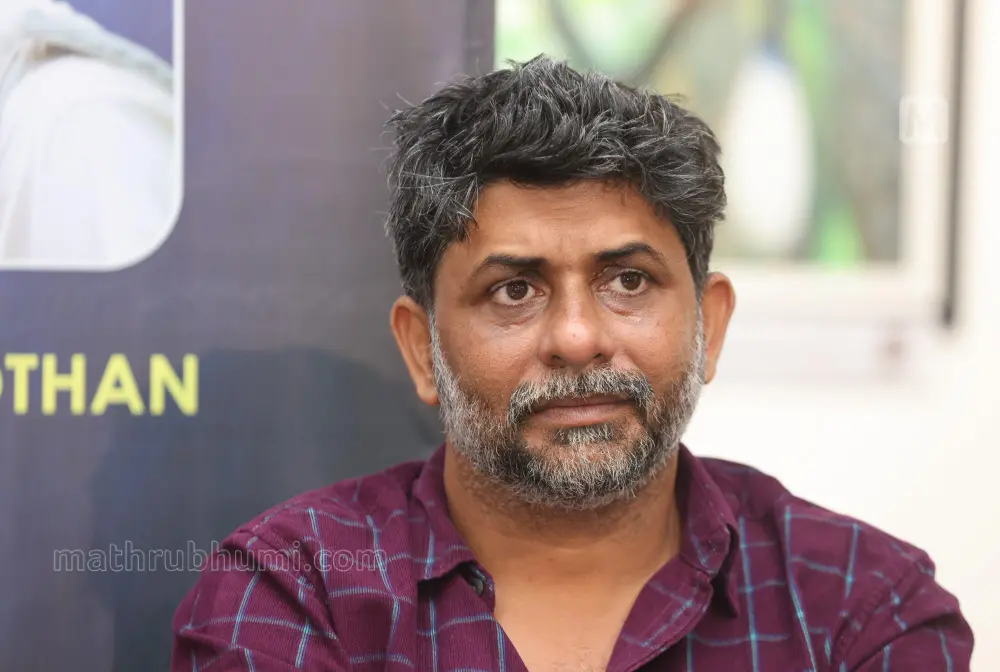
The unravelling of SI Yohannan (a terrific Dileesh Pothan) in Ronth, written and directed by Shahi Kabir, is subtle yet deeply affecting. Kabir, known for his ability to mine complexity from morally grey spaces, lets Yohannan’s contradictions simmer without judgment. At first glance, Yohannan seems like a man split in half—on one side, he’s the seasoned cop who tenderly prepares meals for his emotionally distant and suspicious wife, a small yet telling act of quiet endurance. On the other hand, he is curt, authoritarian, and often cruel in his treatment of his junior, CPO Dinanath (Roshan Mathew). His ridicule feels unnecessarily harsh, and his dominance reeks of institutional arrogance. It is easy, then, to sympathise with Dinanath—an earnest, hot-headed officer who still believes in the sanctity of the khaki, someone who wants to fight the rot from within.
When Yohannan casually accepts a bribe from a priest and brushes off Dinanath’s clear disapproval, it further drives a wedge between them. The scene lays bare a generational and ideological divide between someone worn down by years of systemic failure and someone who still believes in change. But Kabir doesn’t let us settle comfortably into this binary. Through a series of small but significant moments, the dynamics begin to shift. Dinanath, though still resistant, starts observing Yohannan not just as a flawed man but as a product of an unforgiving machinery. He begins to grasp that beneath Yohannan’s caustic wit and dispassionate manner lies a man deeply scarred—someone who long ago learned that vulnerability has no place in a world where justice is a commodity.
Yohannan’s brusqueness, then, becomes recontextualized as self-preservation. That’s when Dinanath realises that the enemy is not always the man in front of you, but the invisible, corrosive power structures that turn even the most well-intentioned officers into cogs. The mentor-protégé dynamic evolves into something messier, more human, rooted in reluctant understanding rather than admiration. It’s this subtle transformation, devoid of grand resolutions, that lends Ronth its emotional depth and lingering power.
How Shahi Kabir subverts the heroic cops in Malayalam cinema
By the time Shahi Kabir made his screenwriting debut, the landscape of Malayalam cinema had already begun to shift its portrayal of police officers. Action Hero Biju (2016) and Thondimuthalum Driksakshiyum (2017) had disrupted the conventional cop trope, replacing the archetype of the macho, morally unshakeable hero with more grounded, vulnerable, and fallible individuals. These films offered a slice-of-life take on policing, depicting officers as ordinary professionals navigating personal dilemmas, systemic rot, and everyday chaos. So when Shahi Kabir’s Joseph (Directed by M. Padmakumar) arrived in 2018, featuring a retired cop (Joju George) haunted by his past and numbed by personal loss, it didn’t feel like a radical departure. Instead, it felt like a natural extension of a new cinematic language—one where cops were no longer heroic saviours but deeply human, often broken, men trying to reconcile with the institutions they once served with pride. Joseph’s seemingly content life begins to unravel when he learns of his former lover’s mysterious death—a revelation that reopens wounds he had long buried. While this jolts him out of his emotional inertia, it also becomes painfully clear that he has never truly recovered from the breakdown of his marriage. The grief of a past love and the guilt of a failed relationship blur into one another, leaving Joseph suspended in a state of quiet despair, unable to move forward yet unwilling to fully confront his pain.
Two years later came Nayattu (2021), directed by Martin Prakatt and penned by Shahi Kabir, a searing procedural thriller that follows three police officers who find themselves on the run after an accidental death involving a Dalit political worker. What begins as a minor scuffle quickly escalates into a political firestorm, with the Chief Minister stepping in under the pressure of looming elections. As the state machinery kicks into overdrive, the trio becomes scapegoats in a cruel game of electoral optics. Despite the absence of concrete evidence, the police are coerced into framing their own, exposing the rot at the very heart of institutional justice. Nayattu cleaves open the inner workings of the law and reveals the silent complicity that allows political interests to subvert truth. It’s a disturbing look at how systemic corruption distorts reality to preserve its power. Though the film faced criticism for its depiction of caste dynamics and accusations of Dalit appropriation, it remains a deeply unsettling and thought-provoking meditation on the state’s exploitative machinery. Joju George’s portrayal of ASI Maniyan is especially haunting. A man of modest means and meek disposition, Maniyan is slowly crushed by a system he once believed in. Joju seamlessly blends vulnerability, fear, duty, and despair—so much so that when tragedy finally strikes, the image of Maniyan’s broken, bewildered face stays with you.
The following year, Shahi Kabir made his directorial debut with Ela Veezha Poonchira—an atmospheric and brooding crime thriller set atop an isolated hill station that houses a wireless police outpost. Here, amidst shifting clouds and howling winds, two officers are stationed, cut off from the world below. The narrative unfolds as a slow burn, with Soubin Shahir delivering a chillingly restrained performance as a withdrawn cop whose seemingly passive exterior slowly gives way to a far more sinister core. As the story progresses, it twists and contorts into increasingly disturbing shapes, leading the viewer through a maze of psychological tension and moral ambiguity.
What makes the film truly immersive—beyond its plot mechanics—is its tonal mastery. The isolation, the eerie silences, and the quiet dread that clings to every frame create a mood of sustained unease. It’s a film that plays havoc with your mind, tapping into buried fears, personal traumas, and the uncomfortable truth that evil often wears the face of the familiar. Once again, Kabir subverts the myth of the heroic policeman. The cops in Ela Veezha Poonchira are neither saviours nor monsters—they are ordinary men, performing routine duties with clinical detachment, until the mask slips and something far more disturbing is revealed. The horror isn’t in the crime itself, but in the slow, unsettling realization of what people—especially those in uniform—are capable of when left unchecked.
Perhaps the weakest film in Shahi Kabir’s otherwise compelling exploration of the police psyche is Officer on Duty, which centres on a protagonist (Kunchacko Boban) with a haunted past grappling with his turbulent present. The film is clearly a departure from Kabir’s signature style of subverting the stereotypical cop narrative. Here, the central character—Harishankar—emerges not as a flawed, conflicted human being, but as a relic of Malayalam cinema’s long-standing obsession with the 'angry cop' archetype. Rather than interrogating the trope, the film leans into it, glamorising vigilantism and reinforcing patriarchal ideals through stylised machismo.
Directed by Jithu Ashraf, the film is ideologically muddled, caught between wanting to say something meaningful about trauma and justice, and indulging in the outdated fantasy of the one-man army. The emotional core is never fully realized, leaving the audience disengaged and unconvinced. The narrative abandons the grounded realism and procedural nuance that defined Kabir’s earlier work, opting instead for high-octane fight sequences choreographed to spotlight the protagonist’s invincibility. Harishankar emerges from every confrontation unscathed, while his battalion conveniently arrives only after the dust has settled—a recurring device that further centres him as a messianic figure rather than part of a functioning law enforcement unit.
The result is a film that feels ideologically regressive and narratively hollow. It inadvertently raises troubling questions about toxic masculinity and the glorification of unilateral violence, echoing a cinematic era Kabir’s earlier work had so effectively moved beyond.