Dulquer Salmaan: Redefining stardom with humility and grace
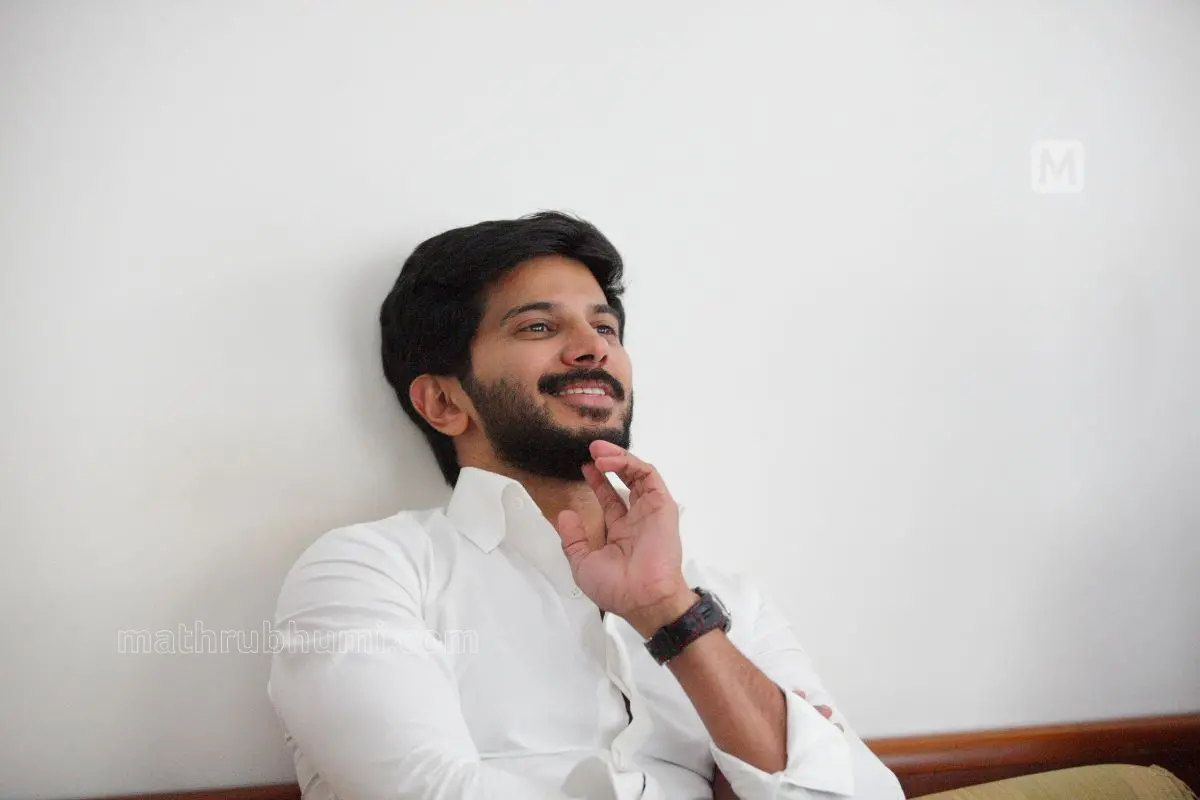
In an industry where allegiances shift overnight and public images are often carefully sculpted, Dulquer Salmaan has managed something rare—he makes authenticity look effortless. On social media too, he resists the curated gloss of stardom. To his fans, he is both a superstar and a boy-next-door —a paradox that has become his greatest strength.
The Lokah team had just begun their Dubai theatre visit when the unexpected happened. Out of nowhere, the film’s producer Dulquer Salmaan walked in, dressed in an oversized shirt, trousers, and a cap. The crowd erupted. Cameras shot up, voices cracked with excitement, and in seconds the atmosphere shifted from routine promotion to sheer frenzy.
But then Dulquer didn’t milk the moment. He hopped onto the stage with an easy smile, hugged the actors, the director, even the emcees, and then, in classic Dulquer fashion, gently pushed the leading actors to the front. It was the kind of gesture that could easily be read as staged warmth, a calculated PR flourish in an industry where allegiances flip with every Friday release. But those who know Dulquer, or even just follow his online presence, would argue otherwise.
Here’s an actor whose social media is not a glossy feed of self-promotion, but a steady stream of warmth, wit, and impeccable manners. From congratulating colleagues with heartfelt notes to lifting up uninspired promotional posters with his personal touch, and writing tender, intimate messages for family on special days, Dulquer has long built a reputation for sincerity. It’s also why he remains Malayalam cinema’s most-followed actor on Instagram, with 15.3 million followers tuning in—not just for updates, but for the sense of grace and genuineness he radiates.
Two days later, at the Hyderabad promotions of Lokah, the picture grew even sharper. For Dulquer, this was less of a promotional pit-stop and more of a gentle homecoming. The city had already embraced him as its own in the wake of Sita Ramam and Lucky Bhaskar’s soaring success. The cheers that rose when he walked in were not just for a producer arriving with his team, but for a star whose presence had left an indelible trace on the Telugu imagination.. Slipping easily into the role of mentor, he guided a team that still looked slightly overwhelmed by the frenzy surrounding their film.
In a long, heartfelt speech, Dulquer shifted the spotlight away from himself and onto every member of the crew. He credited each contribution, large and small, with such precision that his words felt less like routine acknowledgments and more like passages one might proudly place in the preface of their own biographies.
His praise of Naslen was not just appreciative but almost theatrically tender, the kind that made the young actor glow in embarrassment and delight. When he spoke of Kalyani Priyadarshan, he didn’t resort to generic superlatives—he captured instead the specific spirit she brought into Chandra, turning his words into a portrait. And in perhaps the most telling moment, he singled out writer Shanty Balachandran, recognising the invaluable dimension her female voice lent to a world so often monopolised by men. It was a rare moment in an industry where compliments often sound like rehearsed lines. He even went so far as to admit that he had never tasted this kind of success before. This, coming from an actor whose opening-day pull at the box office trails only Mammootty and Mohanlal, was disarming in its humility.
Dulquer has also shown a rare ability to absorb lessons from failure. When King of Kotha underperformed despite massive pre-release hype, he recalibrated his approach. With Lokah, the pre-release campaign was deliberately muted, and only after the film’s numbers began to soar did he scale up the publicity. It was a calculated pivot that reflected not just instinct but strategy. His business acumen became even clearer when he quickly recognised the potential of a Lokah franchise, encouraging director Dominic Arun to explore the universe further—a move that could prove to be one of the smartest brand-building exercises in recent Malayalam cinema.
While Twitter often accuses him of being a bad sport for blocking negative responses, anyone who has spent even a little time on social media knows that shutting out toxicity is less about intolerance and more about survival.
Dulquer doesn’t just play the role of an actor; he extends it into something larger—someone who, through sincerity and small gestures, has mastered the art of being gracious in an industry that often forgets it. In an environment where the word “nepotism” is frequently hurled as a critique or a caution, Dulquer Salmaan occupies a rarer space: that of a star son who wears his lineage lightly, never letting it define or confine him. Instead, he transforms it, making privilege seem effortless yet earned, and turning what could have been a point of criticism into a quietly magnetic charisma that feels, almost impossibly, entirely his own.