IPL final silences the Purists; T20’s ultimate triumph for cricket
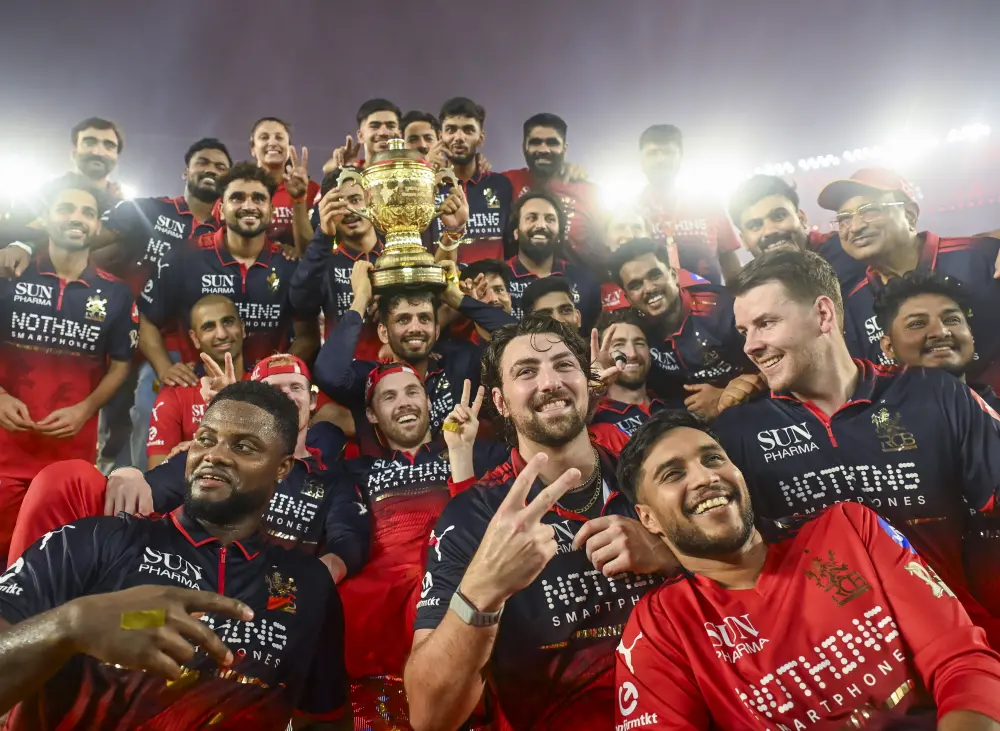
The Narendra Modi Stadium in Ahmedabad witnessed another remarkable IPL final on Sunday. Royal Challengers Bengaluru defeated Gujarat Titans to lift their second consecutive title. The two best teams in the tournament reached the final. The better team won on the night. But the significance of the match goes beyond the trophy. What unfolded over the past two months was yet another reminder that the arguments advanced by cricket's purists against T20 cricket, and the IPL in particular, have not merely aged badly. They have been comprehensively disproved.
Look at the final itself. There was pressure. There was strategy. There was high-quality bowling. There was intelligent batting. There was fielding of the highest standard. There were moments when one mistake could have altered the course of the match. In other words, it was cricket at its finest. That is the inconvenient truth for those who continue to insist that only Test cricket deserves to be regarded as the game's purest expression.
The strange thing about this argument is that it ignores history. When Kerry Packer launched World Series Cricket in the late 1970s, traditionalists reacted with horror. Coloured clothing, day-night matches, white balls, television-driven presentation, and professional salaries, they argued, were sacrilege. Today, those innovations are woven into the very fabric of the game. The opposition to T20 follows exactly the same pattern. Every generation of cricket traditionalists appears convinced that the next innovation will destroy the sport. Yet cricket has survived every one of these supposed existential threats and emerged stronger. The IPL is perhaps the most obvious example. Critics often reduce it to a commercial spectacle. But that misses the point entirely. The IPL, from the very beginning, has been a high-performance laboratory. It is where young players are exposed to the very best talent in world cricket, and where skills are sharpened under pressure. It is where careers are accelerated.
Take the emergence of someone like Vaibhav Suryavanshi. At fifteen, he has already done things that many thought impossible. Records that seemed untouchable have been challenged. Barriers that appeared permanent have fallen. More importantly, he is learning his cricket not in isolation but in dressing rooms shared with some of the finest players in the world. Previous generations never had access to such an environment. A young Indian cricketer thirty years ago could only have dreamt of spending weeks alongside international greats, learning from them every day, sharing nets, conversations and match situations. Today, that has become routine. The benefits are visible everywhere. Batting has improved. Modern batters possess a range of strokes that simply did not exist a generation ago. They score more quickly, rotate the strike better, and attack with greater confidence. Bowling has improved. Fast bowlers and spinners have been forced to innovate because survival demands it. Yorkers, slower balls, knuckle balls, variations in pace, subtle changes in angle and length. Bowlers today operate with a wider arsenal than ever before. Fielding has improved. The athletic standards demanded by T20 cricket have transformed expectations across every format. What once drew applause is now considered routine. Tactical awareness has improved. Captains and coaches now think differently. Match-ups matter, data matters, and flexibility matters. Teams adapt faster because they have learned to operate in environments where every ball can alter the outcome.
The impact is visible not just in T20 cricket but also in Test cricket and one-day internationals. Test cricket today is played at a pace that would have seemed extraordinary twenty years ago. Teams chase totals that previous generations considered impossible. Batters attack rather than merely survive. One day cricket has evolved even more dramatically. Scores once considered monumental are now regularly pursued. The influence of T20 is unmistakable.
Which brings us back to the recurring concern that leagues such as the IPL will somehow destroy Test cricket. The evidence points in the opposite direction. The formats are not competing with each other. They are feeding each other. There will always be players who excel in every format. Virat Kohli remains the obvious example. Nearly two decades into his career, he still displays the hunger and intensity of a newcomer. Others, such as Josh Hazlewood, have demonstrated that elite skills can travel seamlessly across formats. There will also be players who choose specialisation. Some will prefer Tests while others will prefer T20 cricket or shorter formats. There is nothing remotely alarming about that. Every mature sport accommodates specialists. The notion that every cricketer must aspire to the same format belongs to a different era.
There is another uncomfortable reality behind some of the criticism directed at franchise cricket. Money. Too often, players are criticised for earning what the market is willing to pay them. This criticism rarely survives serious scrutiny. Cricket boards require revenue. Infrastructure requires revenue. Coaching requires revenue. Grassroots programmes require revenue. Women's cricket requires revenue. Professional sport does not run on sentiment. The IPL has generated wealth for the game. More importantly, it has reinvested that wealth into the game. And that is not a problem to be solved. It is a success to be celebrated.
The final in Ahmedabad was therefore about much more than another championship for Royal Challengers Bengaluru. It was the culmination of a season that showcased every aspect of modern cricket at its best. Established stars, emerging talents, outstanding batting, outstanding bowling, outstanding fielding, tactical sophistication, and relentless competitiveness. Far from diminishing cricket, the IPL has expanded its horizons.
The purists feared that T20 would weaken the game. What has actually happened is the opposite. It has made the game faster, smarter, more skilful, more athletic, and more global.
And cricket is the better for it.
(The author is a National Award winner for Best Narration and an independent political analyst. Views expressed are personal.)