OPINIONIndia’s electoral rolls need an independent audit
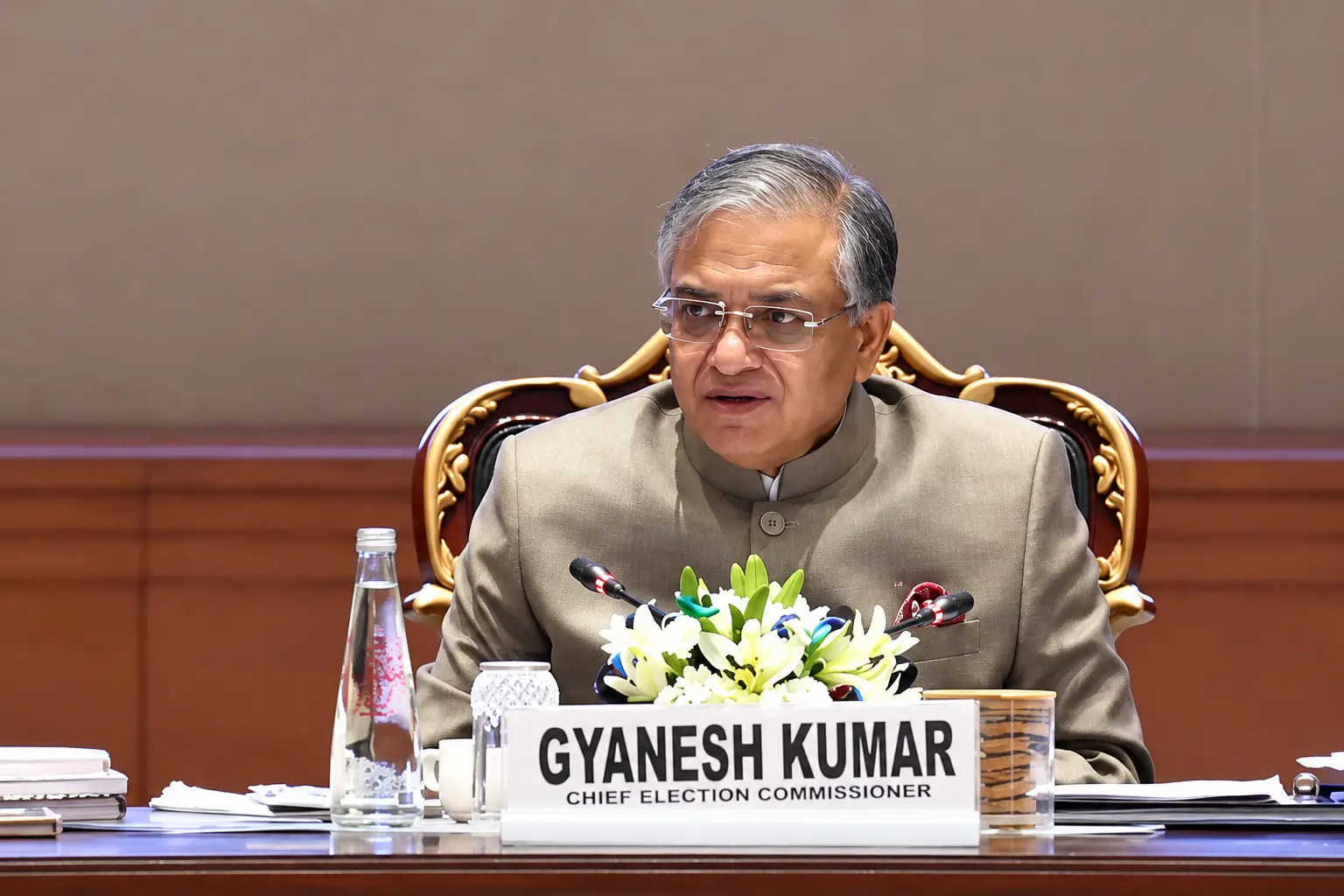
What is so deeply unsettling about the latest controversy surrounding the Election Commission of India is not merely that the Commission is under attack. Institutions are criticised in democracies every day, and political parties often accuse election authorities of bias. What is unusual is that the questions now being raised about the Commission are no longer coming only from Opposition politicians or civil society activists. Two of the three Election Commissioners themselves formally objected to decisions on electoral rolls, voter registration, and the technology controlling the voter database. That changes the very nature of the argument.
The Indian Express investigation has revealed that Election Commissioners Sukhbir Singh Sandhu and Vivek Joshi raised objections at least 14 times over 10 months to decisions and administrative actions that, according to the report, were taken without their knowledge. Their objections concerned changes to Form 6, additions and deletions from electoral rolls and the increasing centralisation of the voter database and software in Delhi. In one instance, the Commissioners described a change to the application form for new voters as “illegal” and “unauthorised”.
The Election Commission's defence is that these were internal deliberations and that the three-member Commission's final decisions were unanimous. That is a legitimate position. Disagreement within a constitutional body is not evidence of dysfunction. Indeed, disagreement can reflect a healthy institution. But then the obvious question follows. What happened between the objections and the alleged unanimity? Where are the minutes or the file notings? Where are the authorisations, and where is the record showing how each objection was considered and disposed of? These are not political questions, but institutional ones.
The controversy also brings back Rahul Gandhi's much-discussed “vote chori” allegations. In August 2025, he presented what he said was an analysis of the Mahadevapura Assembly segment in Bengaluru, identifying more than one lakh allegedly problematic entries involving duplicate voters, questionable addresses, bulk registrations and other irregularities. The Election Commission rejected his allegations and asked him to substantiate them through the prescribed procedure. One need not accept Rahul Gandhi's conclusions to recognise the legitimate question underneath them. If electoral rolls contain anomalies, the answer should be an independently verifiable audit. Instead, his team complained that it was given paper copies rather than easily searchable, machine-readable electoral data. And that difference is not cosmetic. A computer can examine millions of records for duplicate names, addresses, dates of birth and other patterns in minutes, but a human being will end up spending months doing the same thing manually. Mr Gandhi said his team had to work through enormous stacks of printed material and consequently could examine only a fraction of what it wanted to study.
The ECI has its own explanation for why electoral data is supplied in particular formats and has rejected the broader allegations of manipulation. That should be recorded, but it does not answer the larger democratic principle of why the integrity of an electoral roll should depend on citizens having the resources to manually reconstruct it from paper? This is where the present controversy becomes far more important than the political slogan of “vote chori.” The question becomes one of verifiability. The same issue appears in the Special Intensive Revision. 13 crore names have been struck off draft electoral rolls across 30 States and Union Territories. That does not mean 13 crore legitimate voters have been disenfranchised. The deletions include people who are dead, have permanently moved, are duplicated or otherwise fail the applicable verification. But the sheer scale of the exercise makes the quality of the verification process critical.
And then comes the extraordinary revelation from Goa. The Indian Express reported that 97 voters whose documents Electoral Registration Officers had examined and who were found eligible could not have those decisions properly recorded because the software did not permit it. The problem was not necessarily that an official had rejected them, but that the system apparently prevented the official from completing the statutory process. That raises a question which should concern every citizen, irrespective of political allegiance. Does the software serve the election officer, or does the election officer serve the software? Technology is supposed to facilitate the exercise of statutory authority, and cannot quietly become the authority itself. There is another uncomfortable detail. Two Election Commissioners reportedly went so far as to approach Cabinet Secretary T V Somanathan over concerns about the concentration of administrative control over the Commission's voter software.
Yet the most conspicuous political response to the revelations has come not from the Election Commission but from the ruling party. BJP spokesperson Sambit Patra argued that disagreement among Election Commissioners showed a vibrant democracy and that the SIR exercise ultimately reflected unanimity. There is something profoundly awkward about this arrangement. The Election Commission is supposed to be an independent constitutional referee. The BJP is one of the principal contestants in the electoral arena. When the referee is accused of procedural wrongdoing, it is certainly entitled to defend itself. But when the ruling party becomes the referee's most energetic interpreter and defender, questions of perception become unavoidable.
The point is not that the BJP's defence proves anything, nor does internal disagreement prove that elections have been manipulated. But an electoral institution must have more than legal authority. It needs public confidence, and that is something that has to be earned through transparency. This is also why the earlier allegations of discrepancies in election data should not simply be dismissed as Rahul Gandhi's political campaign. Nor should they be accepted as proof of a stolen election. The proper response to such claims is neither credulity nor contempt, but verification. The same principle applies to the claims made by Parakala Prabhakar and others about electoral data and Form 17C. Whatever one's political position, the relevant question is whether votes recorded at polling stations can be reconciled transparently with the votes ultimately counted. If they can, publish the evidence and settle the argument. If there are discrepancies, explain them. An election system confident in its own integrity should have nothing to fear from an audit.
The danger lies elsewhere. It lies in creating a system in which the institution responsible for maintaining the electoral record also controls the data needed to independently interrogate that record, while citizens and political parties are expected to accept its conclusions without equivalent access to the underlying evidence. That is simply not how public trust is built. The current controversy therefore needs to move beyond Rahul Gandhi versus the Election Commission, BJP versus Congress, or SIR versus its opponents. The central question it raises is much simpler. Who audits the auditor? The Election Commission should publish the documentary trail behind the 14 objections raised by its own Commissioners. It should explain who authorised the disputed changes, how the objections were resolved and how the Commission arrived at its claim of unanimity. It should make electoral data available in forms that permit meaningful independent analysis, while protecting legitimate personal information. It should explain the architecture and governance of the software electoral officers increasingly depend on. None of this requires believing Rahul Gandhi, Parakala Prabhakar, Sambit Patra, or anyone else, nor does it require distrusting the Election Commission. It requires trusting citizens enough to let them verify.
An election is not credible merely because the authority conducting it declares it credible. It becomes credible when its processes can withstand scrutiny by people who do not work for the authority, do not belong to the ruling party and do not owe their conclusions to the Opposition. The vote belongs to the citizen, and so does the right to know that it was counted honestly.
(The author is an independent political analyst and the National Award winner for Best Narration at the 71st National Film Awards. Views expressed are personal.)