Oommen Chandy: The tireless democrat who built a culture of accessible governance
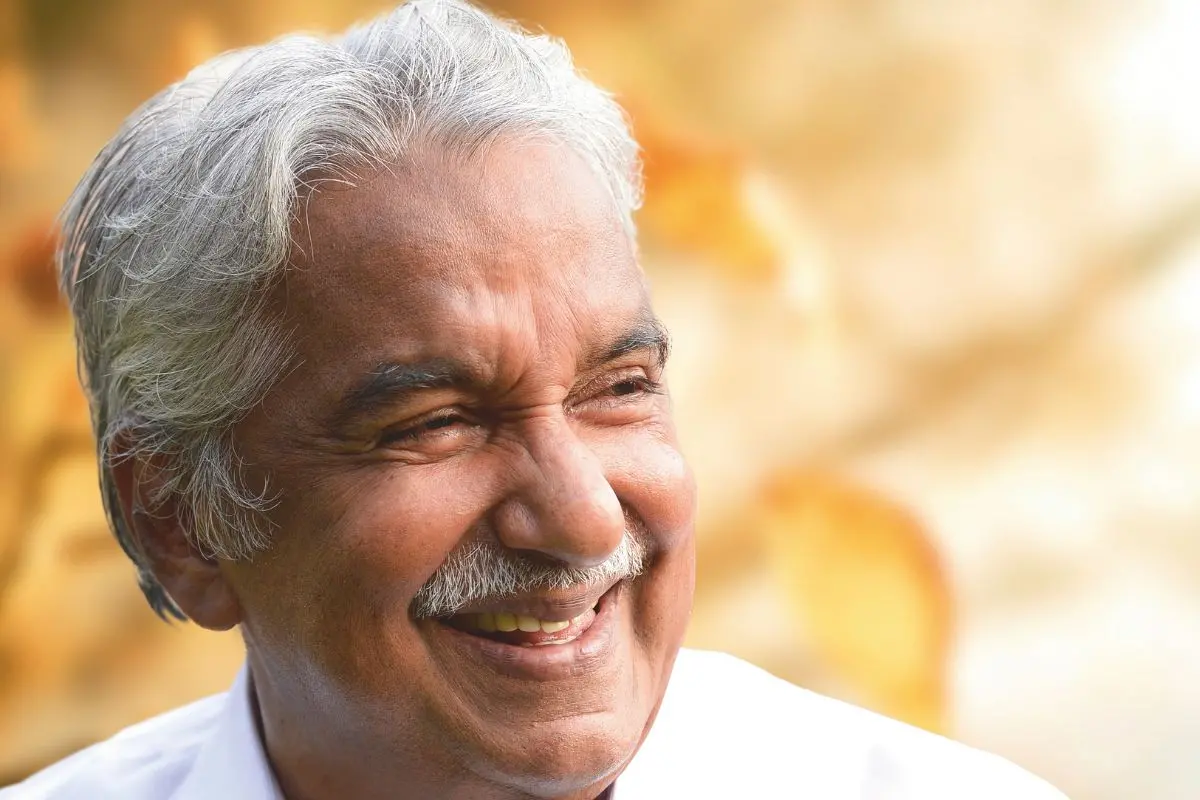
Since Independence, with the rare exception of the 1975–1977 Emergency, India has seldom faced such a pronounced decline as today in the core elements of governance: transparency, accountability and the accessibility of elected officials. Without these three principles, electoral democracy risks turning into legalised autocracy. Voting initiates the democratic process, but effective institutions, devoted public service, and responsiveness to citizens' needs between elections, are what sustain it.
No leader embodies a perfect democratic ideal. As the careers of figures like Abraham Lincoln and Jawaharlal Nehru show, democracy is inherently flawed and perpetually a work in progress. India's framers anticipated this vulnerability, warning that a nation could easily preserve the outer forms of democracy — elections, legislatures, Constitutional procedures — while discarding its spirit. Dr B R Ambedkar famously noted that democracy in India was merely a thin topsoil over an undemocratic social fabric, emphasising that a constitution's strength depends entirely on those who administer it. Similarly, Nehru often voiced frustration over electoral politics, observing that campaigns frequently prioritise rhetoric and partisan conflict over substantive issues.
Consequently, winning an election is not the fulfilment of democratic duty, but its beginning. Leaders must be evaluated by their actions in office rather than their language while in opposition.
Within Kerala’s modern political history, few figures have embodied this commitment to democracy and public service as consistently as Oommen Chandy (whom I used, fondly, to call "O C Chettan", or elder brother), whose 83rd birthday we mark today (October 31). Throughout his career, he treated political power as a practical instrument for socio-economic development, grounding his administration in direct accessibility, openness, and institutional accountability.
What made Oommen Chandy exceptional was not merely the longevity of his political career, remarkable though that was in spanning more than half a century of elective office, but the extraordinary consistency with which he inhabited the role of a public servant. In 2020, three years before his passing in July 2023, he marked his fiftieth year as a legislator, a stunning half-century in public life that saw him serve twice as Chief Minister, hold important ministerial portfolios including Home, Finance and Labour, and occupy the key position of Leader of the Opposition. He had, by then, won eleven consecutive elections from Puthuppally, his home turf, establishing a record as Kerala’s longest-serving legislator and eclipsing the earlier mark set by K M Mani. In total, he served more than 19,000 days as an MLA.
Few careers in Indian politics can match that record of electoral trust; fewer still can claim that such longevity was accompanied by an equally enduring reservoir of public affection. Never was this more apparent than on his final journey to his last resting place, where lakhs of ordinary Malayalis thronged the highway along which his body was taken back from the state capital, Thiruvananthapuram, to its ultimate abode in Puthupally.
But the explanation for Oommen Chandy’s success cannot be found in electoral arithmetic alone. In our democratic republic, the success of a political leader in entering people’s hearts can largely be boiled down to five core ingredients: charisma, of course, but abetted by principles, commitment, capability and empathy, which should be interpreted as a willingness to listen to and connect with the people a politician seeks to represent. Even his fiercest critics would, however begrudgingly, concede that all five were cornerstones of Chandy’s career. These ingredients explain why this exceptional leader occupies such a special place in the hearts of Keralites and why, even after his passing, his memory continues to command an affection that transcends the ordinary boundaries of party and ideology.
He was, in the truest sense of the word, a janakeeyan—a people’s leader. The term is frequently employed in Keralam’s political discourse, but in Oommen Chandy’s case it was an accurate description of this son of the soil who grew to reign over the hearts of his people, remaining throughout a tireless democrat. He was constantly surrounded by the public, from whom he drew his energy and drive. His political journey had begun in student politics, when he cut his teeth as an active member of the Kerala Students Union, which he presided over between 1967 and 1969, before moving on to head the Kerala Youth Congress in 1970. He rose through the ranks of the Indian National Congress to become an AICC general secretary and a member of the Party’s core steering committee. Yet, for all the positions he held and all the honours that came his way, his defining constituency remained the ordinary citizen.
It was perhaps this instinct that lay behind one of the most remarkable experiments in accessible governance that India has witnessed: his Jana Samparkam (people’s contact) programmes. Here was a Chief Minister who did not content himself with receiving petitions through layers of bureaucracy, nor with the carefully choreographed public meetings that politicians ordinarily attend, showering greater attention on the cameras hovering around, than on the people whose agonies they purport to allay. He travelled across Kerala, holding public meetings in every district at which anyone with a grievance could meet the Chief Minister directly and have his or her concerns heard. They were not “sittings”, for the Chief Minister would stand the whole time, often (as I personally witnessed in Thiruvananthapuram) for 14 to 16 hours at a stretch, showing not the slightest sign of fatigue, impatience or hunger. These sessions would often stretch on past midnight, with the CM standing till the very last petitioner in a stadium full of people had been heard and assisted. In most cases, Chandy ensured that the aggrieved party received justice on the spot. It was superhuman, but it worked, and it touched the hearts of millions.
There was something profoundly democratic about this exercise. Jana Samparkam did more than bring a Chief Minister closer to his people; it democratised access to elected representatives and sought to remove the bureaucratic “red-tapeism” that so often turns the citizen’s simplest encounter with the State into an ordeal. It embodied the proposition that government is not an inaccessible edifice to which citizens must supplicate themselves, but an instrument created to serve them. And it demonstrated that accessibility is not an ornamental virtue of democracy but one of its most fundamental conditions.
One could reasonably ask what need there was for a leader who was already a household name, who had won 11 consecutive elections from the same constituency, and who had occupied virtually every major political office in the State, to put himself through such a physically taxing exercise, often for 14 to 16 hours a day. The answer lay in Chandy’s understanding of public service. There was perhaps no greater calling for him than to hear, personally and directly, the voice of the people he served. He understood that electoral victory was not the end of the democratic compact but its beginning.
It is no surprise, therefore, that the United Nations recognised his efforts with the UN Public Service Award in 2013. It was a rare and richly deserved recognition of a model of governance that was at once intimate and institutional—intimate because Chandy himself chose to listen; institutional because he demonstrated what public administration could achieve when it was organised around the citizen rather than the convenience of the bureaucracy.
His accessibility was matched by accountability. Chandy was not merely a leader who wished to be seen by his people; he was a leader who accepted the responsibility of acting upon what he heard. That distinction matters. Accessibility without accountability can become little more than political theatre; accountability without accessibility can become an abstraction. Chandy understood the relationship between the two. His Jana Samparkam was meaningful precisely because the act of listening was followed, to the greatest extent possible, by action.
Oommen Chandy’s understanding of the needs of ordinary people was perhaps nowhere more evident than in his approach to healthcare. I asked him one day, after he had concluded his Jana Samparkam programme in all fourteen district capitals, what had been the principal preoccupation of those who clamoured for his attention to redress their needs. What had he found was the most important demand of the people? Without taking even a second to think, he replied without hesitation that it was health-related issues. Health, he said, is the most important problem facing any individual: without it, you cannot earn or work to support your family or lead a meaningful life; and all else in life pales if you do not have the health to enjoy it. That answer was characteristic of the man: instinctively, he thought not in terms of political slogans or abstract policy categories, but of the immediate anxieties of the people he represented.
His Jana Samparkam sessions convinced him of the vital importance of addressing health as the number one priority of his government: not just public health institutions, important though those were, but assistance for vulnerable individuals whose health did not permit them to be fully contributing members of society. The Karunya scheme emerged from precisely this compassionate understanding of the burdens borne by ordinary families confronting illness.
This was also reflected in his overall administrative record. His celebrated “100 days – 100 programmes” initiative demonstrated a political leader’s determination to translate promises into measurable outcomes within a defined time-frame. It was governance with a deadline attached to it, and therefore governance capable of being judged. The same impulse informed his efforts to ensure that the poor, marginalised, and vulnerable were not left behind: the provision of grain for a single rupee, the Karunya programme of subsidised healthcare, the establishment of facilities to provide subsidised medicines to the needy afflicted with major (and expensive) illnesses, free cochlear implants for the hearing-challenged, and free cancer treatment for families below the poverty line, were not merely welfare announcements but manifestations of a political philosophy in which the State had a duty to stand beside those least able to stand up for themselves.
In turn, they stood up for him – literally, thronging both sides of the highway at 4 am as his cortege wound its way slowly from the state capital, all the way to its final resting place. Rest in peace, OC Chettan. You will live forever in the hearts and minds of those you served.