Kulathoor: A lesson in development without disturbance
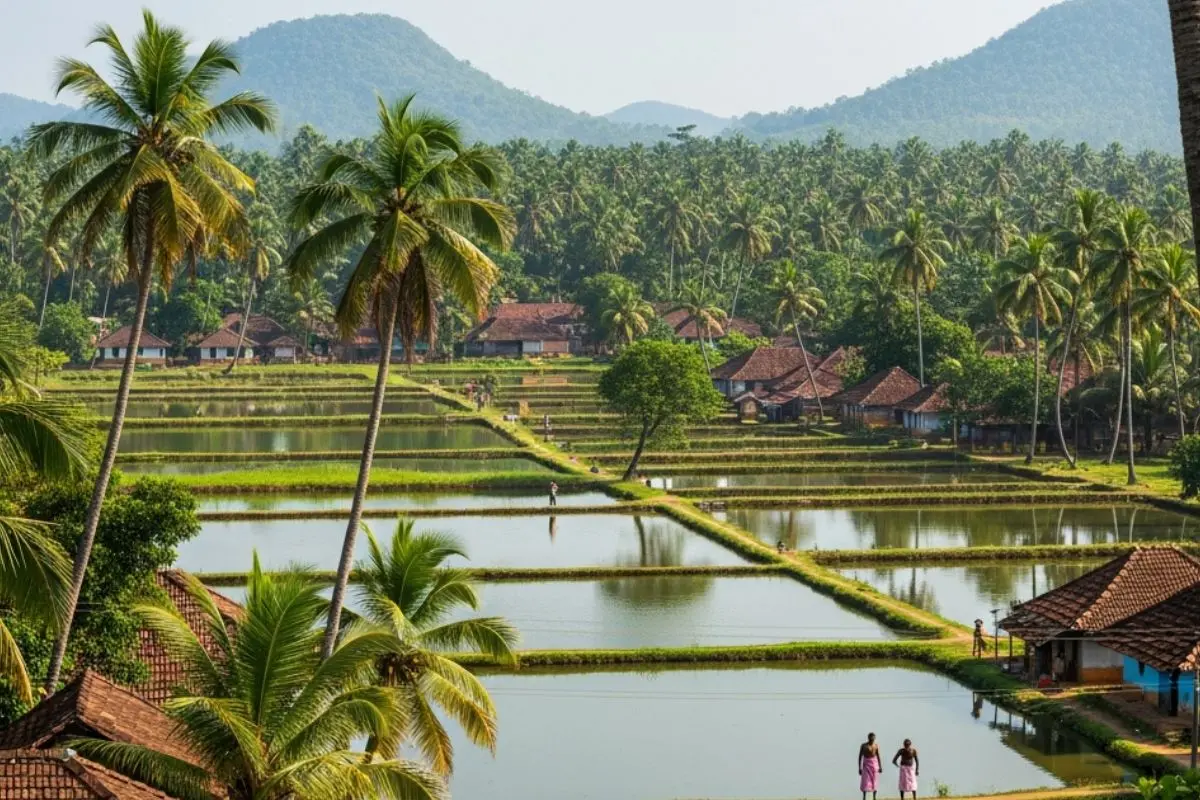
They had insisted—almost pleaded—that I visit them, and so, with a touch of reluctance at first, I made my way to that quiet, unhurried village. In Kulathoor, the people have formed a small collective they lovingly call the “Changathikkoottam”—a circle of friends bound not by wealth or influence but by companionship, trust, and shared purpose. From a modest little room by the side of a pond—roofed with sheets and open to the sun, the breeze, and the laughter of its people—they run their modest but meaningful initiatives.
Within that unassuming structure rests the soul of the village. They have an ambulance, purchased not through abundance but through collective sacrifice. They have a tiny, carefully maintained library, whose shelves hold not just books but their quiet aspirations. Their way of life appears simple, almost fragile, yet it is deeply contented—woven with dignity, mutual care, and a humanity that modernity often forgets.
Coming from the city’s suffocating pace, I felt as though I was inhaling freedom itself—the pure, unhurried air of a place that had retained the innocence of unbroken rhythms.
About thirty villagers—elderly men marked by time, women with an understated resilience, and young people with lively, curious eyes—gathered around me. Out of sheer curiosity, I asked what they did for leisure.
They smiled. “Nothing much,” they said, with a gentle humility.
Most had never travelled in a Vande Bharat train; many had never boarded a train at all. A few had never watched a film in a cinema hall. Their world was small, but beautifully complete—anchored in books, community, and a serenity the modern world desperately seeks but seldom finds.
This village is named Kulathoor—from kulam, meaning pond, and oor, meaning land. Quite literally, the land of ponds. A name that once mirrored the flowing waters, the fertile cycles, and the reflective calm that shaped its landscape. Water was not merely a resource here; it was the heartbeat of the land.
But then came development—urgent, abrasive, and unlistening.
The tranquillity of Kulathoor is now being pierced as National Highway 66 drives its way through the heart of the village, dividing it into two unrecognisable halves. The springs that once whispered beneath the soil are being smothered. The irrigation channels that fed the crops are falling silent. The ponds—those ancient keepers of memory and identity—are slowly losing their breath.
Thus, the land of ponds edges toward the irony of water scarcity.
And still, the villagers do not complain.
They do not protest.
Their acceptance carries a grace that is almost painful to witness.
In that moment, I felt the invisible walls around my own life soften. Their quiet wisdom, their understated affection, and their profound understanding of life drew me into a world lit not by development, but by humanity. Their lives reminded me of a fundamental truth we often overlook:
Development is essential—but it should never come at the cost of the people it claims to uplift, nor the nature that sustains us all.
True development must be gentle, thoughtful, and deeply respectful.
It must be, as someone once beautifully said, “like changing the clothes of a sleeping child—so softly that the child does not wake.”
That is how we must build our roads, our bridges, our cities—without tearing the fabric of communities, without wounding the land, without draining the ponds that hold a village’s memory.
Development is not the enemy. But development without empathy, without environmental sensitivity, without listening to the heartbeat of a place—that is where we go wrong.
Kulathoor, the land of ponds, has taught me a lesson that no policy document ever could:
True progress is not measured in kilometres of highway, but in the dignity preserved, the nature protected, and the lives left undisturbed. To the dear people who opened their world to me—a world of calm truth, unadorned affection, and natural rhythm—I owe a gratitude that words can barely contain.
Kulathoor must not be merely another village sacrificed at the altar of hurried development.
It must become a reminder, a warning, and most importantly, an inspiration for a gentler, wiser way forward.