Swaha in Magahi: Flames that speak in a dying language
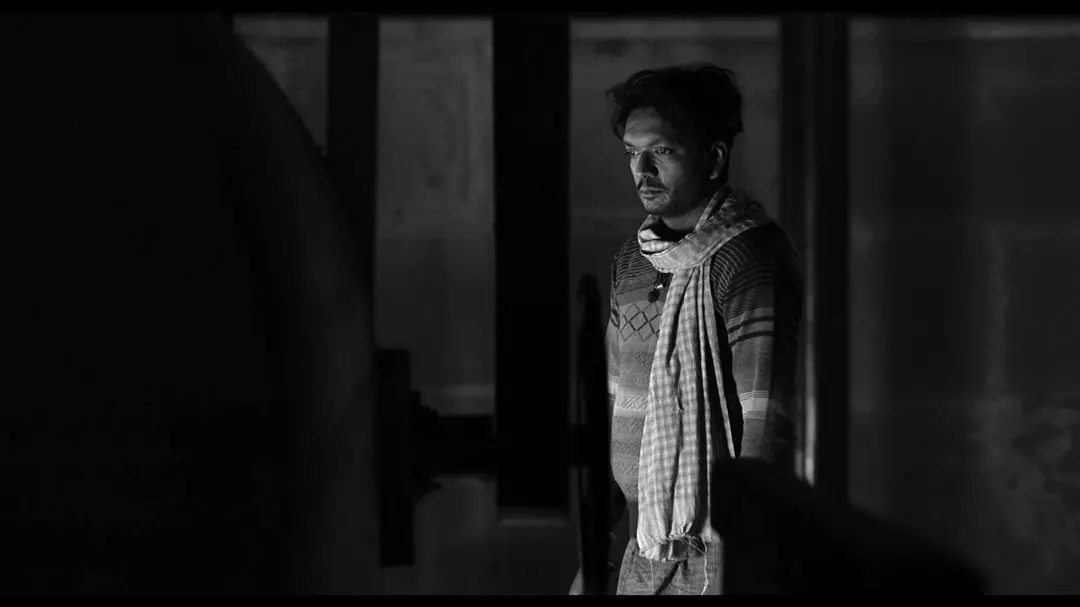
In a world where cinema is gathering both money in all currencies and audiences across the nation, a film like Abhilash Sharma’s Swaha, a Magahi-rare-language film, brings a knee-jerk reaction among people like yours truly, living with the urban comfort of air-conditioned flats. The title Swaha has been translated into English as In the Name of Fire. The name does not matter because this film throws a series of electric shocks used neither in off-mainstream Indian films talking about the marginalization of groups nor to the loud and colourful chutzpah of mainstream cinema. But it is beautiful and deeply touching.
The film has already bagged a bagful of awards such as - Golden Goblet Award for Best Director and Best Actor - Shanghai International Film Festival ( Asian Section ) (Spiritual Film Section), Third Best Indian Film – Bengaluru International Film Festival ( Indian Cinema Competition ), Best Narrative Feature and Best Actress – SR Socially Relevant Film Festival, New York ( International Competition ) and the Best Indian Feature Film - Kodaikanal International Film Festival ( Indian Cinema )
According to Sharma, “Magahi is an ancient language tracing back by 2,500 years to the Buddhist era in central Bihar. Written in the Kathi script, Magahi is an endangered language facing significant social and economic challenges. By spotlighting this under-represented language and its folk songs vital expressions of cultural heritage, we aim to honour the community's collective wisdom.” Born in Dhanbad, a town known for its coal mines, Abhilash is an independent filmmaker who explores women's narratives and the human condition within socio-political landscapes. Swaha has been shot entirely on location on the outskirts of Manorwa village in Bihar.
In Swaha, every scene is shocking for the audience. A low-caste untouchable, Nehura’s sole source of income is through cremating unidentified dead bodies in his marginalized village in a remote part of Bihar suffering from extreme poverty on the one hand, lack of employment on the other and the high-caste, religious residents of Manorva village. These upper-caste people, wrapped in superstition, and blind about the caste hierarchy are busy with the restoration of three temples in the village for a forthcoming festival which demands that all untouchables and Dalits move at least three miles away from the village lest they pollute the religious functions of the holy festival. These untouchables form a caste of rat-eaters looked down upon by the rest who do not even recognize them except as a human curse on the village and its temples.
According to Sharma, “The title Swaha is rooted in a Hindu ritual signifying an offering to the fire god, symbolising the fulfillment of desires and wishes. In our film, the protagonist's journey reflects this concept; her ultimate act of self-sacrifice is not just a personal offering but a profound gesture intended to spark transformation within her community.”
Among these low-caste untouchables live Phekan, his wife Rukiya and their infant son Karimana who has not had a drop of milk for three days running as Phekan and his family are migrants who have arrived in this village for basic survival as there was a natural calamity in their original village. The sound-track spills over with the infant cries of the little Karimana whose hunger remains unfulfilled because his mother Rukiya has stopped lactating. When his wife laments the want of milk for the baby, Phekan sets out in search of work on daily wages because a monthly wage will not solve the problem.
He is of low caste and a migrant so the locals either do not know them at all or do not treat them well. They live in a dilapidated hut on the fringes of the village. Phekan accepts whatever job he can such as sticking posters or selling newspapers at the nearest railway station. But the poster man refuses to pay him. He is bashed up so badly by a gathering crowd and also by the police as he is identified as a child-snatcher and he dies on the streets, just like that.
Rukiya suspects that Phekan has deserted them because when she asks passers-by about her husband, they either run away or tell her to run away lest she be battered by the upper-castes of the village. She turns crazy and lets go of the child without being aware of it. High castes of the village label her a witch. Nehura, the man who cremated Phekan covers the baby with the same piece of cloth that he used to cover Phekan’s dead body with and rescues the baby. Rukiya, crazy with hunger, the baby’s cries and her husband’s sudden disappearance, sets their hut on fire and breaks into a lunatic dance.
Shot almost completely in Black-and-White, Swaha uses sparks of colour when the sun rises or sets or a dead body is being cremated in the distance. Devendra Golatkar’s cinematography is magical as it changes to gritty Black-and-White in the city scenes and look like beautifully executed charcoal sketches in. But this family of migrant, low-caste, extremely poor is no exception. The poor and the helpless define the rule established repeatedly by the keertana group of low-caste crematorium singers who continue to belt out their songs with their harmonium and dholak as a mark of respect to the dead and also, in a manner of sustaining their culture and add some music to their desperately sad lives.
Phekan is basically a good man. He once finds a cart-puller with heavy cartons trapped in the tracks of a railway and tries to help him. The man is saved but the cargo he was carrying falls off, causing him great loss for which he curses Phekan who saved his life. Two police constables torture Phekan though he is completely innocent. Finally, the crowds pounce on him till he is dead. The acting, mainly drawn from theatre, is brilliant with the poetry being partly spoilt by the terribly city-bred and sophisticated looks of Sonali Sharmishta who plays Rukiya.
Swaha is a dark and depressing film. It is a shocking film too. But it subtly covers a range of violation of human rights issues through caste, migrants, unemployment, poverty and women. Sharma has used an unusual narrative to build up his film, brick by small brick, some of the bricks cracked but narrating their own stories.
The film opens with Nehura, a member of the keertaniya group of cremation ground singers called to take cremate an identified dead body killed by the crowd as a child-snatcher. Nehura tries to find the identity of the dead man in vain. The scene shifts to the crematorium where we find a young man’s head being shaved as a ritual as his father has just died. Nehura, who cremated the unidentified dead body is given a bottle of country liquor for plus a few bucks but he is not happy.
The scenes of the crematorium with the fire dotting the dark skies, with the keertaniyas singing their songs are a repeated refrain. One can also read these songs as the only note of a few happy moments for these singers whose lives seem to be spent in the crematorium.
The question is – are the lives of those living outside the crematorium any less tragic? Trapped in religious bigotry and blind belief in witchery, everyone in the village is unhappy as there is no ray of light at the end of the dark tunnel never mind that they are not aware of this. The only game small boys of upper castes know to play is to throw stones at the mother trying her best to save her baby who the upper castes in the village have already labelled a witch.
Sharma leaves it open to his audience to decide whether the film is narrated in flashback, ending where the film began – with the cremation of an unidentified dead body. Or, it may be read as a linear structure where the first unidentified dead body is not the same as the last one. Phekan is just an example of all the unidentified dead bodies that land up to be cremated by Nehura, probably accused of a crime they did not commit. Nehura suffers from deep pangs of guilt for depriving the bereaved families of the dead from their right to perform the last rites. This is a very humane touch.
The village is so poor that the only animals we see are pigs and piglets or a stray goat but not a single cow. Yet, one can see a stray dog and hear dogs barking on the soundtrack. The farms are barren and the trees are shorn of flower or fruit. Even Nature has no kindness left. The sounds of the baby’s constant cries are a refrain to irritate the audience pointing out that this too, is a part of the India we all live in. One catches glimpses of a ragged, old woman, probably thrown out of the village as a “witch.”
The music, (Devarshi) both on the soundtrack and in the songs, including the out-of-tune lullabies the mother tries to silence her baby with, meld beautifully into the film. The editing (Suresh Pai) is deliberately slow to drill into the audience the grim reality that exists in the same India we live in that suddenly gets fast and gritty in the city scenes. An outstanding film, all the way.
Sums up writer-director Sharma, “At its essence, "Swaha" delves into the presence of fundamentalist elements in our society and how the concept of religion often revolves around individual circumstances rather than a universally concrete vision. It underscores the profound notion that the nurturing force of our existence, symbolised by the mother, can, in moments of neglect and ignorance, unintentionally harm her own creation. Nevertheless, she remains bound by the forces of creation and destruction, acknowledging that destruction is sometimes a necessary part of the broader creative process.”
For this critic, the reading is slightly different.