'We don’t need nationalist support': Deepinder Goyal responds to criticism over Rs 85,000 wearable
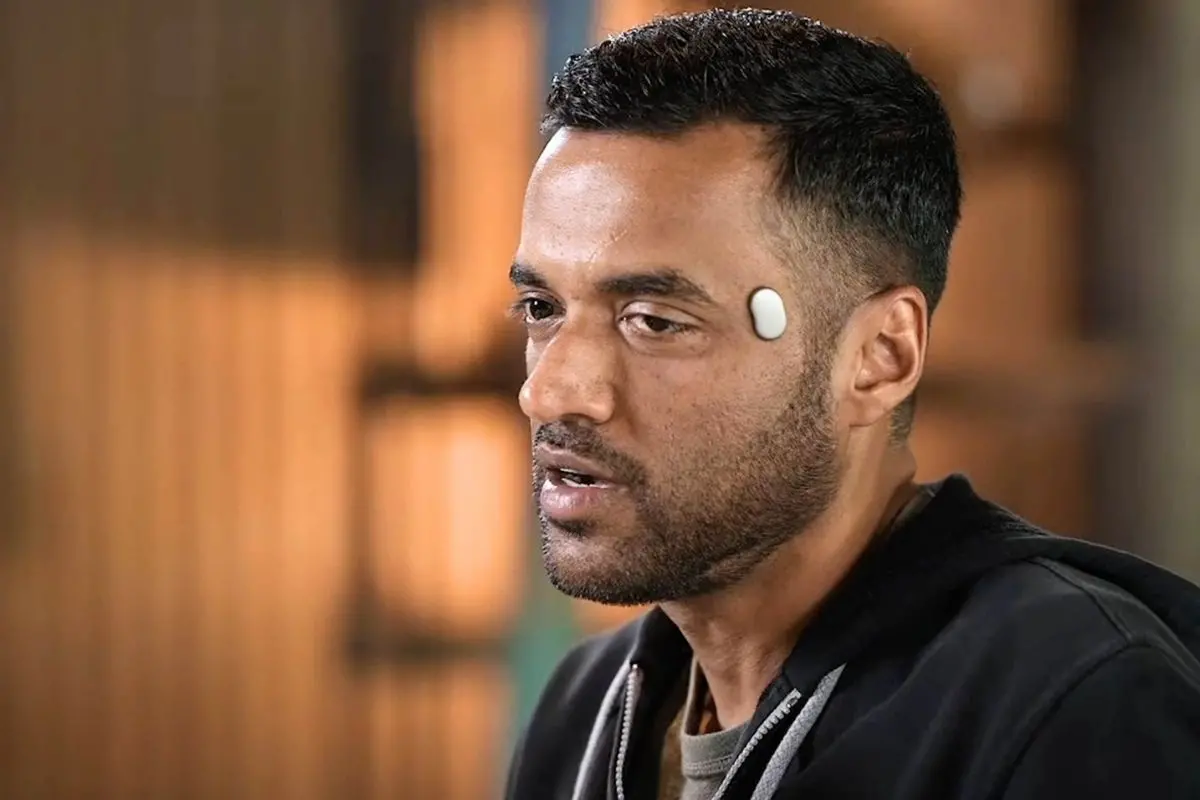
Zomato founder Deepinder Goyal has responded to mounting criticism over his wearable device Temple, defending its pricing, scientific claims and intended purpose while insisting that the product is designed for a global market rather than India.
In a post on X on Sunday, Goyal addressed questions raised by doctors, technology enthusiasts and social media users about the device, which has attracted attention over its claims of monitoring brain blood flow and providing insights into the body's physiological condition.
Temple, an AI-powered wearable developed under Goyal's health-tech initiative, is priced at Rs 85,000, with pre-orders opening on November 1. The device is designed to be worn near the temple and uses optical sensors to track physiological signals. Its features include Brain Flow, which is intended to provide insights into cerebral blood circulation, and Entropy, a proprietary metric that Goyal has described as a measure of the body's physiological strain.
The device has come under scrutiny from members of the medical community, who have questioned the scientific evidence supporting its claims, particularly its ability to measure blood flow inside the brain. Concerns have also been raised about the lack of independently validated, peer-reviewed research establishing the accuracy and practical usefulness of its measurements.
The criticism intensified after Temple's pricing and pre-order details were announced, with some questioning whether consumers should pay Rs 85,000 for a device whose key scientific claims are yet to receive independent validation.
Responding to the backlash, Goyal said Temple was primarily intended for international markets and that the company did not expect a significant proportion of its sales to come from India.
“Hello everyone. Happy Diwali! Thank you for your criticism, your support and your time over the last two days. Gives me much needed clarity on what we need to explain better:
1. Temple is not made for India. It’s made for the world. Please check pricing. We don’t expect any more than 1% of Temples being sold in India.
2. If you are upset that the pricing is too high, I am sorry. There’s a lot of work that went into Temple, and we priced it at what we think it’s worth. If you think its overpriced, you can wait for user reviews to decide if its worth your money.
3. Please do not support us because we are an Indian startup. We want to compete globally. We don’t need/want nationalist support. Support us if you want to support early innovation, which could help you live a better life, and will continue to add more proof to its science over the years.
4. There are different audiences which buy products at various levels of proof. Proof goes from whitepaper -> pre-print -> peer reviewed. You are free to sit on the fence until peer reviewed proof arrives. You are free to not believe it even then. Nobody is forcing you to buy. Making announcements is our right; and if we overclaim anywhere, we will inevitably fall into regulatory trouble everywhere in the world.
5. We didn’t make any medical claim. Doctors primarily see things from a medical lens, so they see every claim as a medical claim. I repeat – Temple is strictly a fitness + AI device, and we've made no medical claims. Temple is not proven to diagnose or prevent any disease. It doesn't do anything which replaces the need for you to see a doctor.
6. The main point of Temple is NOT Brain Flow. That’s what we just started Temple for, and studies on Brain Flow are the first ones getting out.
7. The main point of Temple is Entropy (I shared the HomeScreen of Temple three months ago with Entropy as the main thing). Our emails to our waitlisted users only talk about Entropy. We haven’t published anything on Entropy yet. We will. If you want to buy Temple before that, please do. If you don’t want to, don’t.
8. Roomdeaf AI is an expansion of the device’s capabilities, and our vision for Temple. It is not a pivot.
9. Social media is not the regulator for Temple. Wherever we need regulatory clearances, we will have them before we make any claim needing them.
10. I will post a detailed note on how we calculate Brain Flow, its uses, and most importantly, its limitations in a bit (tomorrow),” Deepinder Goyal wrote on X.
Why is Temple facing criticism?
Temple's central proposition has attracted questions about whether the technology can accurately measure cerebral blood flow using sensors positioned against the side of the head.
Medical experts have pointed out that the superficial temporal artery, where the device is placed, supplies blood to the scalp and face. They have questioned whether measurements from these superficial blood vessels can reliably represent blood circulation within the brain, which is supplied primarily by the internal carotid and vertebral arteries.
Questions have also been raised about the scientific basis of Entropy, which Goyal has described as a new physiological metric. Experts have sought more information about how the score is calculated, what biological processes it represents and whether it has been independently validated.
Goyal has previously defended the project, saying that substantial investment and research have gone into developing the device. He has also indicated that further studies and independent research would provide more evidence about its capabilities.