‘We just screwed that up’: OpenAI’s Sam Altman on GPT-5.2 writing problems | WATCH
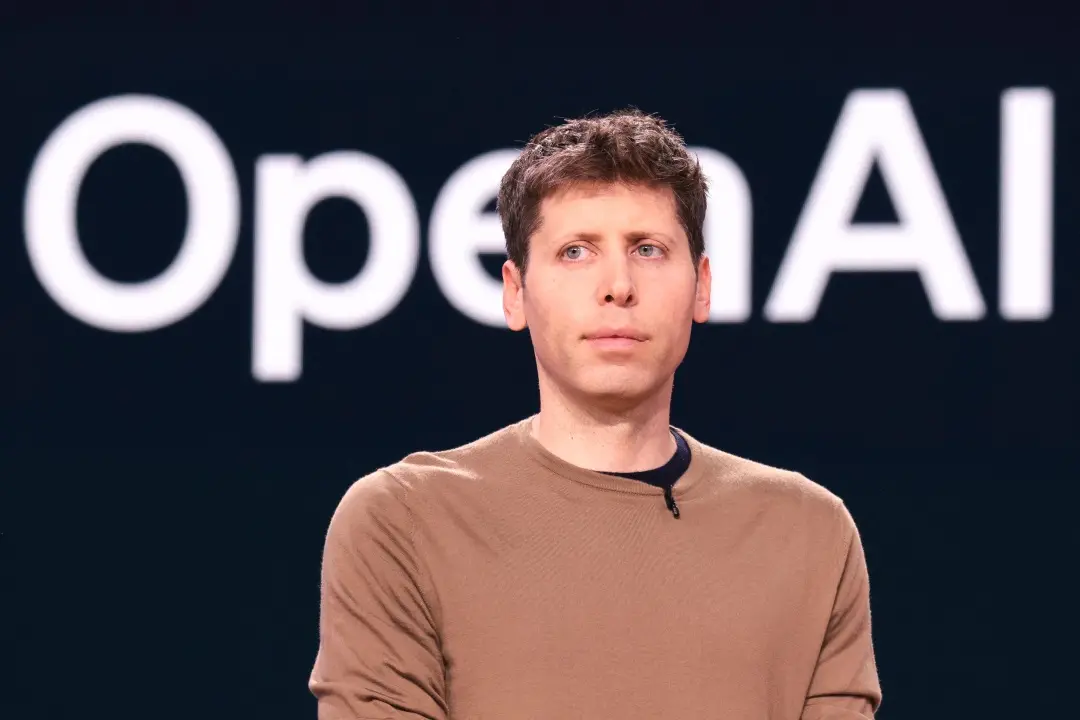
ChatGPT maker OpenAI has acknowledged that the writing quality of ChatGPT declined with the release of its GPT-5.2 model, with Chief Executive Officer (CEO) Sam Altman admitting that the company “screwed up” and confirming that future updates will focus on restoring and improving text output.
The acknowledgement came during the company’s first-ever public town hall, where developers and AI researchers raised questions about product direction, performance trade-offs and long-term priorities.
During the 50-minute session, streamed live on YouTube, Altman accepted that GPT-5.2 does not perform as strongly in writing tasks when compared with GPT-4.5. He explained that the shift was intentional, driven by limited training resources and a strategic decision to prioritise other technical capabilities.
Also Read | ‘Cannot imagine raising a newborn without ChatGPT’: OpenAI CEO Sam Altman | WATCH
Focus shifted towards intelligence and coding
According to Altman, OpenAI concentrated much of its training effort on improving GPT-5.2’s reasoning depth, coding accuracy, engineering use cases and mathematical problem-solving. As a result, areas such as creative writing and conversational fluency did not receive the same level of attention.
Responding to a question from Ben Hylak, co-founder of AI startup Raindrop, Altman acknowledged that OpenAI’s development priorities led to shortcomings in ChatGPT’s writing performance.
“We just screwed that up. We decided — and I think for good reason — to put most of our effort into making 5.2 strong in intelligence, reasoning, coding and engineering,” he said.
Altman also confirmed that writing quality will be a key focus in upcoming updates, with future GPT-5.x releases aiming not only to recover lost ground but to exceed GPT-4.5’s text capabilities.
“We will make future versions of GPT-5.x much better than GPT-4.5 at writing,” he said.
Altman also added that limited development capacity sometimes forces OpenAI to prioritise certain features over others.
Also Read | Users receive ChatGPT data breach alerts | Here’s the truth
“We have limited bandwidth, and sometimes we focus on one thing and neglect another,” he added.
Enterprise demand influenced model priorities
Altman also shed light on the commercial reasoning behind the decision. OpenAI earns a larger share of its revenue from enterprise customers, who pay based on token usage, compared with consumer users on fixed subscription plans.
Because business and developer clients place higher value on structured reasoning, code generation and technical reliability, OpenAI chose to prioritise those areas — even when it affected creative and conversational performance.