Nvidia investigates CEO Jensen Huang after affair claims and Chinese spy allegations
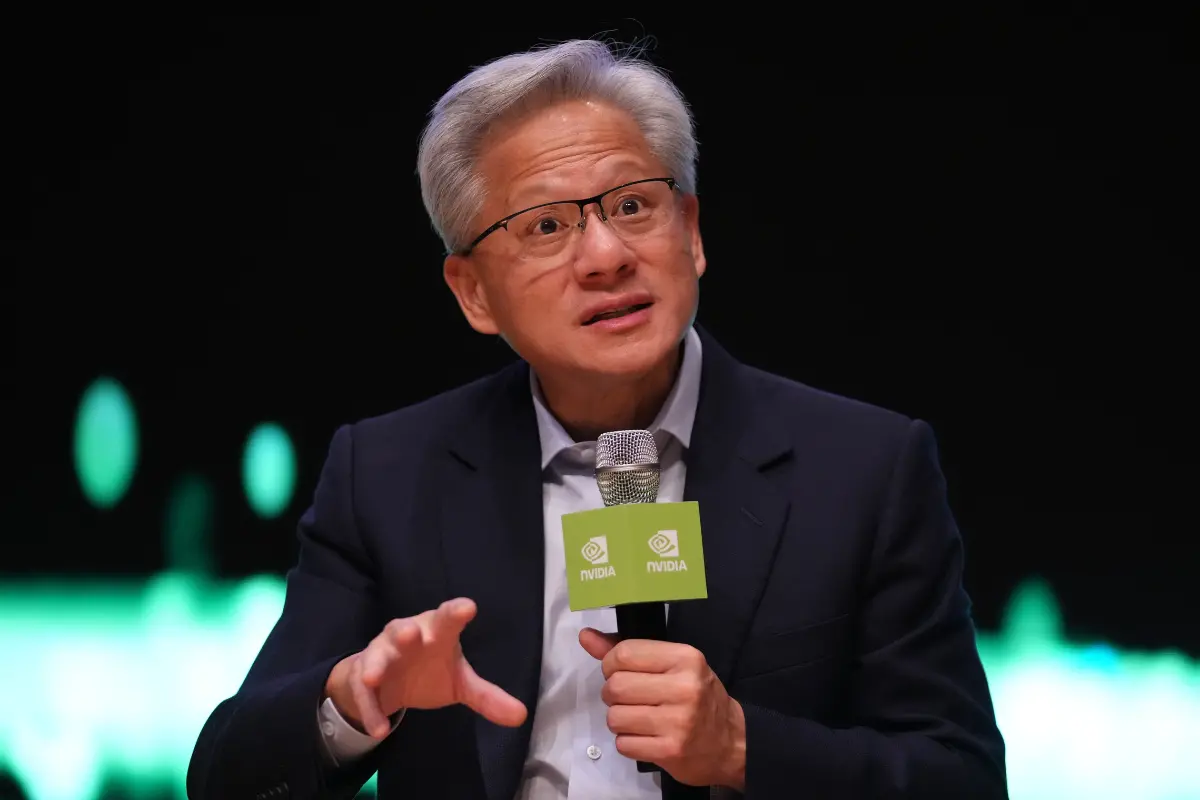
Artificial intelligence giant Nvidia has launched an independent investigation into its co-founder and Chief Executive Officer, 63-year-old Jensen Huang, following allegations that he was targeted by a foreign intelligence operation. The board's decision came after Huang admitted to having an extramarital affair with Alice Huang, a Chinese tech executive who United States intelligence agencies suspect was gathering information for Beijing.
Nvidia, based in Santa Clara, California, is currently the world's most valuable company, making computer chips that power global AI systems. Because these chips are central to tech supremacy between Washington and Beijing, news of the executive probe has sent shockwaves across foreign governments and global financial markets.
What triggered the investigation into Nvidia's CEO?
The scandal broke after American news outlets reported that 63-year-old Taiwanese-born Jensen Huang had developed a close relationship with Alice Huang, also known as Huang Le. The two individuals share a surname but are not related.
Alice Huang is a former television journalist in China who became a top executive at Megaspeed, a data centre firm headquartered in Singapore. Over the past two years, Megaspeed emerged as one of Nvidia's largest customers in Southeast Asia, buying more than $4.8 billion worth of high-tech chips. However, US officials had placed Megaspeed under scrutiny over concerns that it was illegally routing advanced AI processors into China to bypass strict American export bans.
A memorandum circulated among policy officials in the US administration indicated that Alice Huang was recruited by China's Ministry of State Security to feed intelligence straight to Beijing. Following these public disclosures, Jensen Huang confessed his personal wrongdoing in an internal message sent to company staff.
Acknowledging the relationship, Huang issued an apology to his family and workers, stating:
"I was unfaithful to my wife. My actions hurt her and our children. There is no excuse for what I did. I am deeply sorry."
How Nvidia's board is handling the foreign intelligence probe
In response to the intelligence leaks, Nvidia's board of directors announced on Sunday that it had initiated an independent corporate review. The company confirmed that Huang fully supports the inquiry, has promised complete cooperation, and will remain in his position as CEO while the review is underway.
In an official public statement, the Nvidia Board outlined how the inquiry will be conducted:
"A committee of independent directors, assisted by outside independent counsel, will oversee the investigation."
The board also sought to reassure investors and the public regarding data security and national interests:
"The Board prioritizes U.S. national and economic security, which is paramount to the interests of NVIDIA and its shareholders. While the Board has no reason to believe that either national security or NVIDIA secrets were compromised, the Board's inquiry will examine all available information. Jensen fully supports the review and has committed to cooperating with it. The Board has confidence in Jensen and his leadership team and will provide further updates as appropriate"
Meanwhile, official responses from affected governments remain split. The Chinese government dismissed the intelligence allegations as "groundless speculation," while Nvidia previously rejected related claims as "baseless".
Political fallout and reactions from US leaders
The controversy carries heavy political weight because Jensen Huang serves on US President Donald Trump's Council of Advisors on Science and Technology and has actively lobbied Washington to ease restrictions on AI chip exports to China. Intelligence agencies reportedly briefed President Trump about Huang's relationship roughly a year ago, but he chose not to take immediate action at the time.
Speaking to reporters on Sunday, President Trump defended Huang's record:
"I hope everything’s fine then. He’s done such an incredible job."
When asked if he regretted not acting on the earlier spy warnings, Trump added:
"I think he’s an honorable guy. I think he probably has an excuse for it. He’s done an amazing job for our country."
The US President also indicated he remained open to accompanying Huang on an upcoming diplomatic trip to Asia:
"I don’t know but I’d certainly take him,"
However, other senior American officials maintain a cautious distance. Departing for a G7 summit in Paris, US Secretary of State Marco Rubio declined to enter the debate, saying:
"I just can't comment because of the nature of it. And I also can't comment on an internal corporate matter that's going on with Nvidia."
Pressure is mounting on Capitol Hill. Three Republican House committee chairs have requested that Huang appear before them in a closed-door session to explain his contacts with the Chinese businesswoman. These security concerns emerge just as President Trump prepares for summit talks with Chinese President Xi Jinping, where AI competition is expected to be a key agenda item.
What this means for global markets and chip supplies
Nvidia holds immense influence over the global economy. In August, the tech powerhouse posted quarterly profits of $59.69 billion, driven by massive worldwide demand for its cutting-edge semiconductor hardware.
Market experts warn that the board inquiry creates significant risk for the firm. Investment analyst Dan Ives of Yorkville Ives described the announcement as "a black eye moment" for Jensen Huang.
Ives highlighted the potential long-term damage to the company's valuation and market stability:
"This will add risk to the stock as he is so important to the Nvidia story and strategy globally. This will also increase major scrutiny regarding selling chips to China, which remains a key battleground issue in DC."
While Huang is expected to retain his leadership position in the short term, analysts note that the ultimate outcome of the board's inquiry will dictate whether he remains at the helm of the world's primary AI engine.