Can India stop a hazardous asteroid? Expert outlines why preparedness is crucial
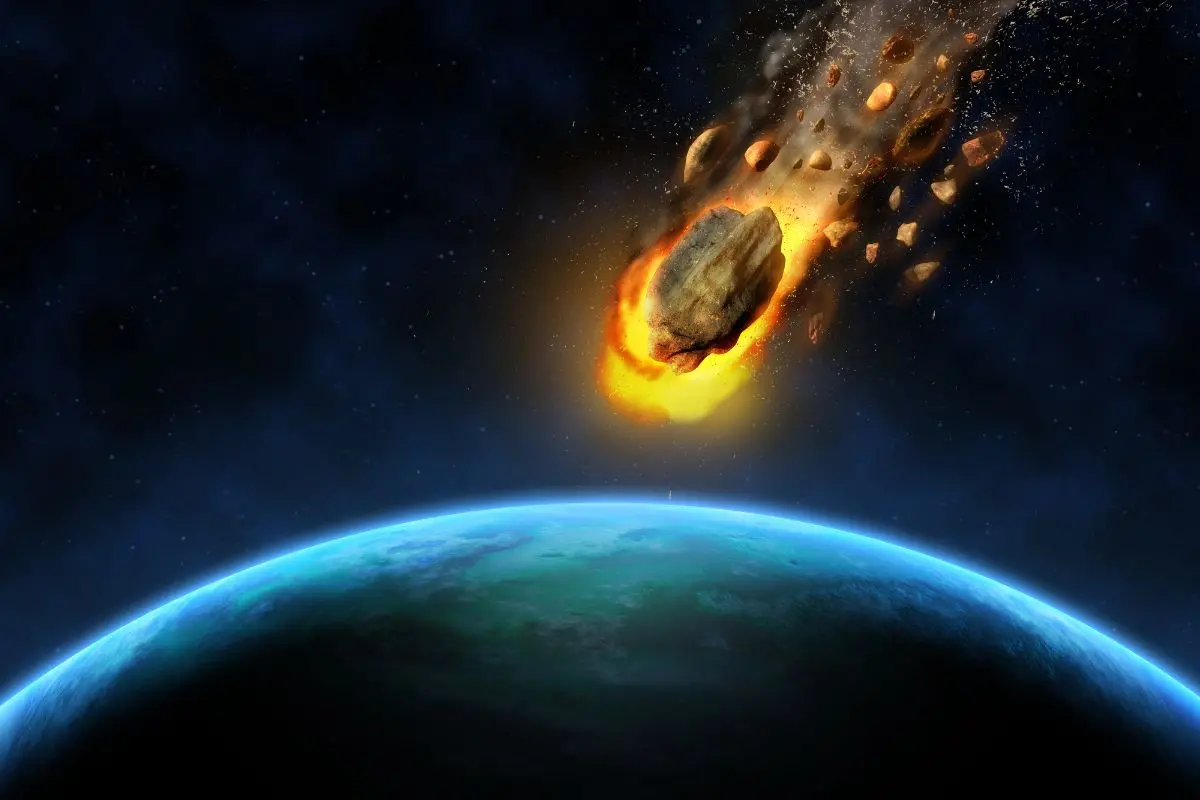
On the morning of June 30, 1908, one of the most remarkable events in Earth's recorded history unfolded over a remote forest near the Tunguska River in Siberia, Russia. Within moments, a vast stretch of forest was reduced to ashes. Millions of large trees were vaporised by the immense heat and energy released.
The region was sparsely populated, so there were no confirmed human fatalities. At the time, local residents could not explain what had caused such widespread destruction.
Years later, astronomers and geologists concluded that the explosion had been triggered by a small asteroid entering Earth's atmosphere.
In December 2016, the United Nations designated June 30 as World Asteroid Day. The annual observance aims to raise public awareness about the potential hazards posed by asteroids, comets and meteoroids, while encouraging efforts to improve planetary defence.
The lesson from the dinosaurs
Scientists in various developed countries are often asked by politicians why people should invest in studying rocks travelling through space outside Earth.
Astronomers sometimes answer with a touch of humour: dinosaurs became extinct because they did not invest in asteroid research.
While intended as a light-hearted remark, it reflects a widely accepted scientific understanding. Around 65 million years ago, dinosaurs, which dominated Earth for millions of years, are believed to have become extinct after a massive asteroid struck the planet.
The asteroid is estimated to have measured about 10 kilometres across. If an object of that size could trigger a mass extinction, it highlights the enormous amount of energy released when an asteroid collides with Earth.
Telescopes keep watch for potential threats
Monitoring asteroids requires specialised telescopes capable of continuously scanning the sky. One such facility is the Pan-STARRS (Panoramic Survey Telescope and Rapid Response System) telescope in Hawaii, United States, which was built specifically to detect and track near-Earth objects.
Most asteroids larger than one kilometre have already been catalogued. Scientists know their locations, speeds and orbital paths, reducing concerns about unexpected impacts from these larger objects.
Smaller asteroids, however, remain more difficult to detect. Many measuring less than one kilometre have yet to be identified and could approach Earth with little warning.
A recent example occurred on May 30, 2026, when a bright fireball was seen over the Boston area in the United States. The sight alarmed many residents, with some mistaking it for a missile because of ongoing global conflicts.
Scientists later identified it as an asteroid measuring only about five feet across. Suppose an elephant were travelling at roughly 120,000 kilometres per hour; that would give an idea of the tremendous energy it could possess. Fortunately, it exploded more than 60 kilometres above Earth's surface, preventing any damage on the ground.
A more destructive incident occurred on February 15, 2013, over Chelyabinsk in Russia. An asteroid around 15 metres in diameter exploded in the atmosphere, generating a powerful shockwave that damaged hundreds of buildings. Thousands of people required hospital treatment due to the impact.
More recently, on March 3 this year, a small meteorite weighing around 300 grams fell in Maharashtra. The Geological Survey of India has since added the specimen to its collection.
DART and Hera missions aim to strengthen planetary defence
Several countries are investing in research to reduce the risk posed by asteroids and improve Earth's ability to respond to future threats.
Among the major initiatives are NASA's Double Asteroid Redirection Test (DART) mission and the European Space Agency's Hera mission.
Both programmes are designed to study whether the path of a potentially hazardous asteroid can be altered by deliberately striking it with a spacecraft equipped with a nuclear weapon. Even a slight change in an asteroid's orbit, achieved well in advance, could be enough to prevent it from colliding with Earth.
The concept is comparable to a dart game in the sky, nudging it off course before it reaches its target.
The United Nations has consistently promoted international cooperation in planetary defence, recognising that an asteroid impact would be a global challenge rather than one confined to a single country.
If an asteroid is detected heading towards our country, there is no guarantee that other nations will come to our rescue. Therefore, the time has come for India to focus on and invest in this space-based DART technology. If our country does not possess this technology, the price demanded by other nations to protect us could be very high. That may not necessarily be in our best interests.
The author is India's first professional meteor scientist.