A game of flight and spirit: How Ultimate Frisbee is finding its place in Kerala
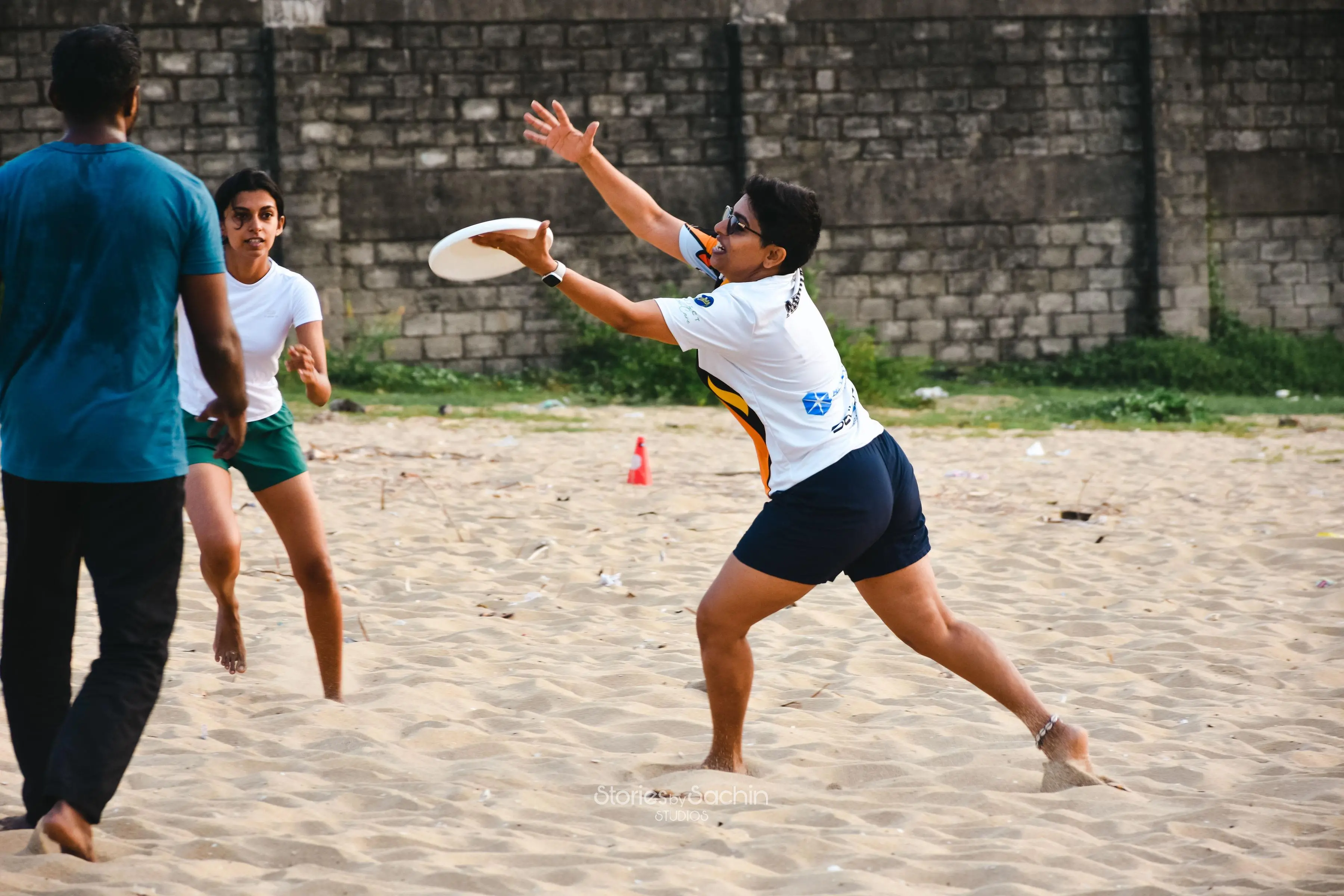
In a land where cricket captures the crowd, football fills the streets, and hockey holds decades of pride, it’s rare for a new sport to earn its ground. Yet, in open fields and quiet beaches across Kerala, a disc spins through the air — not just chasing points, but creating a movement.
This is Ultimate Frisbee, and it’s not just a sport. It’s a reimagining of how games are played, and more importantly, why.
At the heart of this shift is Theertha Menon, who was the spirit captain of Kerala’s first women’s Ultimate team during the Bharat Trophy, held in Bangalore earlier this year. The team didn’t return with medals, but with something deeper — the Spirit Championship, awarded to teams that embody fairness, integrity, and mutual respect.
“It was the first time in my life I could understand what it is to win or lose with a team,” she told Mathrubhumi. “Especially something that you only know when you play a team sport. It is wonderful that in my 30s I’ve been experiencing things in my life that I never had until that.”
Theertha was never a sportsperson. She had always been drawn to cultural spaces like dance and film, but not fields and stadiums. That changed one Tuesday evening when a junior from school invited her to try something called Ultimate. “I told him, ‘Not a sports person.’ He said, ‘It’s okay, just come and give it a try.’”
That evening changed her life. “It was the first time ever that I enjoyed running around or playing. I’ve never been someone who played a lot of sports growing up. I mean, I watch a lot — I love cricket, tennis and all that — but I was into dance and cultural activities. So I thought, why not give this a try?”
Since then, she hasn’t stopped playing.
Ultimate Frisbee is unlike most conventional sports. Played between two teams of seven, it blends the strategy of football, the structure of basketball, and the movement of rugby — minus the aggression. There are no referees, and even slight contact is a foul. Players settle conflicts amongst themselves within 30 seconds. Every match ends in a spirit circle, where both teams sit together, reflect, and appreciate.
“This game also has a lot of principles… something that’s very important in Frisbee is the spirit of the game,” Theertha explains. “How respectful are you to your teammates? How respectful we are towards each other when we are playing… because here we do not have a referee to tell us that we are wrong and this person is right.”
Kerala’s relationship with Ultimate is still young. Trivandrum has Thira, a beach-based team that’s been active for a few years. Kochi has Kocatchis, with its women’s squad Kocatchicas. Alappuzha is home to a rising team called Airstrikers. Cities like Thrissur and Kozhikode are seeing newer games and beginner-friendly tournaments emerge.
But it’s not the typical 16-year-olds who dominate these teams. The average age is in the late 20s — working professionals, students, creatives, and even mothers.
“I think one of the main things is that people, when they think about Frisbee, assume it’s just easy throw-and-catch. Then they come for the game and realise it’s much more than that,” says Theertha. “It gave a lot of people the chance to play a sport competitively, maybe much later in life — like you have to be a cricket or football player from a young age to play tournaments, right? But Ultimate gives you that space — even at this age.”
For women especially, it creates a rare environment — to be physical, free, and fiercely themselves. “I’ve met women in their 30s who are now part of the Indian women’s masters team that’s headed to Portugal this November. All of them have careers, families, children — and they’re still choosing to train, compete, and play a game. That’s powerful.”
For Theertha, this wasn’t a planned path. “I didn’t plan this, it’s not even something I dreamed, but it just so happened to me and I’m so grateful that this journey is taking me where it’s taking me.”
With an international tournament ahead, she’s training harder than ever. “I may not be a great athlete, but I want to give it all — whatever I can. If not anything, I will just be a more healthy person. That’s still a win for me.”
Beyond fitness and play, what Ultimate has given her is something harder to put into words. “I think it’s very difficult to get over the first time… like once you lose or once you fail or you couldn’t catch one or your throw didn’t go well. But the beauty of playing any game is to know that you’ll always have a chance to do better.”
In a sporting culture that often rewards early bloomers and rigid hierarchies, Ultimate Frisbee offers something radical: a second chance, a later beginning, and a deeply human connection to movement and meaning. And in Kerala, it’s slowly spinning its way into people’s lives — one throw, one spirit circle, one Tuesday evening at a time.