What went wrong for India at Hockey World Cup? Former stars break down the crisis
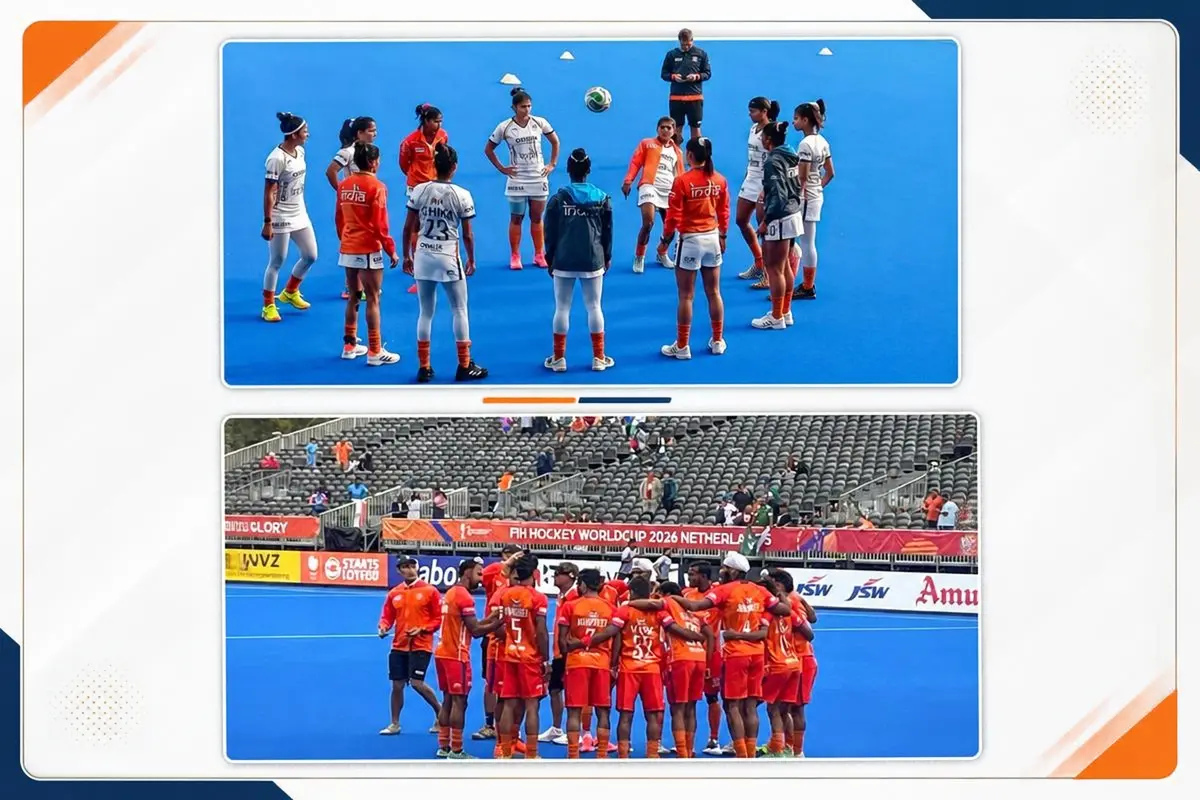
The dream is over, and the finger-pointing has begun. In the space of just forty-eight hours, both India’s men’s and women’s national hockey teams crashed out of the FIH Hockey World Cup 2026, failing to reach the semifinals. These twin exits have laid bare a sport in deep crisis, triggering furious demands for accountability from former captains and icons of the game.
On Monday, the men’s side was sent packing after a chaotic 3-5 defeat to Argentina. Needing a clear two-goal victory to keep their semifinal dreams alive, the team collapsed in a defensive horror show, conceding five goals under intense Argentine attacking pressure. Sukhjeet Singh scored twice, and Hardik Singh converted a penalty stroke, but it was nowhere near enough. The defeat has extended India’s agonising wait for a men's World Cup podium finish to fifty-one years. India won their only World Cup title in 1975 and have not returned to the podium since.
Meanwhile, on Saturday, the women’s team saw their own semifinal hopes die after a tense 0-0 draw against Australia. They ended level on points and goal difference with the Australians, but were eliminated simply because Australia had scored more goals across the tournament.
Now, legendary former players and coaches are demanding answers. Leading the charge is iconic goalkeeper and two-time Olympic bronze medallist PR Sreejesh. He has refused to let the team management hide behind soft excuses.
"But here's the uncomfortable question: Are we building a team to PLAY good hockey, or a team capable of WINNING against the best in the world?" Sreejesh wrote on X. "Stop hiding behind "learning", "good hockey" and future tournaments. The World Cup is not a rehearsal. It is the World Cup. So who is going to ask the difficult questions? Who is going to demand accountability? And most importantly... Does anyone actually care?"
The Illusion of Asian Dominance
For years, Indian hockey has followed a predictable pattern. The national team fails on the global stage, only to sweep regional tournaments and claim everything is fine. India won the Asian Champions Trophy in September 2024 and reclaimed the Asia Cup in 2025 to qualify for this World Cup. But when they face European powerhouses or top global teams, consistency remains completely elusive.
Viren Rasquinha, former India captain and CEO of Olympic Gold Quest, warned that the upcoming Asian Games in Japan could act as a dangerous shield. "Asian hockey is currently at its worst ever, seeing the performance of Japan, Pakistan and Malaysia at FIH World Cup," Rasquinha wrote on X. "My worry is that gold medal for India at Asian Games will paper over a lot of cracks in Indian Men's hockey. Serious introspection is needed post the Asian Games - fitness, selection, tactics, squad depth etc."
Sreejesh agreed, mockingly pointing out how regional medals are used to quieten critics. "Don't worry... the World Cup doesn't matter. The Asian Games are coming. Win a medal there, and then we can start dreaming about LA 2028. Apparently, that's enough to cover everything that went wrong at the World Cup," he said.
Another former Olympian, speaking anonymously, was equally blunt: "We tend to forget big failures after regional success and that is a big worry. Asia cannot be the parameter upon which we judge ourselves."
A Broken Selection System
Why are we failing? The legends point to a stubborn refusal to blood young talent. With less than two years to go until the Los Angeles 2028 Olympics, India’s World Cup team was packed with the same old core group of players. High-performing juniors were completely left out.
Sreejesh, who previously coached the India men's U-21 junior team, expressed his fury at this oversight. "The 2026 World Cup team is still revolving around the same core group of players while promising juniors like Manmeet Singh, who was the top scorer at the Junior World Cup with six goals, Amir Ali, Roshan Kujur, Shardanand Tiwari, Talem Priyabarta, Rohit, and Arshdeep Singh were simply overlooked," he said. Sreejesh warned that India has failed to build a "second string" and that the thirty matches left before the LA Olympics are simply not enough to prepare raw players.
V Baskaran, who captained India to gold at the 1980 Moscow Olympics, was equally scathing about the failure to integrate youngsters. He contrasted India’s stagnation with the smooth transitions seen in Germany and the Netherlands. "The transition from junior to senior has not taken place properly. Germany and the Netherlands have had a smooth transition. Look at the Netherlands team from the Paris Olympics and the World Cup - six gold medallists are missing," Baskaran said. "We are selecting the team on sympathies, past records and numbers. Six players could have been tried in the Pro League," he added. Baskaran also asked why the senior management failed to consult Sreejesh after his junior side won bronze at the Junior World Cup.
Former great Jagbir Singh agreed, suggesting selection decisions have been poor. "We had choices for picking the juniors at the right time and some of the selection decisions could have been better. It should always be Olympic to Olympic year," he said. "The coaching and team management were free to pick juniors after the World Cup. Most likely, they wanted to carry experience to put pressure on opponents, but it didn't work," he added.
Preparation Blunders and Tactical Collapses
It was not just selection that failed; preparation was equally questionable. Sreejesh revealed a shocking lack of professionalism in the women’s camp. "Women's chief coach on holiday just before the World Cup -- and the girls still fought their hearts out and exceeded expectations. Credit to the players. But where is the accountability? Do we really expect a team to perform at its best when the chief coach is away during the final phase of preparation?" he asked, referring to Sjoerd Marijne.
For the men's team, mental conditioning trips to the Swiss Alps did nothing to resolve their notorious inability to handle pressure. There was a heavy over-reliance on captain and drag-flicker Harmanpreet Singh, who was playing through fitness issues, while veterans Manpreet Singh and Mandeep Singh failed to deliver.
On the pitch, head coach Craig Fulton's tactical focus on defensive solidity fell apart. "Our defensive structure was collapsing every 10 minutes. Such variation in 60 minutes is not acceptable. Was it a case of too many cooks spoiling the meal?" observed Jagbir Singh. Baskaran also criticised the forward line's technical failures. "I have not seen any Indian forward in the last four years performing exceptionally well. There was no contribution from anyone. Where were the back passes, how many times did you shoot at goal? When you go for a full press, there was a huge gap in midfield," he said.
Destroying the Grassroots
At the root of these issues is a domestic structure that has been systematically dismantled. Former captain Pargat Singh explained that India no longer has the bench strength because its historic tournaments have been wiped out.
"We don't have good bench strength due to a lack of robust domestic competitions. In Europe, they have many divisions of league competition, which we don't have," Pargat said. "Earlier, we used to have tournaments like the Beighton Cup, Aga Khan Cup, Bombay Gold Cup, Murugappa Cup, and Nehru Tournament. That structure has been destroyed, and it has resulted in a lack of internal competition," Pargat added. Without these tournaments, India has no way to prepare world-class players.
India’s performance in the FIH Pro League—where they finished eighth in both the 2024-25 and 2025-26 seasons—underlined their wild inconsistency. They could beat world champions Germany and Olympic champions the Netherlands in Europe, only to collapse when the pressure of the World Cup arrived.
Now, India’s men face Belgium in a minor seventh-eighth place match, while their focus turns to the Asian Games in Japan next month. But unless Indian hockey addresses its selection woes, tactical fragility, and grassroots neglect, a regional medal in Nagoya will be nothing more than another temporary paper over a widening crack.