Why India’s hockey team is wearing orange jerseys at the World Cup, not blue
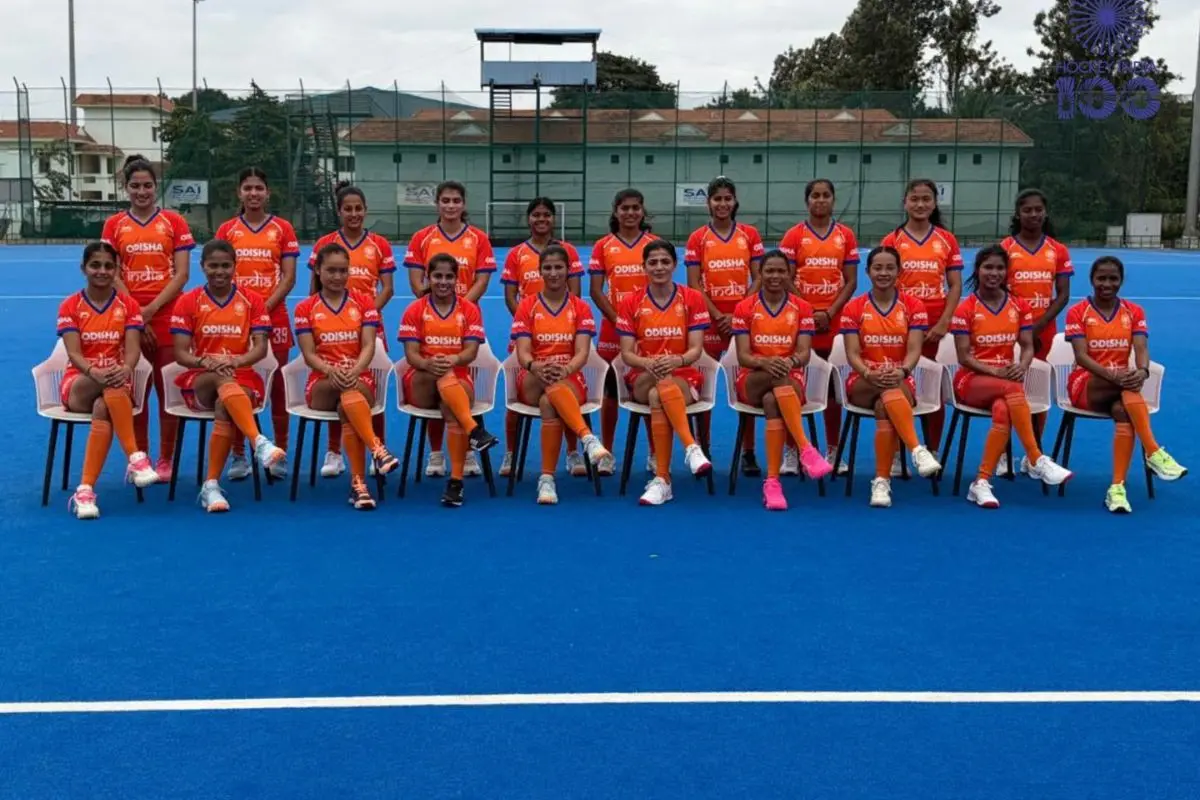
Hockey India has announced that both the men’s and women’s national teams will use an orange (often described as saffron) primary kit for the 2026 FIH Hockey World Cups in the Netherlands and Belgium, with white retained as the secondary colour.
The new strip replaces the iconic blue jerseys that Indian teams have worn for years, and will debut when the women’s tournament begins on August 14 and the men’s on August 15.
The change immediately sparked debate, with some fans and former players questioning why India would move away from blue, a colour strongly associated with the national hockey identity.
But Hockey India and its president, Dilip Tirkey, insist the decision came from the dressing room and the training pitch—not a political meeting room.
Blue jerseys on blue turf: the technical problem
Modern international hockey is played almost exclusively on synthetic pitches, and in recent years the standard has shifted to bright blue turf with contrasting run-off areas (often pink or another bold colour), a design popularised during the London 2012 Olympics and now widely adopted. This colour choice helps television cameras, broadcasters and sponsors—but it inadvertently created a visibility issue for teams wearing blue kits.
According to Hockey India’s official statement, “it was observed that the blue playing uniform tended to blend/merge with the blue synthetic playing surface, which is now the standard colour of international hockey pitches. This visual similarity affected on-field clarity and visibility for the players.” Players and coaches reportedly found that when India wore blue on blue turf, the overlap reduced contrast, making it harder to pick out teammates instantly in fast transitions and tight passing situations.
Dilip Tirkey, speaking in Bhubaneswar, explained that the suggestion to change colours came directly from those on the field: “Technically, when the team plays on blue turf, the blue jersey creates visibility-related issues. That is why two colours, saffron and yellow, were shortlisted.” After discussion, yellow was set aside and orange was chosen, in part because white already serves as the secondary kit and orange completes the Indian flag’s tricolour palette on the pitch.
Former India captain Viren Rasquinha, while critical of dropping blue from a tradition standpoint, has actually underscored the same technical concern: wearing blue on blue turf creates “low contrast, where players blend into the pitch,” making it harder for fans and broadcasters to track the game. In other words, the colour clash is not just about what players see—it affects how the sport is viewed and understood on television.
How the decision was made
Hockey India says the process involved “detailed consultations” with players, coaches and support staff over months. The federation launched the new jersey on July 27 and emphasised that the move was “driven primarily by technical reasons rather than symbolism.”
Tirkey has stressed that the World Cup kit is not a permanent statement and can be revisited: if players feel uncomfortable or if a future pitch colour standard changes, the jersey can be redesigned again. Hockey India has also pointed out that Indian teams have worn orange during training and practice in the past, and that the colour is tied to national pride and visibility, not to any political party or ideology.
Why this matters beyond aesthetics
Colour choice in elite sport is more significant than it appears. High-speed team games rely on instant recognition of teammates’ positions, peripheral vision and split-second passing—anything that reduces visual contrast can slow decision-making or cause errors. In hockey, where the ball moves at high speed and play changes direction constantly, jersey-pitch contrast can influence both performance and safety.
Blue turf solved TV production issues across the sport but forced federations to adapt kit design. India’s move aligns with a wider trend of teams choosing colours that stand out sharply against the pitch, especially in tournaments where fixture congestion, lighting changes and weather can already strain players’ visibility.
The controversy and Hockey India’s defence
Despite the technical rationale, the orange jersey has prompted criticism and political commentary. Some opposition leaders have accused Hockey India of “saffronising” the team’s identity, while Rasquinha called the decision “embarrassing” from a heritage perspective and argued that blue should remain central to India’s hockey image.
Hockey India has responded by reiterating that the colour change “has no political connection” and is about “improving contrast and visibility during international tournaments.” Tirkey has urged critics not to politicise the jersey, emphasising that the choice came from players and staff who will actually compete on blue turf in the Netherlands and Belgium.
For now, the orange kit represents a pragmatic compromise: a colour drawn from the national flag, chosen to stand out on modern blue pitches, and endorsed—at least officially—by those tasked with winning games. Whether it becomes a long-term part of India’s hockey identity will likely depend less on political debate and more on what happens once the World Cup whistle blows.