5 minutes to disaster: The loose rifle sight behind Abhinav Bindra’s golden 10.8 shot
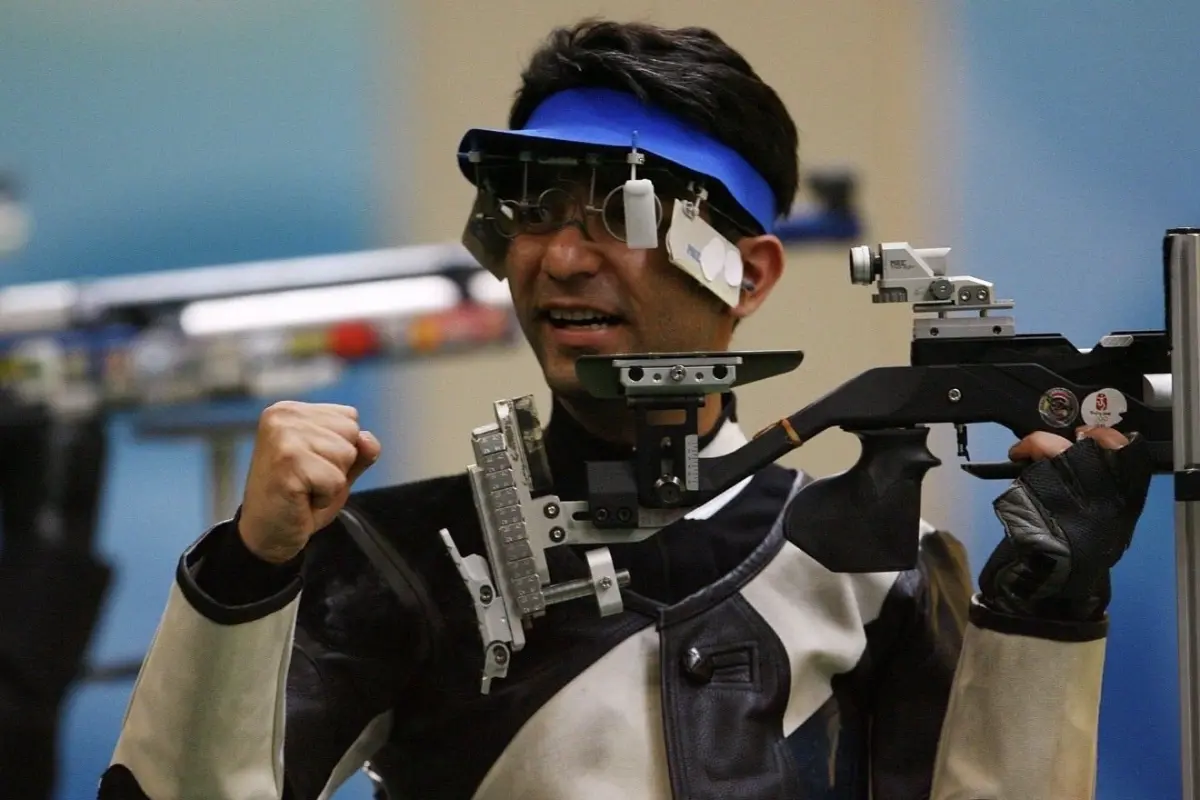
Eighteen years ago, on 11 August 2008, Abhinav Bindra etched his name into the history books by becoming the first-ever Indian to win an Olympic gold medal in an individual event. Yet, behind his flawless finish in the Men's 10m Air Rifle event at the Beijing Games lies a terrifying mechanical crisis that almost derailed his defining moment.
Panic in the Sighting Window
Having qualified for the eight-man final at the Beijing Shooting Range Hall in joint-fourth position with a score of 596/600, Bindra stepped up to his lane for the mandatory five-minute sighting period. Designed as a brief window for shooters to test their equipment and gauge atmospheric conditions, the period quickly turned into a high-stakes nightmare.
As Bindra later detailed in his autobiography, A Shot at History, he discovered to his horror that his rifle's aiming sight had come loose. In the discipline of precision shooting, where victory is measured in fractions of a millimetre, a loose sight renders a rifle completely unpredictable, as the point of impact shifts wildly with every shot. Forced into a race against the clock, Bindra made frantic manual adjustments, tightening the mechanism and recalibrating his sights mere seconds before the five-minute timer expired.
The Duel in Beijing
Despite the mechanical panic, Bindra entered what he later described to Olympics.com as a state of "powerful peace". Over the course of the 10-shot final, the Indian ace maintained extraordinary focus, firing a succession of high scores to steadily chip away at the two-point lead held by qualification leader Henri Häkkinen of Finland.
Bindra outshot the entire final field, never dropping below a 10.0 and steadily closing the gap on Häkkinen. Heading into the 10th and final shot, the two competitors stood deadlocked at the top of the leaderboard, creating a dramatic winner-takes-all scenario for Olympic gold.
The Golden 10.8 Masterclass
Bindra executed his final shot with mechanical perfection, registering a near-perfect 10.8, just 0.1 shy of the maximum possible score of 10.9. Buckling under the tension, Häkkinen could only manage a 9.7 on his final attempt.
Bindra finished with an overall total of 700.5 points to secure gold ahead of China's Zhu Qinan (699.7) and Häkkinen (699.4). The victory ended a 28-year Olympic gold drought for India dating back to the Moscow 1980 Games, turning what could have been a tragic mechanical failure into one of the most remarkable clutch performances in sporting history.