Brazilian GP: Why Interlagos' anti-clockwise layout strains F1 drivers
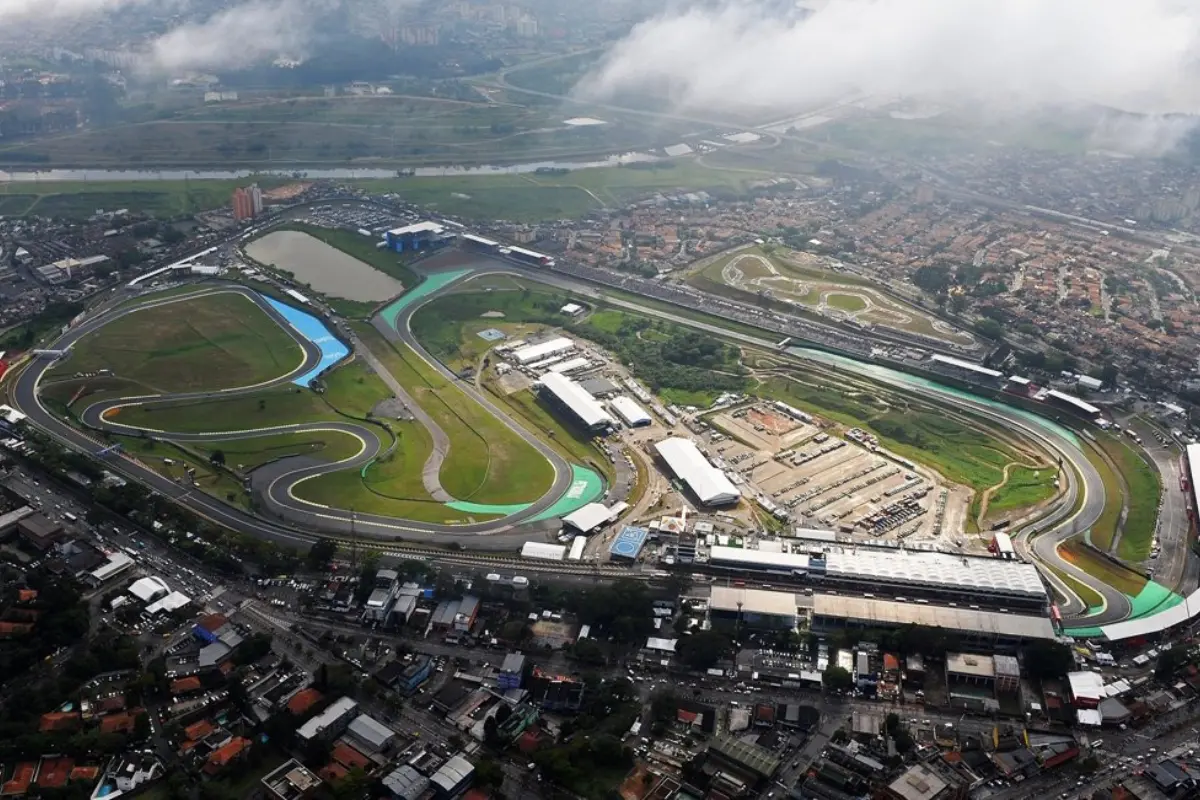
São Paulo: Formula 1 arrives at the Autódromo José Carlos Pace for the 2026 São Paulo Grand Prix, presenting one of the most brutal mechanical and physical challenges on the entire calendar. Nestled in the high altitude of Interlagos, the iconic 4.309-kilometre circuit forces drivers to wrestle with punishing elevation changes, unpredictable microclimates, and extreme aerodynamic compromises.
Yet, beyond the strategic headaches of tyre wear and dynamic setups, the primary adversary for every driver over 71 demanding laps is pure biomechanical fatigue. Running counter to the vast majority of modern venues, Interlagos sweeps in an anti-clockwise direction, systematically targeting muscles that rarely receive such concentrated punishment elsewhere in the world.
ALSO READ: Who is Kimi Antonelli? 20-year-old makes F1 history as youngest-ever world champion
Why Anti-Clockwise Layouts Punish the Body
The fundamental reason behind Interlagos' notoriety lies in basic human conditioning and muscle memory. Because most global racing circuits run clockwise, an F1 driver's neck flexors and cervical stabilisers build immense strength to resist lateral G-forces pulling violently to the left through right-hand bends. When exposed to an anti-clockwise layout, that physical equation flips entirely.
A driver's head and helmet combined weigh approximately seven kilograms. Under sustained 5G cornering loads—where lateral inertia multiplies that mass to roughly 35 to 42 kilograms—the neck muscles are forced into continuous isometric resistance to keep the driver's head upright and sightlines level.
At Interlagos, this load is concentrated heavily on the left side. The sweeping, high-speed left-handers of the final sector, combined with the technical middle section, subject the opposite, less-accustomed cervical muscles to repeated, violent lateral snatching. According to biomechanical training reports published by Iron Neck, failing to maintain eccentric control under these asymmetric loads causes acute muscular fatigue, which rapidly degrades a driver's line of sight and reaction time.
ALSO READ: Who is Rafael Camara? Ferrari prodigy who replaces Esteban Ocon at Haas ahead of Brazilian GP
Enduring the Sector 3 Crucible
The true torture test occurs through the legendary final sector at Interlagos. Sweeping out of the slow Junção turn, drivers launch into a prolonged, uphill left-hand arch that leads onto the main straight. Because this sweeping section is taken flat-out, drivers endure sustained, uninterrupted lateral G-force while simultaneously contending with severe track bumps and altitude changes.
With no opportunity to rest their head against the cockpit padding, drivers must rely entirely on raw muscular endurance to avoid their head sagging toward the right shoulder. As race engineer reports often note, a heavy, fatigued head at Interlagos compromises a driver's spatial awareness entering the heavy braking zone for the Senna S.
Over the course of 305 kilometres, the cumulative effect of hundreds of high-G left turns transforms the Brazilian Grand Prix into an ordeal of sheer grit. It is a rare, punishing arena where peak physical preparation separates those who merely survive the distance from those who master it.