India-Pakistan Asian Games final: No handshakes, no drama; what happened at medal ceremony
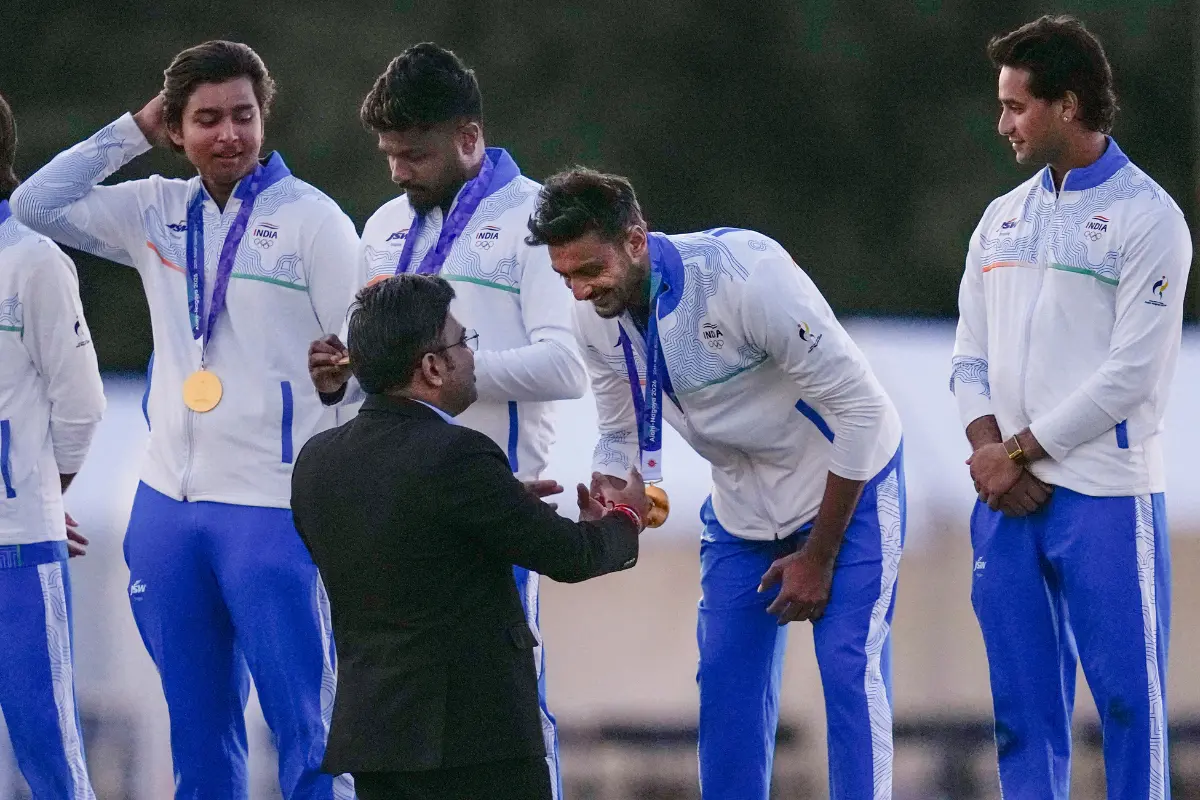
Nagoya: The India-Pakistan cricket final at the Asian Games in Nagoya ended without a major controversy, but the absence of handshakes between the two teams once again highlighted the strained cricketing ties between the neighbours.
India beat Pakistan by 19 runs to retain the Asian Games gold medal. While the match itself remained largely free of confrontation, there was no customary handshake between the players before or after the contest.
For spectators, particularly the sizeable Indian diaspora that travelled from Tokyo, Nagoya and other parts of Japan, the focus remained on the cricket. But the events around the match offered a glimpse into why even routine interactions between India and Pakistan have become closely watched.
Why were there no handshakes?
The lack of handshakes came against the backdrop of strained India-Pakistan relations. The players did not approach each other after the match either.
After India's victory, the Indian players headed towards their dressing room, while the Pakistan team later emerged, shook hands with the umpires and returned without interacting with the Indian side.
Despite this, the match itself was played without major incidents. There were no heated exchanges or significant flashpoints between the players.
Also read | Abhishek Sharma completes 400 T20 sixes, breaks past Chris Gayle in two records
What happened during the medal ceremony?
The medal ceremony also passed off without disruption.
An official from the Aichi-Nagoya Asian Games Organising Committee presented the silver medals to Pakistan. ICC chairman and former BCCI secretary Jay Shah presented the gold medals to the Indian team led by captain Shreyas Iyer.
Sri Lanka, who won the bronze medal, also took part in the ceremony.
The arrangements meant that the presentation did not turn into another India-Pakistan diplomatic or cricketing flashpoint.
Why was Mohsin Naqvi's absence significant?
One factor that may have helped keep the ceremony uneventful was the absence of Asian Cricket Council (ACC) president Mohsin Naqvi.
Naqvi, who is also Pakistan's interior minister, cited prior commitments for not attending the final.
His absence was significant because the BCCI and Naqvi have been involved in a prolonged dispute over the presentation of Asia Cup trophies to Indian teams.
The Asia Cup trophy controversy
The disagreement centres on the BCCI's position that Indian teams should not receive trophies from Naqvi.
The issue emerged after the 2025 men's Asia Cup and continued during the women's edition this year. The Indian teams did not accept their trophies from Naqvi.
The BCCI had asked the ACC to allow its deputy chairman to conduct the presentation instead, but the proposal was not accepted.
As a result, the trophies remained unclaimed after the respective ceremonies.
Naqvi has maintained that India would have to collect the trophies from him personally, while the BCCI has maintained its position against receiving them from him.
Also read | Asian Games 2026 archery: India stuns 10-time Olympic champions South Korea to claim recurve gold
An awkward moment during the group photograph
The only awkward moment during the Asian Games ceremony came during the group photograph.
India were positioned in the middle, with Pakistan expected to stand on one side and bronze-medallists Sri Lanka on the other.
The Pakistani players appeared unsure about their position and stepped down from the podium after the medal ceremony. The Sri Lankan players also followed them.
The teams eventually assembled in front of the Indian contingent for the photograph.
Shah left after the photo session.
More than just a cricket final
An India-Pakistan cricket match attracts attention well beyond the field because of the political tensions between the two countries.
The Asian Games final therefore carried an additional layer of interest. There was speculation about whether the strained bilateral relationship would affect interactions between the players or the medal ceremony.
That did not happen in a major way in Nagoya.
The match remained competitive, with Pakistan putting India under pressure before the defending champions secured a 19-run victory.
Cricket takes centre stage in Nagoya
The Nagoya final showed a clear separation between the sporting contest and the broader tensions surrounding India-Pakistan relations.
There were no handshakes, and the teams kept their interactions to a minimum. But there were also no major on-field confrontations or disruptions.
India retained the Asian Games cricket gold, Pakistan won silver and Sri Lanka took bronze.
The final therefore ended without a repeat of the Asia Cup trophy controversy, even as the absence of handshakes served as a visible reminder of the continuing strain between the two sides.
PTI