Why F1 races under floodlights at Marina Bay: The tech and timing behind Singapore GP
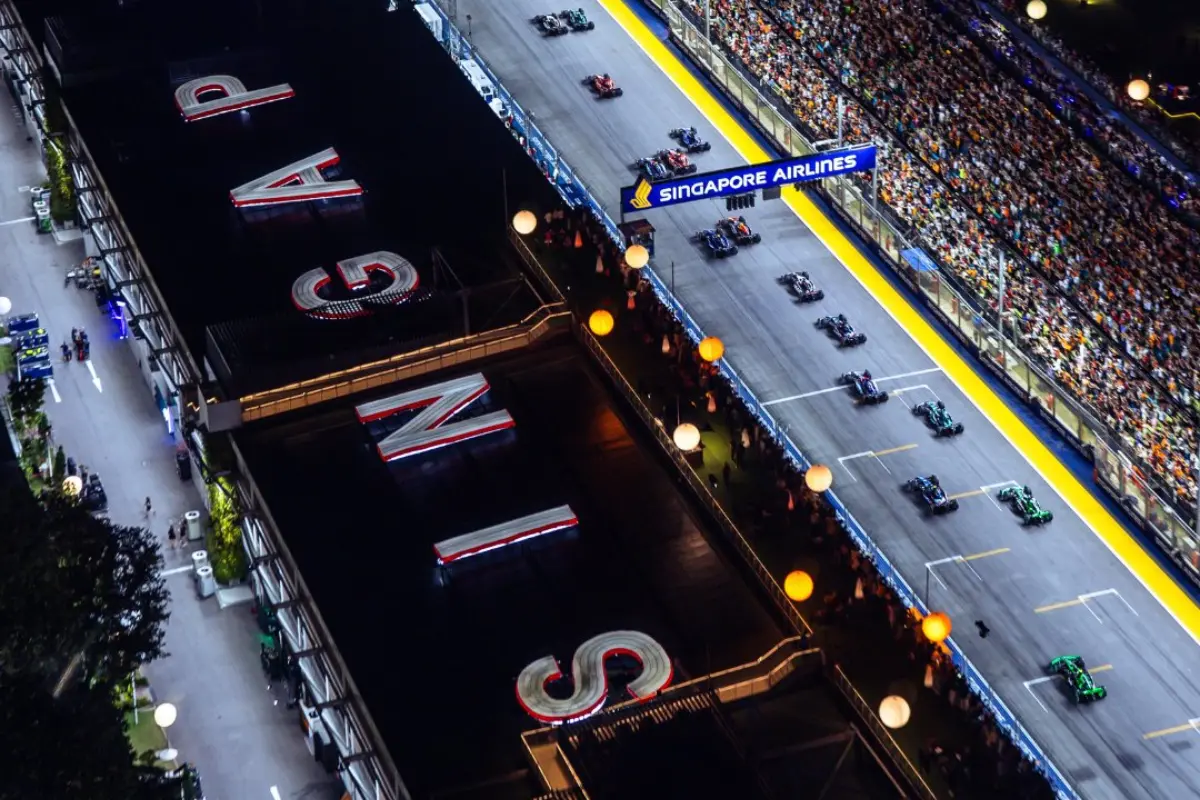
Marina Bay: When Formula 1 introduced the Singapore Grand Prix to the calendar at the Marina Bay Street Circuit, it made history as the sport's first-ever night race. A key driving force behind this timing was catering to F1's massive European television audience. Racing at 20:00 local time in Singapore converts to an early afternoon start in Western Europe, ensuring peak viewing hours for traditional fan bases across Britain, Germany, and Italy. Scheduling the session late in the evening successfully reconciled the regional time zone gap, keeping global broadcast ratings at an all-time high without forcing European fans to wake up in the middle of the night.
Defying Tropical Heat and Humidity
Beyond broadcasting strategy, holding the session after dark serves as a practical measure against Singapore's brutal equatorial climate. Daytime ambient temperatures routinely climb past 30°C alongside crushing relative humidity levels. Operating under the night sky provides a slight drop in track temperature, easing the thermal load on the cars' power units, hybrid batteries, and Pirelli tyre compounds. However, despite the evening schedule, official telemetry data from F1 medical teams shows that cockpit temperatures can still reach a sweltering 50°C, causing drivers to lose up to 3 kg of fluid during the 62-lap distance. Running the event during the scorching afternoon hours would push driver endurance and machinery far beyond safe operational limits.
Architectural Brilliance and Tourism Appeal
The nocturnal setting transforms the central business district into a spectacular visual showcase that delivers immense commercial value. To ensure driver safety on public roads, track operators installed a custom lighting rig boasting around 1,600 specialised floodlight projectors. According to FIA technical assessments, this bespoke system generates approximately 3,000 lux, nearly four times brighter than a standard sports stadium, eliminating glare and shadows cast even under heavy downpours. According to Singapore Tourism Board reports, the visual spectacle of glowing cars weaving through the illuminated skyline draws hundreds of thousands of international visitors annually, generating over £300 million in tourism revenue and cementing Singapore's status as a marquee global destination.