Vinicius' absence leaves Real Madrid without their most dangerous Clásico weapon
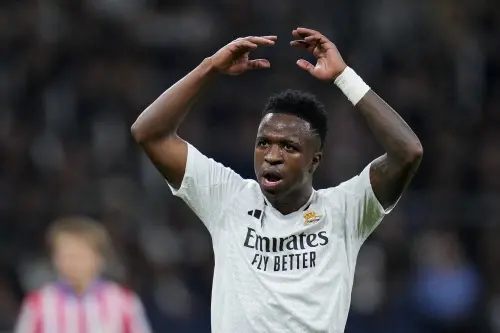
Real Madrid will travel to Camp Nou for the first Clásico of the season without Vinícius Júnior, after the Brazilian was handed a four-match LaLiga suspension for pulling Villarreal’s Nathan Saliba’s hair and then protesting aggressively at the referee.
The Spanish Football Federation’s disciplinary committee announced the ban on Wednesday, ruling Vinícius out of Madrid’s league games against Sevilla, Barcelona, Racing Santander and Valencia.
The most damaging absence is the October 25 trip to Barcelona, where José Mourinho’s side trail the league leaders by six points.
What happened against Villarreal
Vinícius came on as a substitute in Real Madrid’s 1-0 win over Villarreal at the Santiago Bernabéu on October 10. Around 20 minutes after entering, he pulled Saliba’s hair while sprinting down the field, moments before putting the ball into the net.
Referee Isidro Díaz de Mera initially allowed play to continue, but after a VAR review, Vinícius was shown a straight red card. His goal was disallowed, and Madrid had to see out the win with 10 men.
The Brazilian then reacted furiously. The referee’s match report said Vinícius protested the decision, raised his voice aggressively and had to be restrained by teammates as he left the pitch.
Vinícius later apologised publicly. “I am sorry to the team and the fans,” he wrote on social media.
Why the ban is four matches
The suspension was built in two parts. The disciplinary committee imposed two matches for violent conduct, classifying the hair-pull as an act committed while Vinícius was not in a position to challenge for the ball. It then added two further matches for protests against the officials, taking the total to four.
The distinction mattered. Under Article 130 of the federation’s disciplinary code, the hair-pull alone could have attracted a ban of one to three matches, depending on how it was interpreted. But the referee’s report on Vinícius’ reaction gave the committee grounds to double the punishment.
Vinícius will therefore miss:
* Sevilla at home, October 18
* Barcelona away, October 25
* Racing Santander away, November 1
* Valencia away, November 7
He remains eligible for Champions League football, meaning Real Madrid can still use him in Europe during the domestic ban.
Mourinho’s anger
Real Madrid manager José Mourinho criticised not the length of the ban itself but its timing. The decision was announced roughly two hours before Madrid’s Champions League match away to Roma on Wednesday.
“Do you think it’s normal for a player from a Spanish team, preparing for an important match that’s also crucial for Spanish soccer, to find out about his four-match suspension just two hours before kickoff?” Mourinho said. “Couldn’t they have announced the decision now or tomorrow morning? We were on the bus about to arrive at the stadium when we found out.”
Mourinho had already refused to attend his post-match press conference after the Villarreal red card. Reports in Spain suggested Real Madrid considered an appeal, though an initial appeal was said to have been dismissed.
The tactical hole at Camp Nou
Vinícius’ absence changes the shape of Madrid’s attack. Even in an inconsistent season -- one goal in nine appearances -- he remains the player most capable of punishing Barcelona’s high defensive line with sudden acceleration, one-versus-one dribbling and runs in behind.
Barcelona’s aggressive pressing and high defensive line naturally create space behind their back four. Vinícius is precisely the kind of forward who can exploit that space, either by isolating a full-back or by drawing fouls and yellow cards in dangerous areas.
Without him, Mourinho must decide whether to play Yan Diomande on the left, shift Kylian Mbappé wide, or use a more conventional central striker such as Carlos Espi. Each option changes Madrid’s pressing structure, counter-attacking routes and the areas from which they threaten Barcelona.
Diomande started on the left against Villarreal and scored Madrid’s only goal, offering Mourinho a ready-made alternative. But Vinícius’ ability to destabilise a defence through repeated dribbles is harder to replace.
A bigger problem than one match
The suspension is not merely a Clásico problem. Vinícius will miss four consecutive league fixtures, removing Madrid’s most-used forward from a stretch that includes three away matches and a home game against Sevilla.
Madrid are fourth in LaLiga, six points behind Barcelona, who have won all 10 matches across competitions this season. A defeat at Camp Nou would widen the gap to nine points and make the early title race significantly harder.
The ban also removes a psychological reference point. Barcelona’s defenders will not have to plan for Vinícius’ direct runs, while Madrid’s attacking rhythm may become more predictable if Mbappé is forced to operate wider or deeper than usual.
Discipline becomes the story
Vinícius’ red card has turned a narrow win over Villarreal into a costly setback. Madrid kept three points, but lost their most explosive attacker for a month of league football -- including the fixture that could define their title challenge.
For Mourinho, the task is now twofold: rebuild an attack capable of hurting Barcelona without Vinícius, and prevent frustration over the suspension from becoming a wider distraction. For Vinícius, the four-match ban is a reminder that his talent gives Madrid an edge -- but his loss of control can take that edge away at the worst possible moment.