Saleh’s journey: From playing on Kottayam’s grounds to being part of East Bengal’s ‘Pancha Pandavas’
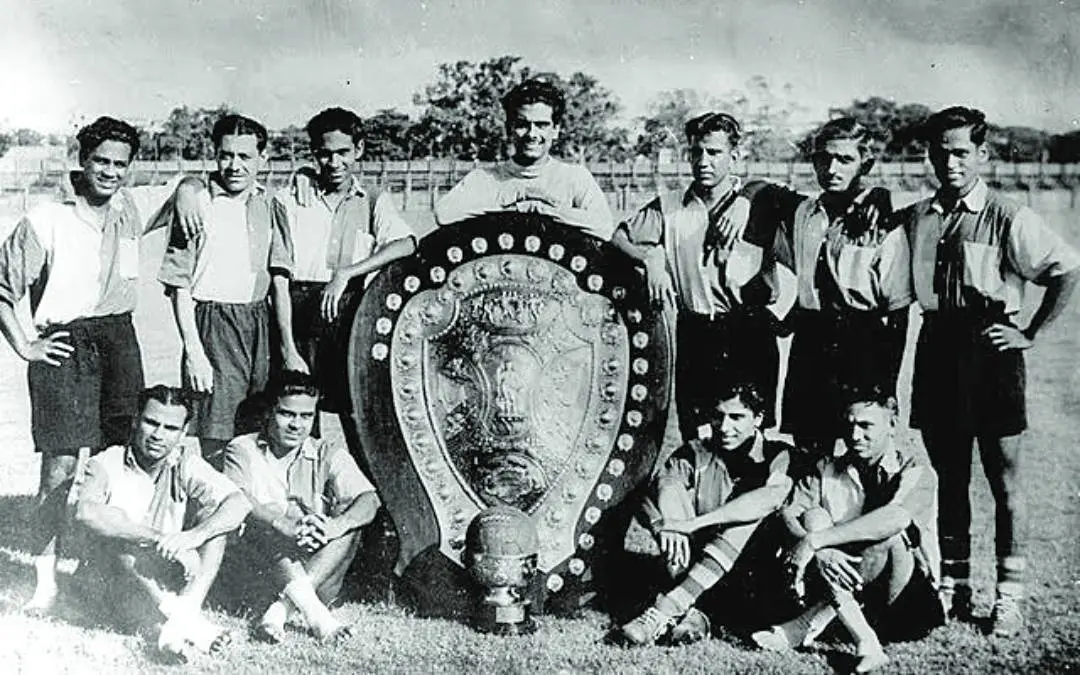
Kottayam: Puthenparambil Babakhan Abdul Razzaq Saleh, famously known as Kottayam Saleh, became the first Malayali to play for East Bengal, marking a significant milestone in the history of Indian football. Born in Puthenparambil near Kottayam, Saleh was only 20 years old when he joined East Bengal in 1945, quickly establishing himself as a star player. His exceptional skills on the field helped East Bengal secure numerous victories during his nine seasons with the club from 1945 to 1953.
Saleh’s journey to East Bengal began during a tournament in 1944 in Travancore, where his football prowess caught the attention of the East Bengal authorities. However, his family, well-off at the time, was initially reluctant to send him to Kolkata. It was only after East Bengal officials sought the help of the Maharaja of Travancore during a royal banquet that Sali's family agreed, on the condition that the club ensure he could continue his education in Kolkata. With this assurance, Saleh’s career in football took a new turn.
Initially, Saleh faced skepticism from the club's senior officials, who questioned whether the young Malayali player could make an impact. To begin with, Saleh was asked to play in the junior league, but his talent soon became undeniable. Over the next few years, Saleh, alongside his teammates, became part of East Bengal's legendary "Pancha Pandavas" — a historic combination of players who dominated the football scene in Kolkata.
Saleh formed a formidable partnership with fellow forwards Venkatesh, Appa Rao, Ahmed Khan, and K.P. Dhanraj. Their collaboration resulted in East Bengal’s golden era, winning multiple titles including the Kolkata League, IFA Shield, Rovers Cup, Durand Cup, and DCM Trophy between 1949 and 1952.
Despite his fame on the football field, Saleh’s academic pursuits were not neglected. As per the agreement with his family, he was enrolled in Kolkata University to continue his education. The then Examination Controller of the University, a staunch football fan, reportedly modified the university’s regulations to allow Saleh to complete his degree, despite his commitments to football. Saleh successfully completed his studies, which was a testament to his determination.
Saleh’s achievements were not limited to club football. He also played for the national team and was a key figure in India’s gold medal win in football at the 1951 Asian Games. Saleh also participated in the 1952 Helsinki Olympics, marking his international presence.
Though he had only one opportunity to play in the Santosh Trophy, Saleh made it memorable by scoring a goal in the final, helping Bengal win their fifth title in 1950. His performance in the national team and with East Bengal cemented his place as one of Indian football's greats.
Saleh’s football career took him from his early days at CMS College and HMC in Kottayam to Kolkata, where he achieved national and international acclaim. After retiring from football, he worked as a senior customs officer and passed away on June 24, 1979, in Tamil Nadu. He is survived by his wife, Naiba, and children Nasli and Niyas.
Saleh's legacy as the first Malayali to captain East Bengal and his groundbreaking achievements in both national and international football will continue to inspire generations. He remains the first Malayali to win the Santosh Trophy and the first to represent East Bengal as captain.