Ronaldo walkout, Israel-Ireland tensions and Zidane’s return highlight dramatic Nations League window
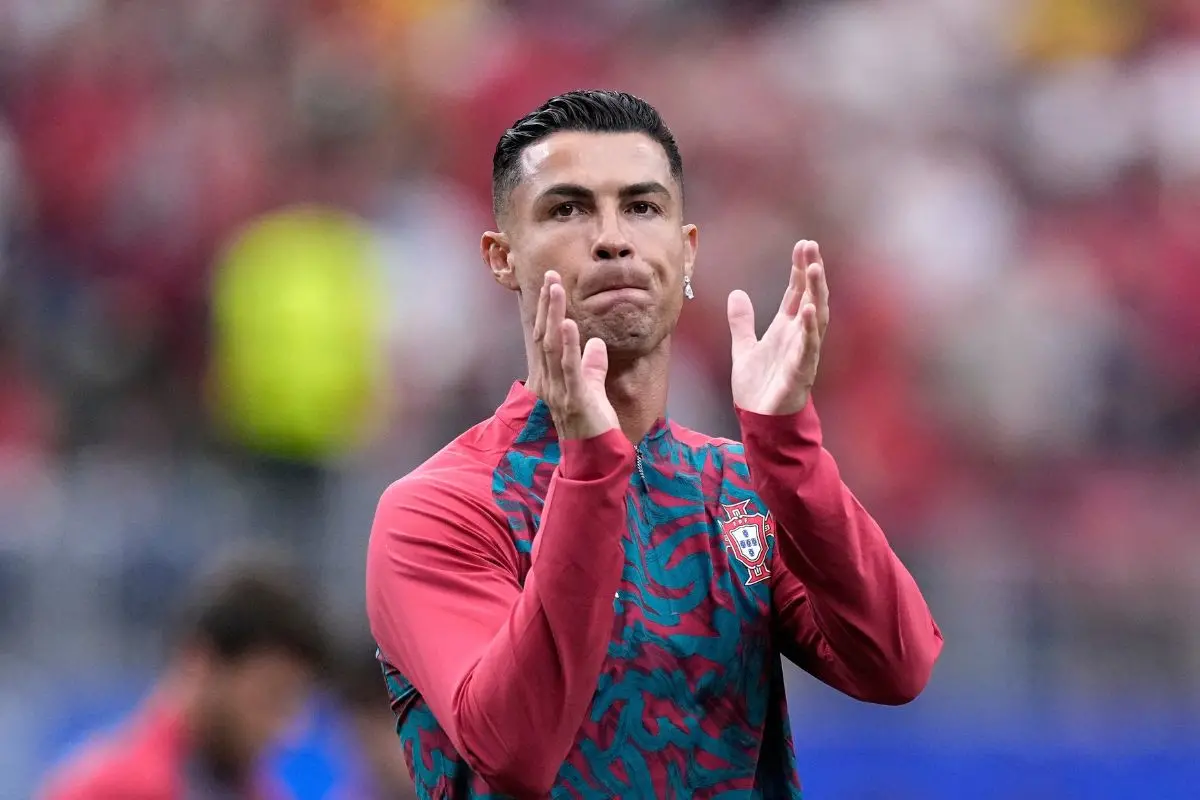
For anyone expecting international soccer to slow down after the World Cup, the recent slate of Nations League matches in Europe delivered anything but a breather. From high-profile squad walkouts and high-stakes diplomatic tensions to the debuts of iconic managers, the extended international break proved to be one of the most action-packed in recent memory—all while Manchester City's international contingent processed their club's involvement in one of English soccer's biggest scandals.
Here is a breakdown of the key talking points from a whirlwind fortnight of international action:
Ronaldo's unraveling Portugal career
After 23 years, 234 appearances, and 146 goals, Cristiano Ronaldo’s iconic international career appears closer than ever to its conclusion. A public power struggle with new Portugal manager Jorge Jesus escalated into a full-blown soap opera after the 41-year-old walked out on the squad over a lack of playing time.
In the matches Ronaldo missed or spent on the bench, Portugal won all three games. His replacement, Gonçalo Ramos—who famously stepped in for him at the 2022 World Cup—scored three times.
Ronaldo capped the break with a lengthy Instagram post to his 679 million followers, outlining an eight-point script he claimed Jesus was supposed to read at a press conference. Notably, point No. 6 urged Jesus to admit a mistake in asking “someone of the stature of Pelé or Maradona” to warm up on the touchline without sending them on against Norway. While acknowledging an impending suspension under federation rules, Ronaldo reassured fans, promising, “we will have one or more farewell matches.”
Tensions flare in Ireland vs. Israel clashes
The two-game series between Ireland and Israel proved as volatile as anticipated following the February UEFA draw. Grounded in historic Irish support for the Palestinian cause, the Irish national federation had previously requested Israeli teams be excluded from European competitions over alleged UEFA statute violations and declined to host its home leg in Dublin.
Played at neutral venues in Hungary and Serbia following tense pre-game press conferences, both fixtures carried heavy political weight. Ireland wore black armbands in the first match, followed by both teams in the second. Players refused handshakes, and Irish players bowed their heads during the Israeli national anthem.
UEFA is now investigating an incident where an Israeli player allegedly spat at an Irish coach near the touchline. In light of the fallout, Ireland manager Heimir Hallgrímsson urged UEFA to separate the two nations in future draws, especially with qualifying groups for Euro 2028—co-hosted by Ireland—set to be drawn on December 6 in Belfast.
Mixed fortunes for new 'super-coaches'
The era of the international super-coach is in full swing, with Jürgen Klopp and Zinedine Zidane joining the ranks alongside Carlo Ancelotti and Thomas Tuchel.
Returning to management after a five-year absence, Zidane made an immediate impression with France, securing three wins and a draw to replace Didier Deschamps. The French legend looked entirely in his element, celebrating a Michael Olise goal with a sprint down the touchline and casually controlling a stray ball on the sideline to cheers from the crowd.
In contrast, Klopp faces a steeper incline with a struggling Germany side. Germany managed just one win from four matches, including a home defeat to Greece. However, Klopp used the window to experiment with two distinct squads to evaluate his player pool, suggesting his tactical overhaul will require time.
A growing injury crisis
The physical toll of the congested schedule quickly became apparent. Netherlands striker Brian Brobbey and Germany forward Kai Havertz were forced off injured on the opening night, setting off a domino effect across Europe:
Kylian Mbappé returned to Real Madrid after suffering a hyperextended left knee.
Alexander Isak and Cody Gakpo were sent back to Liverpool following injuries with Sweden and the Netherlands.
Ferran Torres departed the Spain camp with ankle pain.
Alex Scott, England's promising young midfielder, was sidelined for up to two months with a thigh problem.
Erling Haaland limped off fatigued in Norway's final match, leaving Manchester City holding its breath.
The new format: Praise and pushback
The new, extended early-season block drew mixed reviews across the continent. Larger nations and new managers welcomed the extra preparation time. Scotland coach Sébastien Pocognoli highlighted the value of their pre-tournament camp before a grueling run of four games in 11 days, stating, “For my timeline with the group, this first week in Spain was gold.”
Conversely, others criticised the heavy workload. England boss Thomas Tuchel voiced a preference for the traditional two-game windows in September, October, and November, noting it would “give even more players also the chance to impress in between the camps, and then come and get a nomination.”
Italy manager Roberto Mancini called the schedule “too demanding,” while Wales manager Craig Bellamy emphasised the strain on smaller squads, stating, “We know it’s a complete disadvantage for us.”
Spain dominates as Italy shows signs of life
Reigning World Cup champions Spain maintained their dominant form, joining Portugal as the only teams to win all four matches during the window. With Lamine Yamal continuing his elite form and Merino operating as an effective super-sub, Spain extended their unbeaten streak to 2½ years—prompting England winger Anthony Gordon to remark that the Spanish side is “built different.”
Meanwhile, Italy showed signs of recovery after missing out on a third consecutive World Cup. Under Roberto Mancini—returning for his second spell after leading the team to the Euro 2021 title—the Azzurri recorded two wins and a draw against France, hinting at a potential national resurgence. (AP)