From São Paulo to Salt Lake; India’s long wait to face Brazil
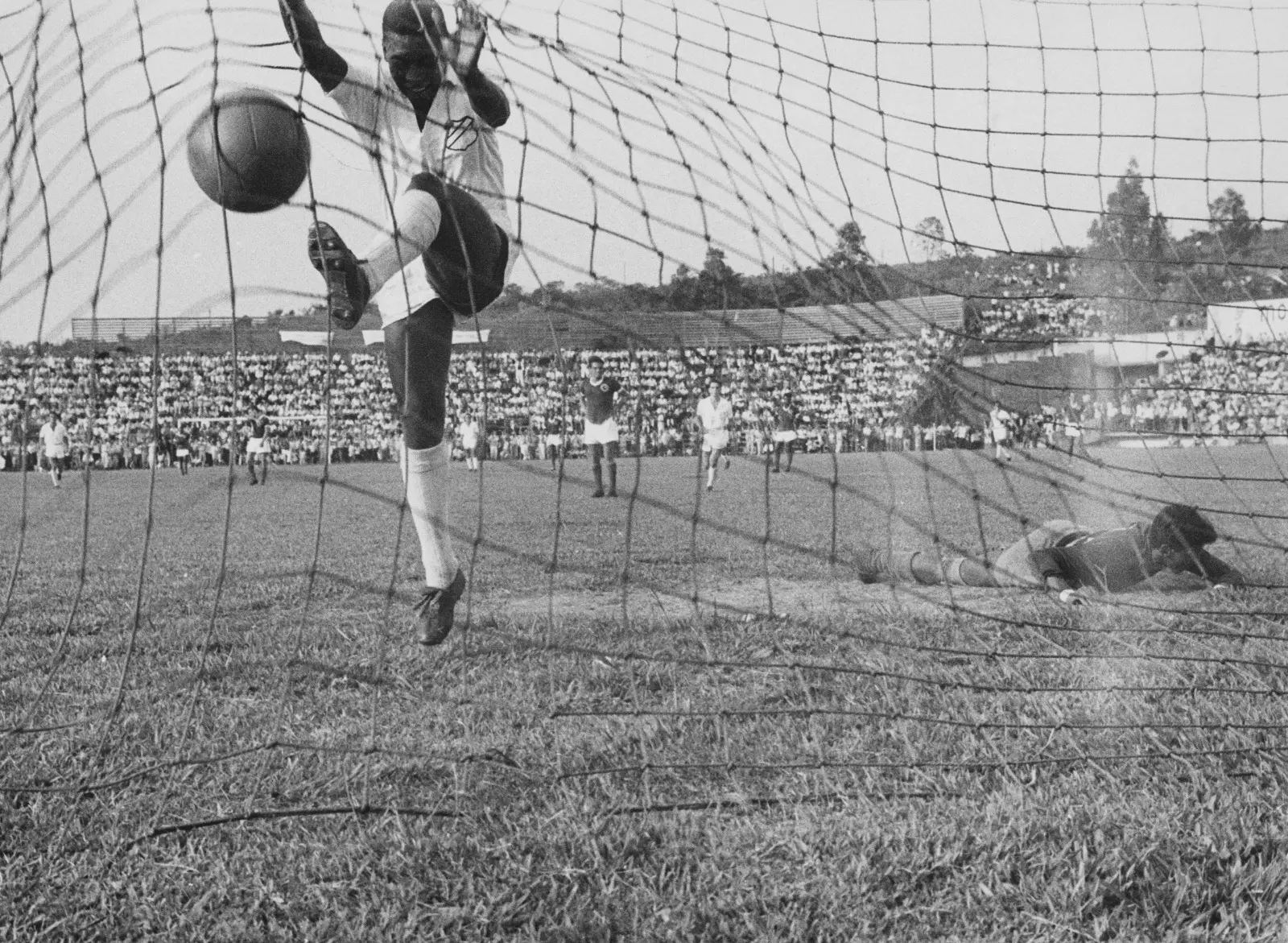
Three stars have always shone across the vast sky of Latin American football—Brazil, Argentina and Uruguay. Three nations that have carried the dreams, tears and celebrations of generations, together accounting for ten FIFA World Cup titles.
Uruguay—the fearless pioneers who rose to glory by hosting and winning the first World Cup. Brazil—the empire that has painted the world yellow five times. Argentina—the epic journey from the magic of Maradona to the brilliance of Messi.
Of these three Latin American giants, India has had the privilege of facing two on the football field. Uruguay came up against India in the 1982 Nehru Cup. Two years later, in 1984, it was Argentina. Against the giants of world football, India fought bravely and walked off the field with its head held high, even in defeat.
But India never had the opportunity to step onto the field against Brazil—the land of samba, the nation that carried forward Pelé’s extraordinary legacy and whose football magic has mesmerised generations.
At last, the stage is set for the rare meeting that time had long kept waiting.
On October 3, India and Brazil will face each other at the Salt Lake Stadium in Kolkata.
Time itself will roll like a football.
When Brazil comes to India, an old memory comes alive once again.
January 11, 1989.
The Sree Kanteerava Stadium in Bengaluru.
It was the day São Paulo FC, one of Brazil’s most celebrated football clubs, arrived to face an Indian XI.
A club that had already written chapters of its own in football history. A breeding ground for legends, wearing the famous white shirt crossed by horizontal red and black stripes—Rogério Ceni, Leônidas, Raí, Careca, Cafu, Rivaldo, Luis Fabiano, Dani Alves, Casemiro...
Every name belonged to an era.
In 1992, São Paulo defeated Johan Cruyff’s legendary Barcelona “Dream Team” 2–1 to win the Intercontinental Cup. The fact that this historic club had set foot on Indian soil three years earlier gives that 1989 visit an added significance.
The São Paulo squad that came to India included a blend of experienced players and young talent. Among them were prominent names such as Ivan, Flávio and Mazinho.
On January 11, the floodlights of Sree Kanteerava illuminated a night that remains etched, without a trace of fading, on the memory wall of Indian football.
In the first match, played in Delhi on January 8, India had gone down 0–4.
What would happen in Bengaluru?
The game had barely begun.
The second minute.
Winger Betinho sent in a lob. Mazinho controlled the ball with his left foot and unleashed a powerful shot along the ground.
1–0. São Paulo were ahead.
For a moment, it seemed the Brazilians were about to unleash a goal storm on the Indian goal.
But India did not collapse.
The 14th minute.
Confusion in the São Paulo defence.
Ivan tried to play the ball back to goalkeeper Anselmo. The pass lacked pace.
Kuljit Singh reacted in a flash.
He seized the ball, read the goalkeeper’s movement and calmly placed it beyond him.
1–1.
The rest of the first half turned into a fierce midfield battle. São Paulo’s quick passing and command of possession constantly tested India. But the defence, led by Sharafali and Sudip Chatterjee, stood firm under relentless pressure.
At half-time, the score remained 1–1.
Early in the second half, a Mazinho shot struck the Indian post and went out.
Under coach Naeemuddin, India gradually found its rhythm.
The 60th minute.
With the São Paulo players committed forward, a mistake in their defence opened the door.
Kuljit seized the opportunity, raced forward and finished with ease.
India were 2–1 ahead.
For one extraordinary moment, the Bengaluru stadium seemed to forget the Brazilian giants standing before them.
Could India actually defeat one of the giants of club football?
The minutes that followed severely tested Indian resilience.
Sudip Chatterjee, Sharafali and Amit Bhadra formed a defensive wall in front of the Indian goal.
The São Paulo attacks came wave after wave.
Only three minutes remained.
Even the hands of the clock seemed to hold their breath.
Was time moving more slowly?
Could this become a historic night for Indian football?
Could this stadium become the witness to a dream that had been waiting for decades?
But football is a drama whose story is never complete until the final whistle.
And then came the tackle that felt like the sword of fate.
Amit Bhadra brought down Mazinho inside the box.
The whistle!
The referee pointed to the penalty spot.
Despair spread across the faces of the Indian players. In the stands, silence descended—as if thousands were waiting for a verdict.
São Paulo captain Flávio walked towards the penalty spot with the ball.
He placed it carefully.
Two steps back.
Ahead of him stood Indian goalkeeper Henry Menezes.
Flávio began his run.
The kick!
Henry dived...
But the ball raced into the corner of the net.
Goal! 2–2.
Soon afterwards, the final whistle sounded.
Some nights do not give you victory.
Instead, they leave a mark that can never be erased from history.
That night in 1989 was one of them.
Thirty-seven years later, when India and Brazil meet again at Kolkata’s Salt Lake Stadium on October 3, the lights of that Bengaluru night will once again flicker in the dark chamber of memory.
The Indian XI that faced São Paulo FC
Henry Menezes, Amit Bhadra, Sudip Chatterjee, Sharafali, Babu Mani, Savio Medeira, Bikas Panji, Mauricio Afonso, Satyajit Chatterjee, Kuljit Singh and Sisir Ghosh.