2002 redux? France vs Senegal World Cup preview: Tactical breakdown, key players & prediction
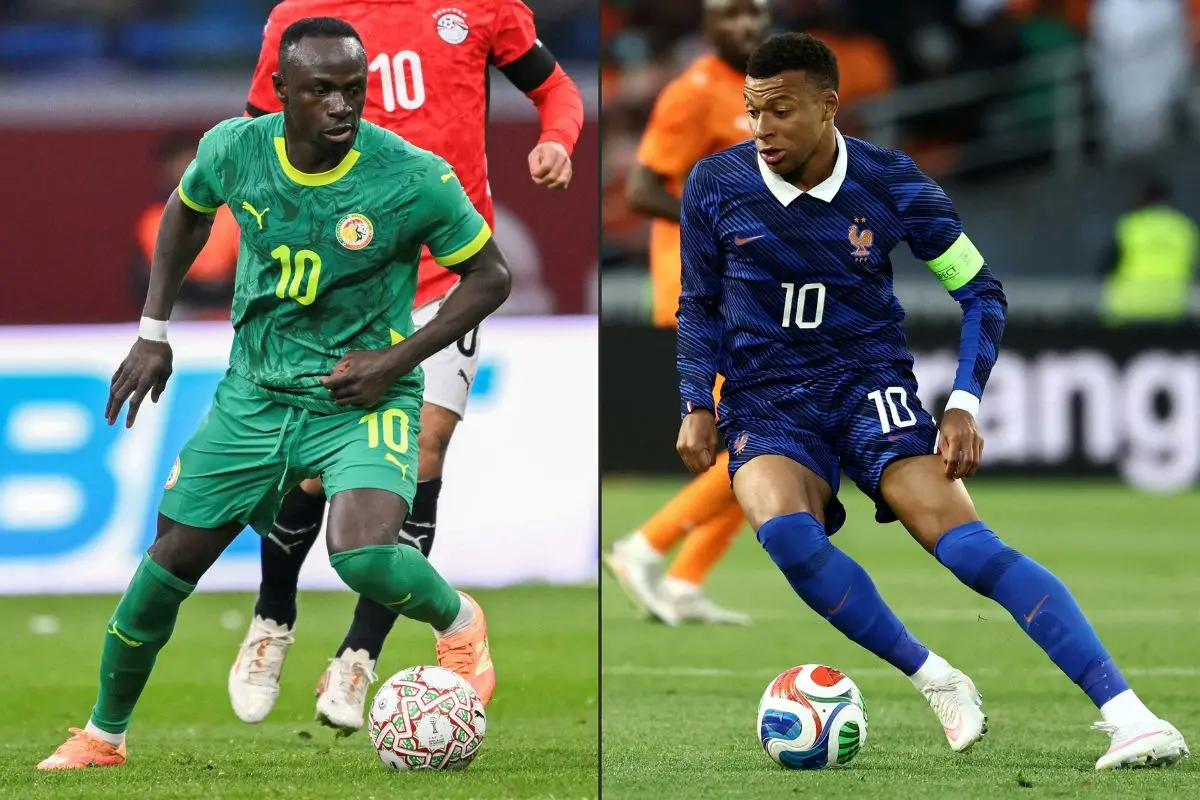
France vs Senegal remains one of World Cup football’s most symbolic and unpredictable fixtures, dating back to Senegal’s famous 1-0 win over the defending champions in the 2002 opener in Seoul. Papa Bouba Diop’s decisive goal stunned a French side weighed down by off-field turbulence and set the tone for one of the tournament’s greatest shocks.
More than two decades later, a renewed meeting in New York/New Jersey carries added intrigue: a dominant, star-stacked France under Didier Deschamps seeking global supremacy once again, and a disciplined, evolving Senegal side built on defensive strength, midfield energy, and a growing European influence.
FRANCE
Strength
France arrive as arguably the most complete squad in world football, blending elite depth with tournament experience. Their attacking options are extraordinary—Kylian Mbappé leads a group that includes Ousmane Dembélé, Michael Olise, Bradley Barcola, Désiré Doué, and Rayan Cherki, giving Deschamps unmatched rotational flexibility.
At the back, the William Saliba–Ibrahima Konaté pairing offers both power and composure, while France’s recent consistency in major tournaments—four consecutive World Cup semi-final appearances—underscores their pedigree. Mbappé’s scoring record, including his decisive impact across recent World Cups, remains their most reliable weapon.
Weakness
Despite their talent, France can appear tactically conservative in decisive matches. Didier Deschamps’ structured approach has often limited attacking fluidity, particularly when breaking down compact defensive sides.
Midfield creativity is another concern, with the double pivot prioritising control over invention, placing heavy responsibility on advanced attackers to generate chances. There is also lingering uncertainty around penalty reliability after recent shootout disappointments, while any dip in Mbappé’s fitness significantly reduces their attacking threat.
Gameplay
France typically operate in a controlled 4-3-3 or 4-2-3-1 shape, prioritising defensive stability and rapid transitions. The system is designed to protect their centre-backs while releasing pace in wide and central attacking zones.
Expect structured buildup, selective pressing, and quick vertical attacks aimed at exploiting Mbappé’s acceleration and the dribbling ability of their wide forwards. Matches often hinge on moments of individual brilliance rather than sustained dominance.
Squad
Deschamps has selected a 26-man squad drawn from Europe’s top leagues, reflecting exceptional depth in every position. The group includes multiple Premier League, Ligue 1, and Bundesliga regulars, with strong competition for starting places across attack and defence.
Notable absences include Eduardo Camavinga and Randal Kolo Muani, but the squad retains high-quality reinforcements such as Jean-Philippe Mateta as backup striker. William Saliba’s return to fitness strengthens an already elite defensive unit.
Key Players
France rely on a core of world-class match-winners capable of deciding games in a single moment.
Kylian Mbappé remains the central figure, operating as both finisher and outlet in transition. His pace, movement, and finishing make him the primary threat in knockout football, especially in space behind defensive lines.
Ousmane Dembélé provides unpredictability on the flank, using his dribbling and acceleration to break compact defences. When in rhythm, he is one of France’s most dangerous creative outlets.
Aurélien Tchouaméni anchors the midfield, offering defensive balance, ball recovery, and progression from deep positions. His role is vital in protecting the back line and enabling attacking freedom.
William Saliba brings composure and physical strength at centre-back, helping France manage high-pressure moments and aerial duels against physical forwards.
Prediction
France are expected to top their group and progress deep into the tournament. With their depth and experience, another semi-final or final appearance is realistic, with their ultimate success likely hinging on Mbappé’s form and Deschamps’ tactical adaptability in knockout stages.
SENEGAL
Strength
Senegal are built on physical intensity, tactical discipline, and strong collective organisation. Their midfield trio—anchored by Idrissa Gueye—provides energy, ball recovery, and balance.
Defensively, Kalidou Koulibaly remains a commanding presence when fit, while the team’s European-based core gives them experience against elite opposition. In attack, they possess pace and directness through Sadio Mané, Ismaïla Sarr, and Iliman Ndiaye, capable of stretching any defensive line.
Weakness
Senegal’s biggest limitation is a lack of consistent central goal-scoring output. While Nicolas Jackson has been trusted in the striker role, his international scoring record remains modest, placing pressure on wide players and midfield runners to contribute goals.
There is also some inconsistency in transition phases when facing top-tier possession teams, where defensive workloads increase and attacking opportunities become limited.
Gameplay
Senegal typically line up in a 4-3-3 system focused on athletic midfield dominance and rapid counter-attacks. They are most dangerous when winning the ball high or breaking quickly into space behind defensive lines.
Against stronger opponents, they may sit deeper, relying on compact organisation and physical duels, while using wide pace to launch direct attacks. Set pieces remain an important part of their offensive strategy.
Squad
Pape Thiaw’s squad blends experienced leaders with emerging talent. Kalidou Koulibaly remains central to the defensive structure, while Idrissa Gueye provides leadership in midfield.
Sadio Mané is fit and available after an injury-disrupted previous World Cup, and young PSG forward Ibrahim Mbaye represents the next generation of Senegalese attacking talent. The squad also features a strong contingent of players competing in Europe’s top leagues, reinforcing their competitive edge.
Key players
Senegal depend on leadership, athletic intensity, and direct attacking threats from wide areas.
Sadio Mané remains their most influential attacker, capable of creating and finishing chances from wide or central positions. His experience in high-pressure matches is crucial.
Kalidou Koulibaly leads the defence with authority, organising the back line and handling elite attackers in physical duels and set-piece situations.
Idrissa Gueye provides midfield control through relentless pressing and ball-winning ability, often setting the tone for Senegal’s defensive structure.
Ismaïla Sarr adds pace and directness in attack, stretching opposition defences and creating transition opportunities when Senegal break forward quickly.
Prediction
Senegal are capable of progressing beyond the group stage, particularly given their defensive solidity and athletic midfield core. However, their lack of a prolific striker may limit their ceiling against elite opposition. A quarter-final run would be a strong outcome if key players remain fit and effective.
Venue: New York New Jersey Stadium
Date: Tuesday, June 16, 2026
Kick-off time: 3:00 PM ET, Tuesday, June 16, 8:00 PM PT , Tuesday, June 16