Did you know? Messi saw red card just 47 seconds into his Argentina debut
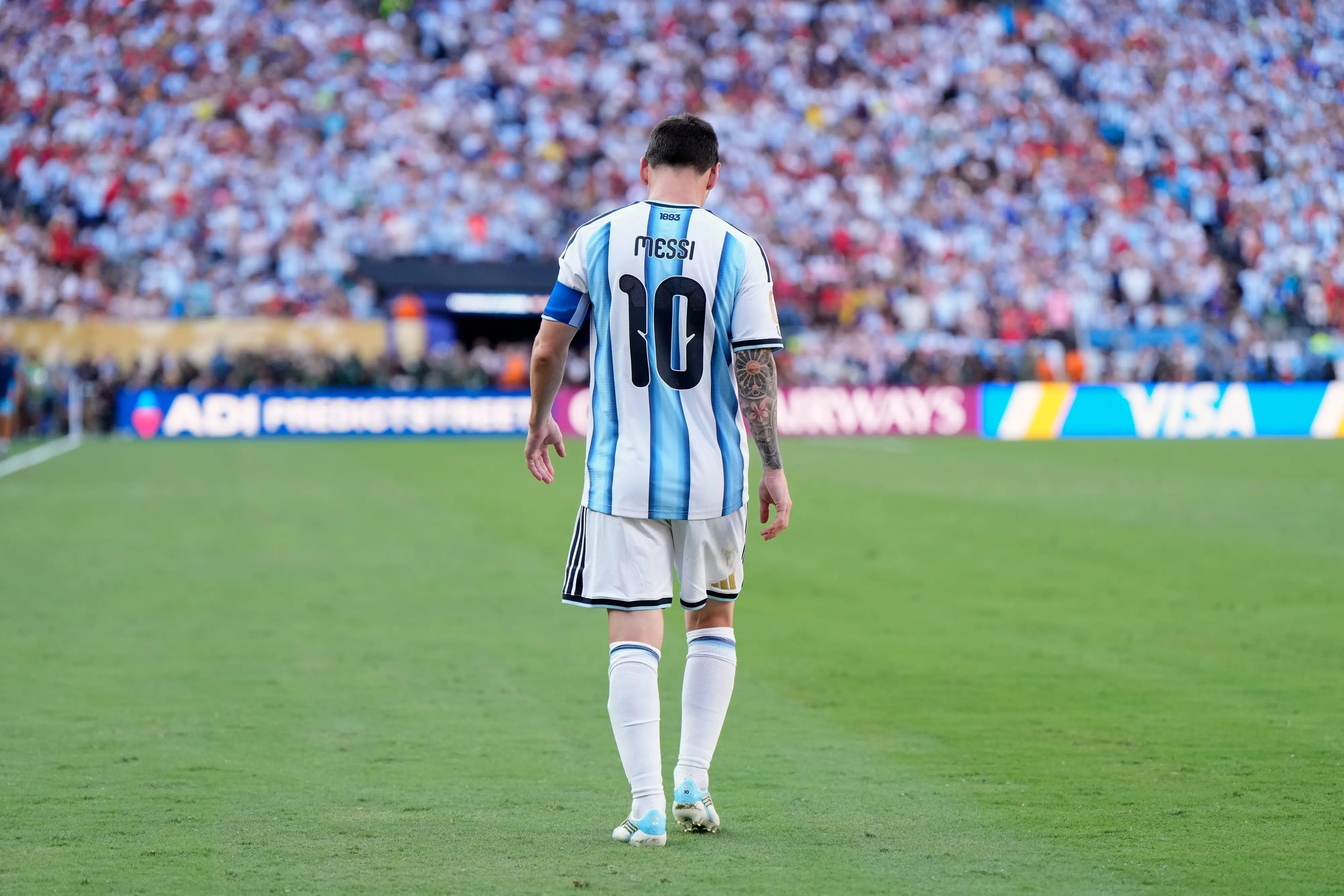
Buenos Aires: Before Lionel Messi became Argentina's captain, World Cup winner and one of football's most decorated players, his senior international debut lasted just 47 seconds before he was sent off.
Messi, who announced his retirement on Monday, came on as a second-half substitute against Hungary in a friendly on August 17, 2005. Barely a minute after entering the field, he was shown a red card following an altercation with defender Vilmos Vanczak.
Also read | ‘I wrote these words two days after the final’: Messi’s emotional Instagram post on retirement
It was hardly the start anyone would have imagined for the teenager from Rosario.
Messi replaced Lisandro Lopez in the 63rd minute and almost immediately received the ball before turning away from Vanczak. The Hungarian defender grabbed his shirt to stop him, and Messi reacted with an elbow that earned him his marching orders.
“We knew the Argentina team was very strong but we wanted to see this player because everybody spoke about him being a big player,” Vanczak told The Athletic in 2022. “Maybe I started his career!”
Also read | Messi’s life after Argentina: Retirement, $850m wealth, family and luxury assets
The bizarre beginning came only weeks after Messi had helped Argentina win the FIFA U-20 World Cup in the Netherlands. He scored six goals — including both goals in the 2-1 final victory over Nigeria — and collected both the adidas Golden Boot and adidas Golden Ball.
The teenager did not have to wait long to make his mark at senior level.
His first Argentina goal came in his sixth appearance, against Croatia in March 2006. After setting up Carlos Tevez for the equaliser, Messi pounced on a misplaced pass from Stjepan Tomas, cut inside onto his left foot and curled the ball into the net.
A World Cup beginning
Messi's World Cup journey began at Germany 2006, when coach Jose Pekerman included him in a star-studded attacking squad featuring Carlos Tevez, Javier Saviola and Hernan Crespo.
He was an unused substitute in Argentina's 2-1 victory over Ivory Coast before Pekerman turned to the teenager against Serbia and Montenegro.
With Argentina leading 3-0, Messi entered the game with 16 minutes remaining. Within four minutes, he had provided an assist for Crespo, before Tevez returned the favour and set him up for his first World Cup goal.
It was the beginning of a World Cup story that would eventually span five tournaments and culminate in glory. But the journey was far from straightforward.
From promise to heartbreak
Messi gradually became the centrepiece of Argentina's attack, but international success remained elusive.
Argentina's defeat to Germany in the 2010 World Cup quarterfinals extended the wait for a major trophy. Four years later, Messi came closer than ever, leading Argentina to the 2014 World Cup final, only for Germany to win 1-0 after extra time.
The heartbreak continued at the Copa América. Argentina lost the 2015 Copa América final to Chile on penalties. A year later, the same opponents again prevailed on penalties in the 2016 final.
After the second defeat, Messi announced his retirement from international football, saying he had missed a penalty and felt that "it's not for me". But the decision did not last. Messi returned to Argentina duty and continued chasing the trophy that had eluded him for so long.
From despair to glory
The breakthrough finally came at the 2021 Copa América. Argentina defeated Brazil 1-0 in the final at the Maracanã, giving Messi his first major international trophy with the senior national team.
The triumph changed the mood around Messi and Argentina. A year later came the ultimate prize.
At the 2022 FIFA World Cup in Qatar, Messi led Argentina through a dramatic campaign that included a shock opening defeat to Saudi Arabia. Argentina recovered, reached the final and faced France in one of the most memorable World Cup matches ever played.
Messi scored twice as the final ended 3-3 after extra time. Argentina eventually prevailed on penalties, giving Messi the World Cup trophy that had defined so much of his international career.
He finished the tournament with the Golden Ball and became the first player to win the award twice. Argentina's success continued with another Copa América title in 2024, when Messi captained the team to victory over Colombia in the final.