Unbundling the IWL: How standalone commercial rights will transform women's football in India
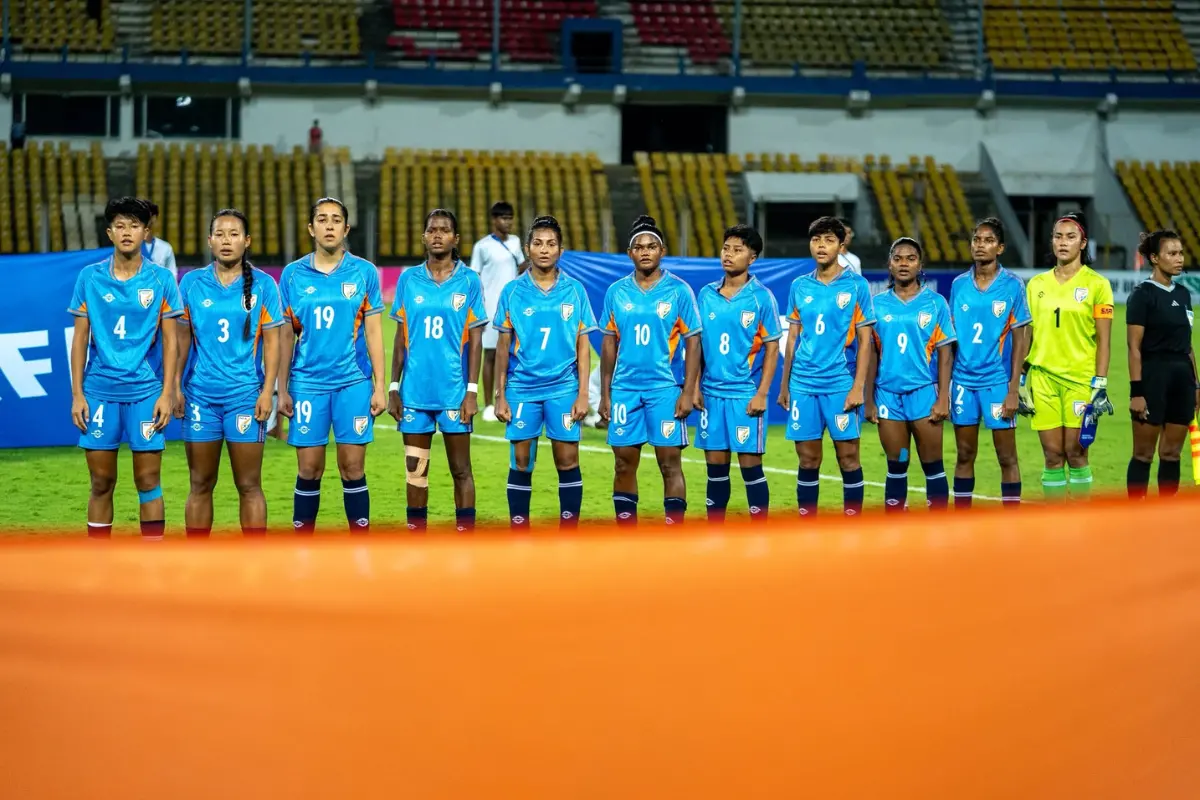
New Delhi: For decades, women’s football in India operated in the shadow of men's domestic competitions, frequently bundled as a secondary, low-cost add-on in broader broadcast tenders. However, the All India Football Federation (AIFF) is now reshaping the sport's domestic landscape by officially unbundling its commercial rights framework. Under the long-term tender structure, the federation established Package B, a standalone commercial package exclusively encompassing the Indian Women's League (IWL) and IWL 2, completely separate from men’s competitions like the Indian Super League (ISL) and Federation Cup.
A Dedicated Commercial Engine
This structural breakup creates a dedicated, long-term commercial engine valued at over ₹150 crore across its multi-decade cycle. Previously, broadcast and production arrangements for domestic football yielded minimal net returns, with women's fixtures routinely relegated to digital streams with limited production investment. By decoupling Package B, the AIFF has established an explicit valuation benchmark for women's football, ensuring that sponsorship, media, digital, data, and merchandising revenues flow directly into developing the women's sport.
Shifting from Corporate Responsibility to Core Value
Unbundling forces broadcasters, corporate sponsors, and media conglomerates to evaluate the IWL as an autonomous growth asset rather than a Corporate Social Responsibility (CSR) checkbox. Under the previous bundled paradigm, corporate investment was primarily driven by regulatory compliance or secondary visibility attached to men's tournaments. The independent bidding framework obliges prospective broadcast partners and commercial buyers to formulate targeted monetisation strategies, professional production standards, and marketing campaigns tailored specifically to an expanding women's football demographic.
Aligning with Global Sporting Benchmarks
The decoupling strategy mirrors successful commercial models deployed across the global sporting landscape. The decision aligns Indian football governance with the broader global surge in women's sports valuation, exemplified by the commercial growth of the Women's Premier League (WPL) in cricket, the National Women's Soccer League (NWSL) in the United States, and England's Barclays Women's Super League. By asserting independent rights, the IWL joins an international movement proving that elite women’s athletics generates distinct, commercially viable audience engagement.
Structural Infrastructure for Long-Term Growth
Beyond broadcast revenues, Package B establishes crucial financial predictability for participating clubs such as Gokulam Kerala and Odisha FC. Ring-fenced commercial allocations enable franchises to commit to multi-year professional contracts, specialised coaching staff, and structured youth academy pipelines feeding up from IWL 2. As the league continues its home-and-away format, this standalone commercial vehicle provides the economic foundation necessary to build a self-sustaining professional ecosystem for women's football in India.