Did Kumar Dharmasena's DRS gesture give England an edge? Controversy brews in
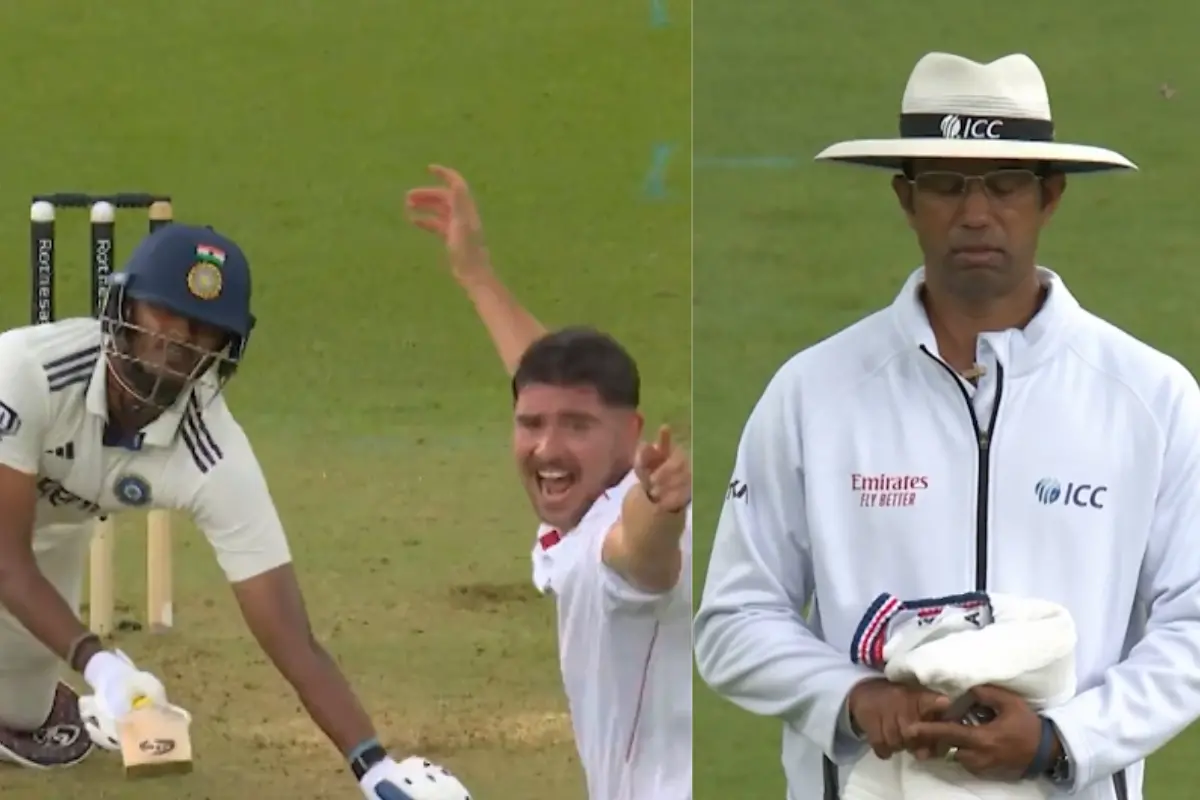
London: Day 1 of the 5th and final Test between India and England at The Oval was marred by controversy after Sri Lankan umpire Kumar Dharmasena made a subtle hand gesture during an LBW appeal that some believe may have influenced England's decision not to review—a call that replays later proved to be critical.
The Flashpoint: Was That an Inside Edge Signal?
In the 13th over of India’s innings, Josh Tongue delivered a sharp inswinging yorker to Sai Sudharsan, who was caught off-guard and struck on the pad. England launched a loud LBW appeal, but Dharmasena shook his head and appeared to subtly indicate a faint edge by pointing to his finger—a non-verbal cue suggesting the ball touched the bat.
England decided not to review the decision.
According to reports but as replays rolled in, it was revealed that Sudharsan had indeed edged the ball, which would have nullified any LBW. However, the controversy wasn’t about the decision, but about whether Dharmasena’s body language improperly influenced England’s choice not to use DRS.
Déjà vu? Echoes of the 2008 Sydney Test
The incident quickly drew comparisons to the infamous 2008 Sydney Test, where multiple umpiring blunders by Steve Bucknor and Mark Benson led to accusations of bias against India and forced a complaint from the BCCI.
While Dharmasena’s gesture wasn’t a wrong decision per se, critics argue that even unintentional signals go against the neutral spirit of umpiring in the DRS era, where each team gets only three reviews per innings.
Sanjay Bangar and Michael Atherton Weigh In
On Star Sports, former India cricketer Sanjay Bangar pulled no punches: “These second-nature habits must stop. The umpire has just 15 seconds to stay neutral. That gesture, even if innocent, is misleading.”
Former England captain Michael Atherton also criticised the moment, saying: “India would say, ‘We want England to burn their reviews.’ That’s exactly what didn’t happen because of that signal.”
Anil Chaudhary Defends Dharmasena
Veteran Indian umpire Anil Chaudhary offered a calmer perspective, saying such gestures can happen in the "flow of the game" and are usually unintentional. “No umpire does this deliberately. It’s instinctive and accidental.”
Still, critics argue that intent doesn't erase impact—especially in high-stakes matches like the Anderson-Tendulkar Trophy decider.
Trust in Umpiring Takes Another Hit
This latest flare-up once again shines a spotlight on the grey area of umpire communication during DRS windows. The system was introduced to reduce human error, but such moments raise uncomfortable questions about subtle bias and professionalism on field.
The ICC may be forced to revisit umpiring protocols, particularly regarding non-verbal conduct during review periods.
Match Context: Series Decider Still in the Balance
Despite the controversy, India ended Day 1 on a relatively steady note at 72/2, with Sudharsan unbeaten on 25 and Shubman Gill on 15. However, the DRS drama might have altered England's momentum had they chosen to review.
England made four changes, including resting skipper Ben Stokes due to injury. India also fielded a fresh-looking side with Karun Nair, Dhruv Jurel, Akash Deep and Prasidh Krishna brought in.
The Kumar Dharmasena episode may not change the series outcome—but it reignites long-standing concerns over transparency, fairness, and the role of umpires in the age of technology. With social media already ablaze, this is no longer just about one delivery—but about the ethics of influence in the modern game.