'Teams should be allowed to use saliva': Gill pushes ICC to reconsider Covid-era cricket rule
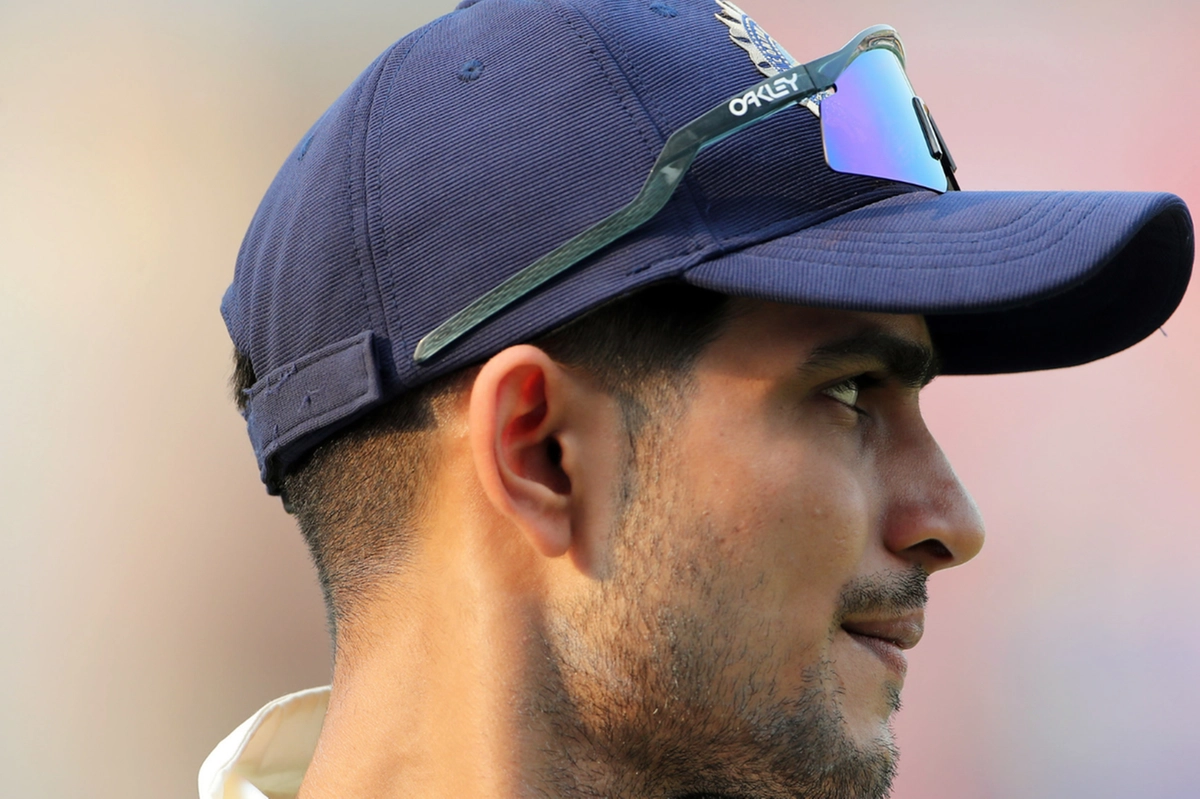
The struggle to extract wickets on an unresponsive Wellington pitch has reignited the debate over cricket's saliva ban, with India captain Shubman Gill urging the International Cricket Council (ICC) to reconsider the regulation and raising concerns over the quality of Kookaburra balls.
Gill's remarks came after New Zealand batted through 75 overs on the final day of the drawn first Test in Wellington, scoring 120 runs before losing three wickets.
The hosts eventually finished at 239 for five, as neither side managed to force a result in a contest marked by prolonged attritional cricket.
Questioning the continued relevance of the saliva restriction, Gill pointed out that the regulation was introduced during the Covid-19 pandemic and argued that the circumstances which prompted it have long since changed.
‘We are way past Covid times. There was a rule that you can't apply saliva to shine the ball. It's been 7-8 years now, I still don't understand why they are not allowing it,’ Gill said.
The India skipper also flagged concerns over how quickly the Kookaburra ball loses its hardness, suggesting that the issue is making it increasingly difficult for bowlers to create opportunities, particularly on pitches offering little assistance.
‘Our first ball, I think after 25-30 overs, the ball became very soft. I think they also complained,’ he said.
Gill questioned whether the quality of the cricket balls had deteriorated, explaining that a softer ball considerably reduces the chances of edges carrying to the wicketkeeper or slip cordon.
On surfaces with limited movement, it also restricts opportunities for bowlers to trouble batters through conventional methods.
‘I don't know if the quality of the balls has come down or what happened. But in such conditions, if there is no help from the wicket, and the ball also becomes soft, then it becomes very difficult for the bowlers to take wickets,’ he said.
The India captain recalled similar concerns during the team's 2025 tour of England, where the ball reportedly softened early in the innings.
He also referred to the use of a slightly different ball during the first three to four matches, including at The Oval.
Gill maintained that while the ball naturally loses hardness after 50 overs, the process becoming noticeable within the first 25-30 overs puts the bowling side at a considerable disadvantage.
‘Ideally, we understand after 50 overs, the ball obviously will go soft. But if the ball is going soft after 25-30 overs or it's going out of shape and you're also not able to maintain the ball and use saliva, then it's a very difficult job for the bowlers,’ he said.
He reiterated that restoring the permission to use saliva could help teams preserve the ball's condition for longer, especially on unresponsive pitches where bowlers need every available advantage.
Meanwhile, India's bowling unit endured a demanding outing in Wellington, delivering close to 250 overs during the drawn encounter.
Acknowledging the workload, Gill said team management had scrapped a planned team activity in Christchurch to give the players time to recover.
However, the skipper promised that the bowlers would still receive a well-deserved treat after their prolonged effort.
‘Our bowlers have put in so many overs, we will definitely take them (out for a dinner). We had a team activity but after bowling so many overs it stands cancelled,’ he said.