‘Saved his energy in the run-up...’: How Akash Deep breached the Edgbaston fortress
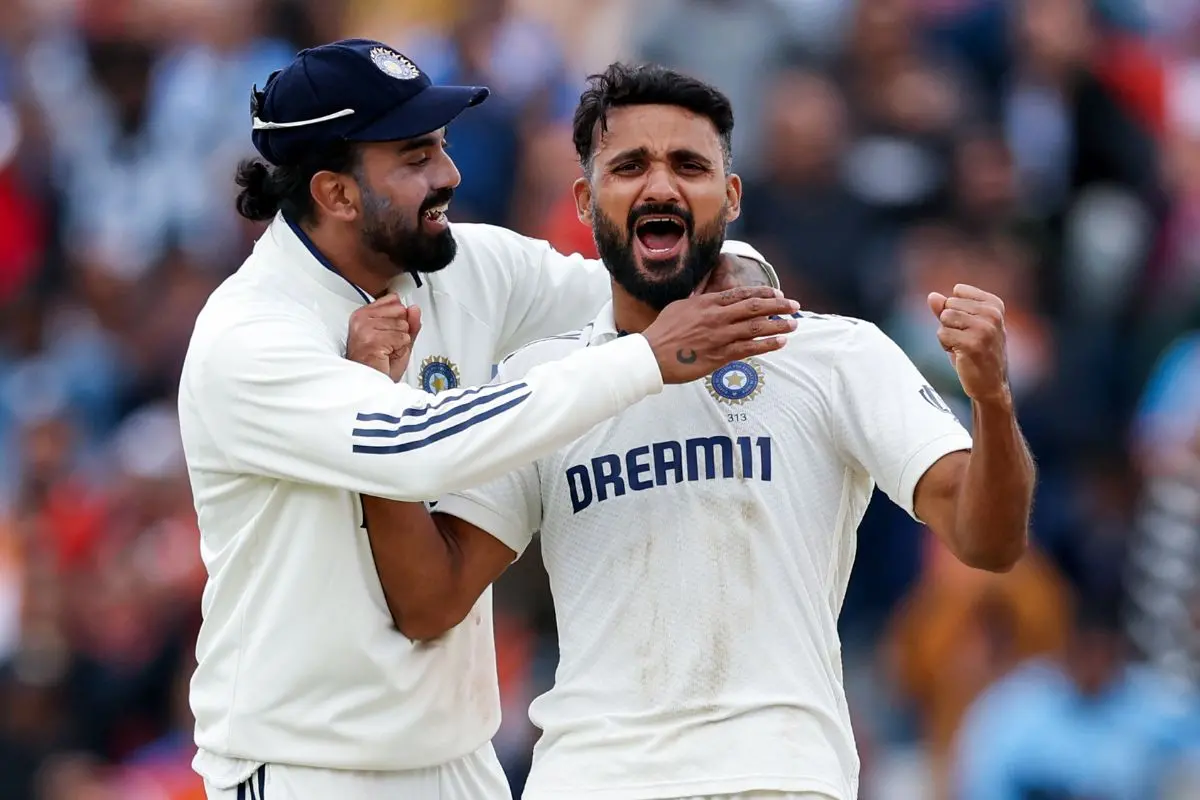
As was pointed in this column before the start of all action in England, the success of India’s fast bowling resources has paved the way for the team to score against the Ben Stokes -led home team; they were prominent in the first Test at Headingley, Leeds and in the second Test at Edgbaston, Birmingham.
The difference was that India upstaged England by a whopping 336 runs at Edgbaston to restore parity in the five-Test series for the Anderson -Tendulkar Trophy after going down by five wickets in the lung opener at Leeds.
India’s fast bowlers have captured the bulk of the wickets - 32 to be precise with a tyro in international cricket, fast medium bowler Akash Deep covering himself with glory taking, ten wickets in only his eighth Test match.
That the 28-year-old did not feature in the conservative team selection for the first Test may baffle the discerning; the tour selection committee and the two travelling selectors in Ajit Agarkar and Shiv Sundar Das, went for the option of Shardul Thakur for the first Test just because he can hit the ball hard and long. Deep is a specialist who operates with the shining new ball and the well-used one, and has a reputation of providing breakthroughs in his opening bursts just as a did in his debut Test against England in Ranchi when he dismissed Ben Duckett, Zak Crawley and Ollie Pope.
Only three times in the fourteen innings that he has bowled, has he gone wicketless and that was in the second innings of the Test against Bangladesh in Chennai, in the second innings against New Zealand at Pune and in the second innings against Australia in Melbourne, all in the last one year.
A susceptible back kept him out of the fifth and final Test against Australia at Sydney, but the selection committee did well to pick him for the series in England where he and the likes of Prasidh Krishna and Arshdeep Singh had little experience bowling with the Dukes ball in a Test match.
At Edgbaston, Deep came into the playing XI at the expense of Bumrah, who took five first innings wickets in the Leeds Test, but after a seven-day break, chose to sit out in order manage his workload on his lower back.
There may have been the temptation to cap left-arm seamer Arshdeep Singh, but better sense prevailed and Deep got to play the Test at Edgbaston where India had not win a Test in eight appearances since 1967. It was a fortress for the home team, but one that eventually got breached with the spectacular show of individual brilliance by the Bihar- born bowler who turns out for Bengal in the Ranji Trophy.
Sharing the new ball with Mohammed Siraj, Deep took wickets of the top-order England batters in his first spell and caused much anxiety in the home team dressing room. Four of his six second innings scalps were unassisted by the fielders - lbw and bowled which provides a substantial evidence of his ability to manipulate the seam bowling within the stumps. Most of his wickets were as a result of his wherewithal to keep the England batters guessing.
It was more or less the case with Siraj being able to run through the England lower order and tail trapping then leg before or bowled after making the top and middle order nick to the wicketkeeper Rishabh Pant.
As was the instance of Harry Brook and Jamie Smith pummellIng the bowlers in the first innings, there could be more occasions in the next three Tests at Lord’s, Old Trafford and The Oval when Bumrah, Siraj, Deep and Krishna will be at the receiving end, but the thumb rule that has been established is of the fact of not straying and attacking the stumps from 22 yards.
For ten days on the trot the pitch at Leeds and Edgbaston turned out to be a batting paradise with the finger spinners not able to get much purchase of the surface. All the more the reason the Indian fast bowlers and their ilk deserving much credit for being smarter than the home team’s group that is so accustomed to the Dukes ball and the conditions.
Deep sent down a little over 41 overs and did not look exhausted and that’s because he did not expend much energy in his run up to the bowling crease, but used his body swing to generate speed. Deep on most occasions hovered under 140kmph, but made the ball hasten of the wicket from a good length that varied for different batters.
Krishna who was battered in the first three innings, showed the inclination to find his rhythm, line and length in the second innings at Edgbaston and even got a wicket.
The famous adage in cricket is that “it’s the bowlers who win matches” and this was amply reflected in Siraj’s six first innings wickets and Deep’s ten wicket match haul.
India and its captain Shubman Gill - who has led by example with the bat - would like to repeat the same process in the third Test at a venue in the vicinity of St. John’s Wood in Westminster. Bumrah will spearhead the attack, this was confirmed by Gill at the post match at Edgbaston. But the India captain will impress upon the heed to put plenty of runs on the board to give time for his bowlers to probe the England batters - by directing the ball within the stumps with speed and working efficiently and adeptly on the seam.