KL Rahul was a class act in the Champions Trophy
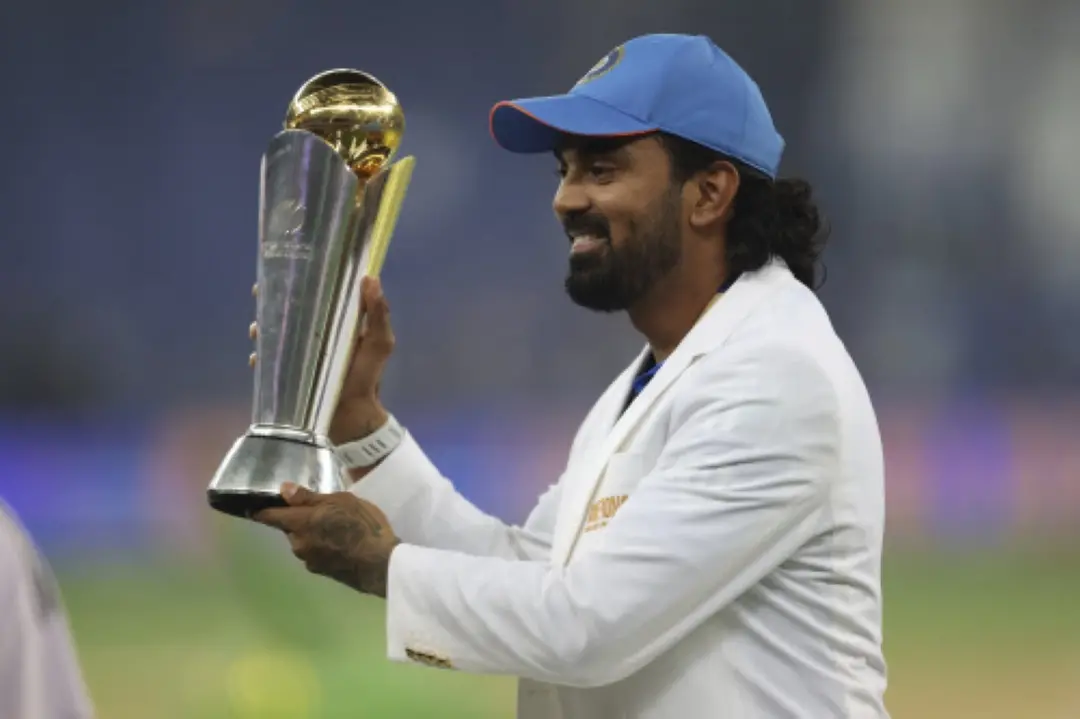
KL Rahul has been a class act... a match-winner in the ICC Champions Trophy in many ways. He quietly performed his duties as a wicketkeeper and did what was needed in front of the wicket. There may have been a blemish or two standing up to the spinners of various types, like the two different wrist spinners — left-arm chinaman Kuldeep Yadav and Varun Chakravarthy, who has gained a reputation as a mystery spinner rather than a pure leg-spinner — and the two left-arm finger spinners, Axar Patel and Ravindra Jadeja. The fifth slow bowler in the squad, off-spinner Washington Sundar, did not have to be summoned for action.
It’s never easy to keep a versatile talent like Rishabh Pant out of the fray, even for a single match. Still, in this eight-nation tournament, the team benched the Delhi left-hander for the full duration, which involved five matches for India. The team management, including skipper Rohit Sharma, head coach Gautam Gambhir, and those responsible for team selection, including the committee headed by Ajit Agarkar, decided to nominate KL Rahul as the primary wicketkeeper for the tournament. Former England captain Nasser Hussain stated that the Indian team had the best wicketkeeper-batter, who provided balance to the side. Rahul's position at No. 6, after Axar Patel, pushed someone like Jadeja to the No. 8 spot.
The story of India’s success in the Champions Trophy — after losing to Pakistan in the 2017 final at the Oval — was due to applying their minds without prejudice and defining roles for every player. If Rahul being given precedence over Pant was a calculated move, then roping in Chakravarthy as a fifth spinner in the fifteen-member squad — replacing left-handed opener Yashasvi Jaiswal from the original squad — was a masterstroke. A late bloomer in the BCCI domestic tournaments, Chakravarthy made a significant impact in the white-ball series against England, and hours after the third ODI in Ahmedabad, his inclusion in the squad was announced.
Chakravarthy played his part in replacing Harshit Rana after the first two matches against Bangladesh and Pakistan. Still, the role given to Rahul and how he executed it — delivering game-changing moments in the semi-final against Australia and the final against New Zealand, particularly as a batter — was remarkable.
Rahul, who started his ODI career with an unbeaten 100 against Zimbabwe in Harare in June 2016 and has kept wicket in 45 matches, dispelled all fears of Australia and New Zealand getting a foothold in the two knockout matches. Taking the field at the fall of crucial wickets and when India was shy of the target, Rahul defended and hit out to make an unbeaten 42 against Australia and 34 not out against New Zealand. He hit two classic sixes against Australia and one against New Zealand, attacking strokes that calmed a tense Indian dressing room.
India's captain, Sharma, was forthcoming about how Rahul was fitted into the playing XI: “Look, when we discussed KL's position, that is one thing we discussed quite deeply, about how calm he is when batting. The pressure doesn’t get to him; we wanted that calmness somewhere in the middle. We also wanted to use a left-hander in the middle. So that worked out both ways for us. KL has been doing a lot of challenging work for the team for many years. And I'm pleased with how he managed to pull through this tournament and batted under pressure, both in the semi-finals and the final against New Zealand. The contribution may not be 70-80, but those 30-40s are essential. It can get tough when you're chasing, run-a-ball at the back end. It can get difficult. But with KL being there, we know he has the mindset to keep calm, and the dressing room is also very calm. So I'm pleased with how he managed things in this tournament and happy about his contributions to the team,” a beaming Sharma said during the media interaction at the Dubai International Stadium on Sunday.
Rahul scored 140 runs in five matches across four innings and remained unbeaten on three occasions, starting with a 41 not out against Bangladesh. When things appeared tricky against Bangladesh in the opening group match, his firm forward play and clean strokes enabled him and Shubman Gill to share an 87-run stand in 70 minutes off 98 balls that eased India past an extremely slow and turning surface.
Rahul was terrific against Australia, warding off threats from the two leg spinners, Adam Zampa and Tanveer Sangha, and the two finger spinners, Cooper Connolly (left-arm) and Glenn Maxwell (off-break). Rahul was involved in two good partnerships — with Virat Kohli and Hardik Pandya. He hit the winning shot, a six, against Australia. And against New Zealand, his unbeaten 34 was priceless.
Rahul has been around for close to nine years in ODIs. He has played 85 matches and scored 3,043 runs, with seven centuries and 18 half-centuries. He has batted as an opener (915 runs), at No. 4 (558 runs), and No. 5 (1,299 runs).
Sharma and the senior players in the team hold him in the highest regard. “It’s very, very satisfying. I'm thrilled at the moment. ICC victories are not easy to achieve. It’s my first one, so I'm thrilled and over the moon. I am happy with how we've played this entire tournament; it’s been a complete team effort. There haven’t been one or two standout performances. I think all 11 or 12 players have stepped up, and that’s one of the biggest reasons we ended up winning this tournament,” he said.
Rahul’s position in the team, vis-à-vis Pant, was discussed and debated. But he showed the way for his team to win the ICC Trophy the men in blue had coveted for a long time.