Abhishek Sharma smashes 38-ball T20I century, breaks Kohli’s record as India crush New Zealand
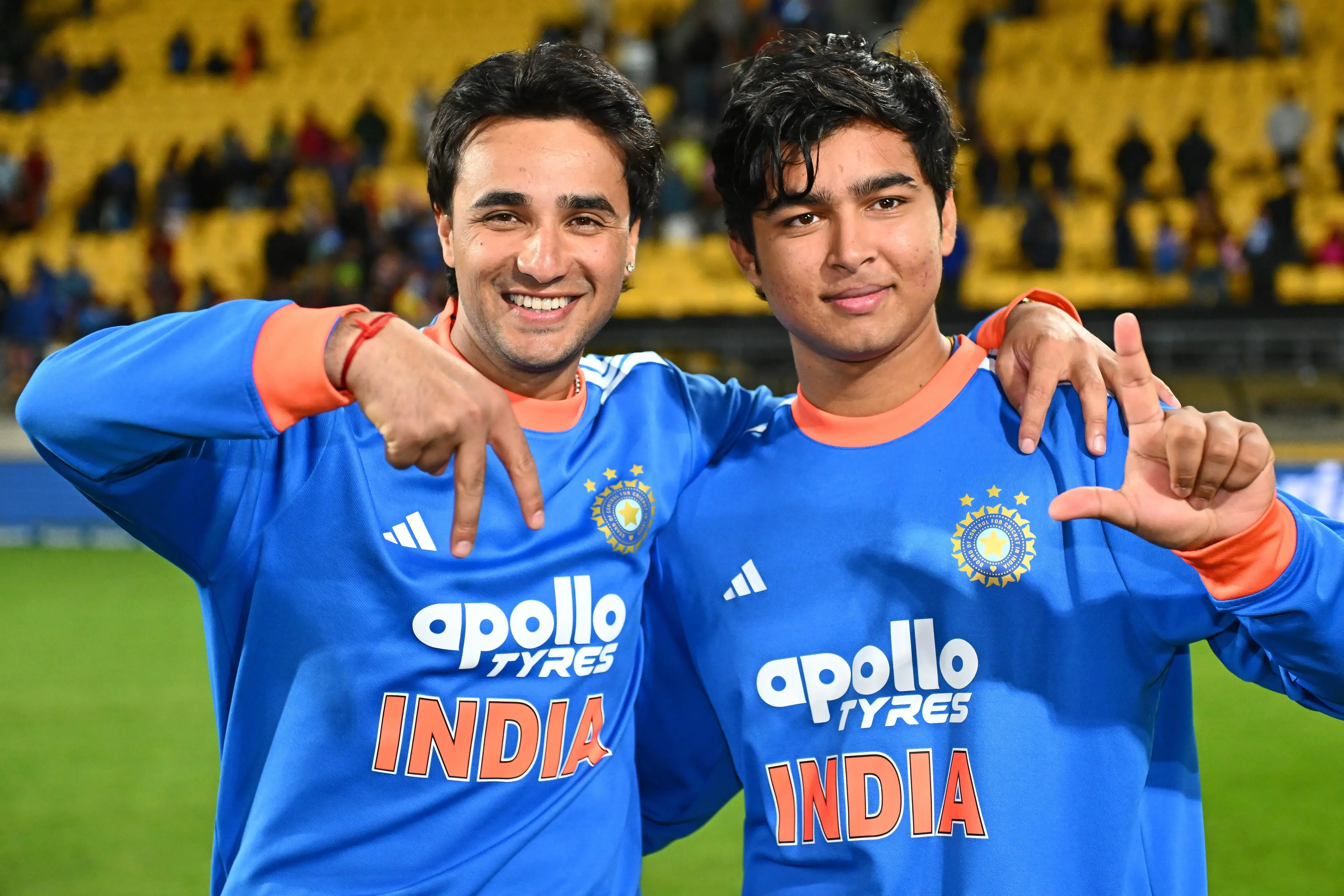
Wellington (New Zealand): Abhishek Sharma produced a breathtaking 38-ball century as India chased down New Zealand’s 199-run target in just 13.2 overs to win the third T20 International by eight wickets on Tuesday, taking an unassailable 3-0 lead in the five-match series.
Abhishek smashed 113 off 38 balls, including 11 sixes and nine fours, at a strike rate of 297.37. His explosive innings helped India reach 100 runs in just five overs and post 118 without loss in the power play- the highest power-play total by any team in T20 cricket.
The left-hander also overtook Virat Kohli to become the Indian batter with the most centuries in T20 cricket, taking his tally to 11 across the format, compared with Kohli’s 10.
Abhishek’s 11 T20 centuries, placed him third on the all-time list behind West Indies great Chris Gayle, with 22, and Pakistan’s Babar Azam, with 13.
He also registered his fourth T20I century, moving level with Rohit Sharma, Suryakumar Yadav and England’s Phil Salt for the joint second-most hundreds in the format. Australia’s Glenn Maxwell leads the list with five.
Abhishek reached his half-century in just 15 balls before bringing up his hundred off 35 deliveries. He was dismissed for 113 shortly afterwards, having put India firmly in control of the chase.
India races to 118 in power play
India’s opening partnership set the tone for the remarkable chase. Teenage batter Vaibhav Sooryavanshi, promoted to open ahead of Sanju Samson, struck 45 off 19 balls, including four fours and four sixes.
The pair added 133 runs for the first wicket, dismantling New Zealand’s bowling attack. India scored 26 runs in the opening over and reached 43 after two overs, 64 after three and 118 at the end of the power play.
Sooryavanshi was caught in the deep off Matthew Fisher early in the eighth over. Abhishek continued his assault before departing three balls after reaching his century.
India completed the chase at 202/2 in 13.2 overs, winning with eight wickets remaining and 40 balls to spare.
Also read | ‘Gill is my captain right now, I have to keep him happy’: Rohit Sharma's witty 2027 World Cup remark
Daryl Mitchell’s 89 goes in vain
Earlier, New Zealand posted 198/3 after being asked to bat first. Daryl Mitchell led the innings with an unbeaten 89 off 52 balls, including five fours and five sixes.
Mitchell added 86 runs for the second wicket with Finn Allen, who scored 40 off 25 balls. He then shared an unbeaten 75-run partnership with Bevon Jacobs, who made 39 not out off 23 deliveries.
However, New Zealand managed only 52 runs in the final five overs, leaving India a target that its aggressive batting line-up chased down with ease. Arshdeep Singh, Axar Patel and Nitish Kumar Reddy took one wicket each.
Also read | ‘Just be you’: Morne Morkel backs Bhuvneshwar Kumar to find his feet after long gap
Abhishek closes in on another T20I record
Abhishek’s century also strengthened his position among the leading run-scorers in T20 internationals. He has scored 2,240 runs in 70 matches and is approaching Suryakumar Yadav’s record for the most T20I runs by an Indian in a calendar year.
Abhishek has scored 1,125 T20I runs in 2026, leaving him 40 short of Suryakumar’s 2022 tally of 1,164.
He has also struck 158 sixes in T20 internationals, becoming only the third Indian to cross the 150-sixes mark after Suryakumar, with 179, and Rohit Sharma, with 205.
With the third consecutive victory, India has secured the series with two matches still to play. Abhishek’s record-breaking innings has emerged as the defining moment of a match in which New Zealand’s total of 198 proved no match for India’s extraordinary power-hitting.