'My question remained unanswered': Abhinav Bindra's sharp message to IOA leadership
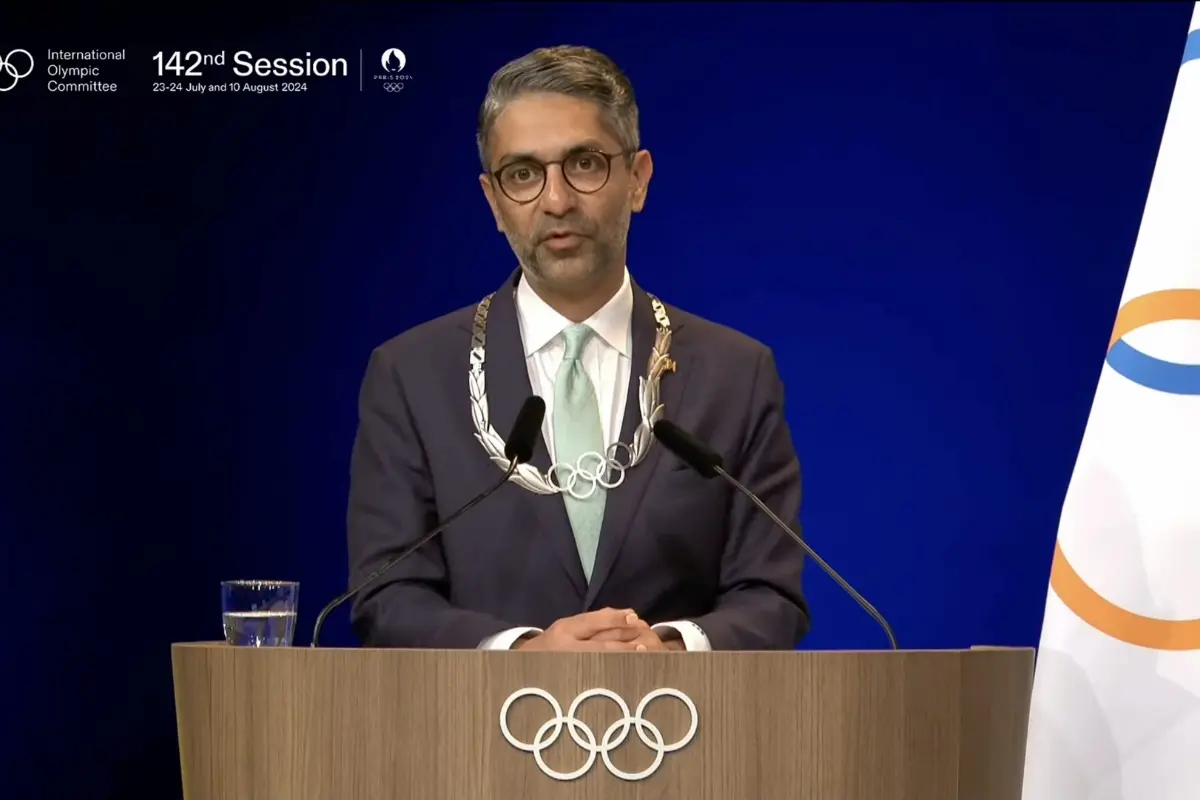
New Delhi: An election is only as credible as the rules governing it, and Olympic champion Abhinav Bindra believes the Indian Olympic Association (IOA) needs to take a closer look at precisely that.
Days after raising concerns over the association's electoral framework, the legendary shooter has made public his correspondence with the IOA, questioning an apparent conflict between its constitution and the rules framed for the recently concluded Sportspersons of Outstanding Merit (SOM) elections.
Bindra, India's first individual Olympic gold medallist, said his specific query about the alleged inconsistency had remained unanswered despite approaching the Electoral Officer and following up with the association's leadership.
He has called for greater constitutional clarity, transparency and institutional accountability in Indian sport.
The development comes after a significant electoral setback for IOA president PT Usha, who lost the women's category in the recently concluded SOM elections.
Olympic medallist Saina Nehwal, along with former international athletes Anju Bobby George, Rani Rampal and Dola Banerjee, emerged victorious.
The men's category, meanwhile, had seen four candidates elected unopposed after eight of the 12 contenders withdrew from the contest. Olympic medallists Gagan Narang, Yogeshwar Dutt and Vijender Singh, along with former table tennis player Kamlesh Mehta, secured the four positions.
The electoral developments assume added significance ahead of the December 5 elections to the IOA Executive Council for the 2026-2030 term. The elected SOM representatives will become members of the IOA General Assembly, with the right to vote and contest in the upcoming Executive Council elections.
One male and one female SOM representative will also take a seat on the Executive Council, giving them a direct stake in the association's decision-making structure.
On X, Bindra published his letter dated October 31, 2026, explaining that he decided to make the correspondence public after references to it appeared in media reports.
‘Unfortunately, my private correspondence with the Indian Olympic Association has found its way into the public domain. Given the references to it in recent media reports, I thought it appropriate to share my letter of 31 October 2026 in its entirety, so that its intent and context are clear,’ he wrote.
The Olympic champion clarified that he sent his communication before the SOM elections and intended it as an exercise in constructive engagement, not an attempt to influence the electoral outcome or question individual candidates.
At the heart of the controversy is Article 3.7 of the IOA Constitution and its apparent inconsistency with the recently notified rules governing the election of SOM representatives.
Bindra said he had sought an explanation from the Electoral Officer but, although he received a response indicating which rules were being followed, his central question about their compatibility with the constitution remained unresolved.
He also said that neither the Electoral Officer nor the IOA leadership had provided a substantive clarification so far.
In his letter addressed to IOA president PT Usha and CEO Raghuram Iyer, Bindra expressed disappointment over the lack of a clear response, while acknowledging that there could be a reasonable explanation for the apparent discrepancy.
‘I must admit to feeling a little disappointed that a genuine question concerning the interpretation of our own Constitution could not be addressed. There may well be a perfectly reasonable explanation for the apparent inconsistency, and I would have welcomed the opportunity to understand it,’ he wrote.
Bindra also made it clear that his decision not to contest any election was independent of the concerns he had raised.
With the Executive Council elections approaching, he maintained that questions surrounding the interpretation of the IOA Constitution remain relevant regardless of an individual's participation in the electoral process.
The former shooter stressed that sporting bodies must ensure their constitutions, electoral regulations and administrative procedures are aligned and communicated clearly.
He argued that ambiguity in institutional rules can undermine confidence, particularly when legitimate questions are not addressed in a timely and transparent manner.
For Bindra, good governance goes beyond procedural compliance. It requires institutions to listen to their stakeholders, acknowledge concerns raised in good faith and create an environment where athletes and members have confidence in the systems governing them.
He further said that the IOA, as the custodian of the Olympic movement in India, has an opportunity to establish higher standards of institutional conduct.
Drawing a parallel between the expectations placed on athletes and those governing sporting bodies, Bindra said institutions must demonstrate the same discipline, fairness and excellence that they demand from competitors.
He also emphasised that even seemingly small improvements in communication, clarity and responsiveness could significantly strengthen public confidence in sporting organisations.
Looking ahead to the December 5 elections, Bindra expressed hope that the process would be conducted smoothly and transparently, with mutual respect among all candidates.
Describing the upcoming polls as an important moment for the IOA, he said the exercise should serve not merely to elect representatives but also to reinforce faith in the institution and its values.
His larger message was unmistakable: the credibility of Indian sport cannot rest solely on the achievements of its athletes. The institutions responsible for governing them must also be held to equally high standards.
'Ultimately, the credibility of our sporting institutions rests not merely on the decisions they make, but on the fairness and integrity of the processes through which those decisions are reached. Indian sport deserves nothing less,' Bindra signed off.